প্রকাশের তারিখ : ২২ জুলাই ২০২৬
Clerics, Madrasa students played key role in July uprising: AB party
||
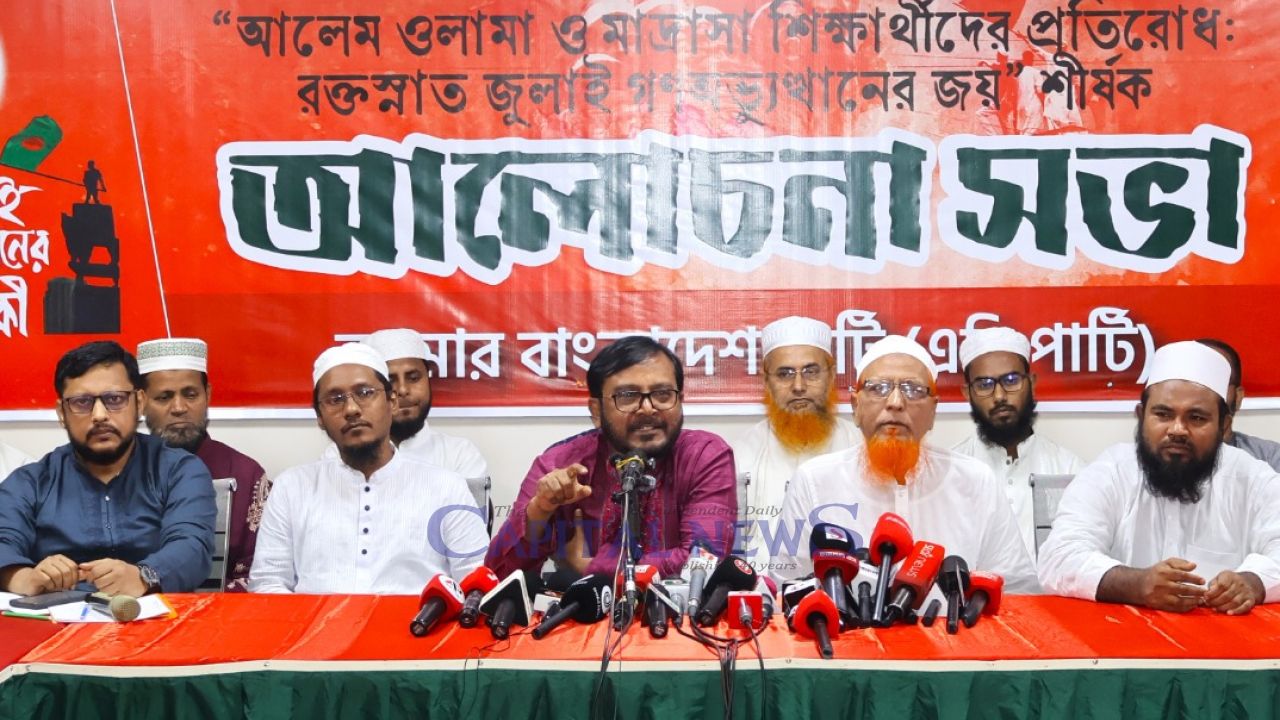
Desk Report: The Amar Bangladesh
Party (AB Party) on Wednesday claimed that the participation of Islamic
scholars (ulema), madrasa students and people from all walks of life was
instrumental in the success of last year's July mass uprising, while stressing
that broad-based national unity is essential to prevent the return of
authoritarian rule. The observations came
at a discussion titled "Resistance of Ulema and Madrasa Students: Victory
of the Blood-Stained July Mass Uprising," organised by the party at its
central office in Bijoynagar to mark the second anniversary of the July
uprising. Speaking at the event,
AB Party Chairman Mojibur Rahman Monju drew a comparison between the
Hefazat-e-Islam rally of May 5, 2013, and the events of August 5 during last
year's anti-government movement. "People wept in
silence after the brutality of May 5. Mothers and sisters prayed from their
homes. But on August 5, men and women alike took to the streets against the
violence. Their united resistance forced the authoritarian regime to flee. That
is the significance of the mass uprising," he said. Monju alleged that
supporters of what he described as the previous "fascist regime" are
attempting to re-establish their political relevance after its fall. "Throughout
history, defeated forces either surrender or flee, but their collaborators and
remnants try to regroup," he said, adding that similar attempts are now
being made following the political change brought about by the July uprising. Highlighting the role
of religious scholars, Monju said that although the ulema generally remain
outside active partisan politics, they have repeatedly stood with the nation
during critical moments. He said religious
scholars had made notable contributions to major historical movements,
including the anti-British struggle, the Language Movement, and movements
against military rule. "Despite
differences of opinion among themselves, the ulema have always remained
uncompromising on Bangladesh's independence, sovereignty and national
interests," he said. Referring to the 2013
Hefazat rally at Shapla Chattar, Monju claimed that many political forces
failed to support the religious scholars at the time, allowing the government
to suppress dissent and consolidate its rule. He also said the July
movement expanded gradually, beginning with university students before drawing
in college students, private university students, madrasa students, women,
cultural activists and people from different professions. "The
participation of students from universities, colleges, private universities and
madrasas, along with the ulema, was one of the defining features of the
movement," he said, paying tribute to those involved. Several invited
speakers also highlighted what they described as the historical role of Islamic
scholars in political and social movements. Khelafat Majlish
Senior Nayeb-e-Ameer Ahmad Ali Qasemi said lasting protection against
authoritarianism would require structural reforms and called for the
implementation of the proposed "July Charter." National Ulema
Alliance Member Secretary Maulana Sanaullah claimed that the seeds of the July
uprising had been sown during the events of May 5, 2013, while criticising the
previous government's handling of political dissent. Islami Jubo Samaj
Secretary General Maulana Abdullah Al Masud Khan said madrasa students had
joined the quota reform movement despite having no direct personal stake in it. Khelafat Jubo Majlish
President Jahiduzzaman said Islamic scholars had historically contributed to
every major political movement in the country, beginning with the anti-colonial
struggle. The programme,
moderated by AB Party Joint Secretary General Shahadatullah Tutul, was attended
by leaders of AB Party and several religious and political organisations,
including July movement activist Maulana Sadman Fuad and others.
The discussion formed
part of a series of programmes being organised by different political groups to
commemorate the second anniversary of the July mass uprising.
© 2025 The Daily Capital News