প্রকাশের তারিখ : ০৮ আগস্ট ২০২৬
China-Bangladesh Ceramics Conference seeks technology-led growth for local industry
||
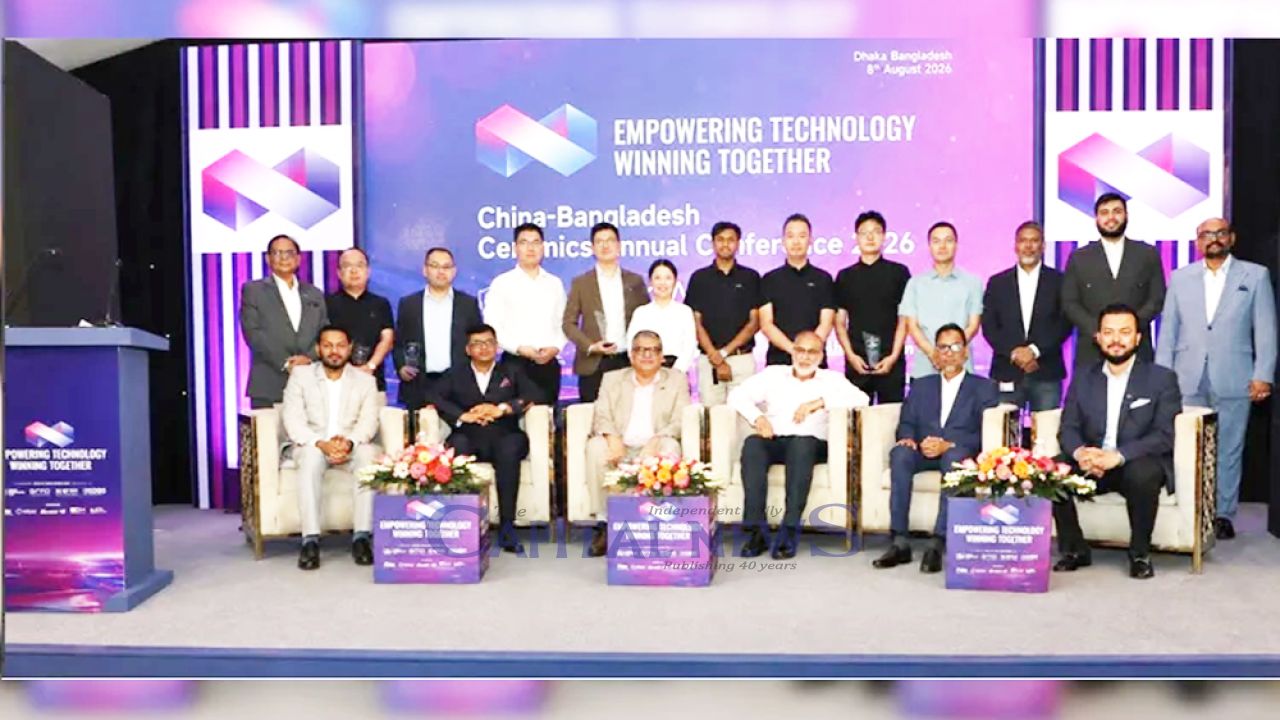
Online Desk: Bangladesh’s rapidly expanding ceramics industry must move beyond price-based competition and embrace technology, innovation, quality and branding to secure a stronger position in both domestic and international markets, industry leaders said at the China-Bangladesh Ceramics Annual Conference 2026.The conference, jointly organised by the Bangladesh Ceramic Manufacturers & Exporters Association (BCMEA) and Foshan Uniceramics Expo, China, was held at a hotel in the capital on Saturday under the theme “Empowering Technology, Winning Tomorrow Together.”The day-long event brought together senior representatives of Bangladesh’s ceramics industry, Chinese business leaders, technical experts and international delegates to discuss the future of ceramic manufacturing, technological cooperation and the growing potential of the Bangladeshi market.Opening the conference, Irfan Uddin, General Secretary of BCMEA and Director of FARR Ceramics Ltd., stressed that partnership and knowledge-sharing are essential for industrial progress in an increasingly interconnected world.“Empowering technology, winning tomorrow together reflects our belief that meaningful collaboration, knowledge exchange and innovation are the foundation of a stronger and more competitive ceramic industry,” he said.He also underscored the importance of cooperation between businesses, observing that no industry can achieve sustainable growth in isolation.Huge room for market expansionThe enormous potential of Bangladesh’s ceramics market emerged as one of the key themes of the conference.Eva Chan, Overseas Business Department Manager of Uniceramics China, said Bangladesh’s current per capita ceramic consumption is around one square metre, compared with a peak of 6.9 square metres in China.The wide gap, she said, indicates substantial room for future growth in Bangladesh.“The gap is huge, which means the growth potential is equally huge. This is where the opportunity lies,” Chan said.She encouraged Bangladeshi manufacturers to rethink their competitive strategy by placing greater emphasis on quality, design and brand development, rather than relying primarily on lower prices.Her remarks came at a time when Bangladesh’s ceramics manufacturers are seeking to expand exports while meeting increasingly sophisticated consumer demand at home.China-Bangladesh cooperation gains importanceSpeaking on the broader economic relationship between the two countries, Mohammad Khorshed Alam, President of the Bangladesh China Chamber of Commerce and Industry (BCCCI), said closer cooperation with Chinese businesses could create new opportunities for both countries.“I strongly believe that through cooperation with the China business partners, we can create new opportunities in both the local and international market,” he said.He highlighted technology transfer and skills development as important areas where Bangladesh-China business cooperation could deliver long-term benefits.Industry observers at the conference also emphasised that access to modern machinery, production techniques and technical expertise could help Bangladeshi manufacturers improve productivity while reducing production costs.Ceramics emerging as a major manufacturing sectorMd. Mamunur Rashid, Senior Vice President of BCMEA and Additional Managing Director of X Ceramics Group, described ceramics as one of Bangladesh’s most dynamic manufacturing sectors.He said the resilience of the national economy is creating opportunities for further investment in the sector.Bangladesh, he noted, now produces world-class tableware, tiles and sanitary ware, with products being exported to markets in Europe, North America and the Middle East.The comments reflected the industry's growing ambition to establish Bangladesh as a competitive global ceramics manufacturing and exporting hub.Energy challenge demands innovationThe conference also drew attention to one of the biggest challenges facing the ceramics industry: energy consumption.Moynul Islam, President of BCMEA and Chairman of Monno Group of Industries, said the long-standing relationship between Bangladesh and China should be used to strengthen industrial cooperation and accelerate the exchange of knowledge and technology.He described the conference as more than a business gathering, saying it provided an opportunity for the two countries to exchange ideas and build a stronger industrial partnership.Islam urged Bangladeshi manufacturers to learn from Chinese efficiency and technological innovation, particularly in addressing energy-related challenges.He pointed to emerging technologies such as electric kilns and hydrogen-enriched heating systems as possible avenues for improving energy efficiency and reducing the industry's dependence on conventional fuel sources.Technical session focuses on innovationFollowing the opening session, the conference moved into a technical discussion titled “Technology & Innovation in Industry & Bangladesh Market Potential.”The session was chaired by Rasheed Mymunul Islam, Vice President of BCMEA and Managing Director of Monno Ceramic Ind. Ltd.Mohammad Ziaur Rahman, Deputy General Manager of Akij Ceramics Ltd., delivered the keynote presentation, focusing on technological developments and the future potential of Bangladesh's ceramics market.The technical panel included Mohammad Khourshed Alam, CEO of RAK Ceramics (Bangladesh) Ltd.; George Yang, Export Manager of Guangdong Dinghe Superhard Tools; Ahmad Jubair, Sales Engineer at Zhaoqing Jinma Leading Intelligent Technology Co. Ltd.; and Jack Ma, Sales Manager at Renqiu Kangjie Sanitary Ware.The discussions provided a platform for manufacturers, technology providers and business representatives to examine how modern equipment, production methods and technical expertise can contribute to greater efficiency and competitiveness.A new chapter in bilateral cooperationThe opening session concluded with a crest distribution ceremony honouring Chinese delegates and other key contributors to the event.The gesture was seen as a symbol of the growing relationship between the ceramics industries of Bangladesh and China and their shared interest in expanding commercial and technological cooperation.Abdul Hakim (Sumon), Senior Vice President of BCMEA and Managing Director of Excellence Ceramics Group, delivered the vote of thanks. He stressed the need for the industry to adapt to the changing energy landscape and prepare for future challenges through innovation.The conference concluded with a networking session and closing remarks by Mohd Ziaul Hoque (Zico), Director of BCMEA and Deputy Managing Director and CEO of Hua Thai Ceramics Industry Ltd.Among others, Saquif Ariff Tabani, Adviser of BCMEA and Vice Chairman and Managing Director of Khadim Ceramics Ltd., and Hamzah Saquif Tabani, Director of BCMEA and Director of Khadim Ceramics Ltd., were present at the event.For Bangladesh, the message from the conference was clear: the next phase of growth for the ceramics industry will depend not only on expanding production, but also on adopting smarter technologies, developing skilled workers, improving energy efficiency and building globally recognised brands.With Bangladesh's domestic market still having considerable room for expansion and international demand offering further opportunities, closer cooperation with Chinese technology providers and businesses could become an important part of the industry's journey toward a more competitive and sustainable future.
© 2025 The Daily Capital News