প্রকাশের তারিখ : ১৬ আগস্ট ২০২৬
Dhaka hosts enchanting Naat evening in praise of Prophet (PBUH)
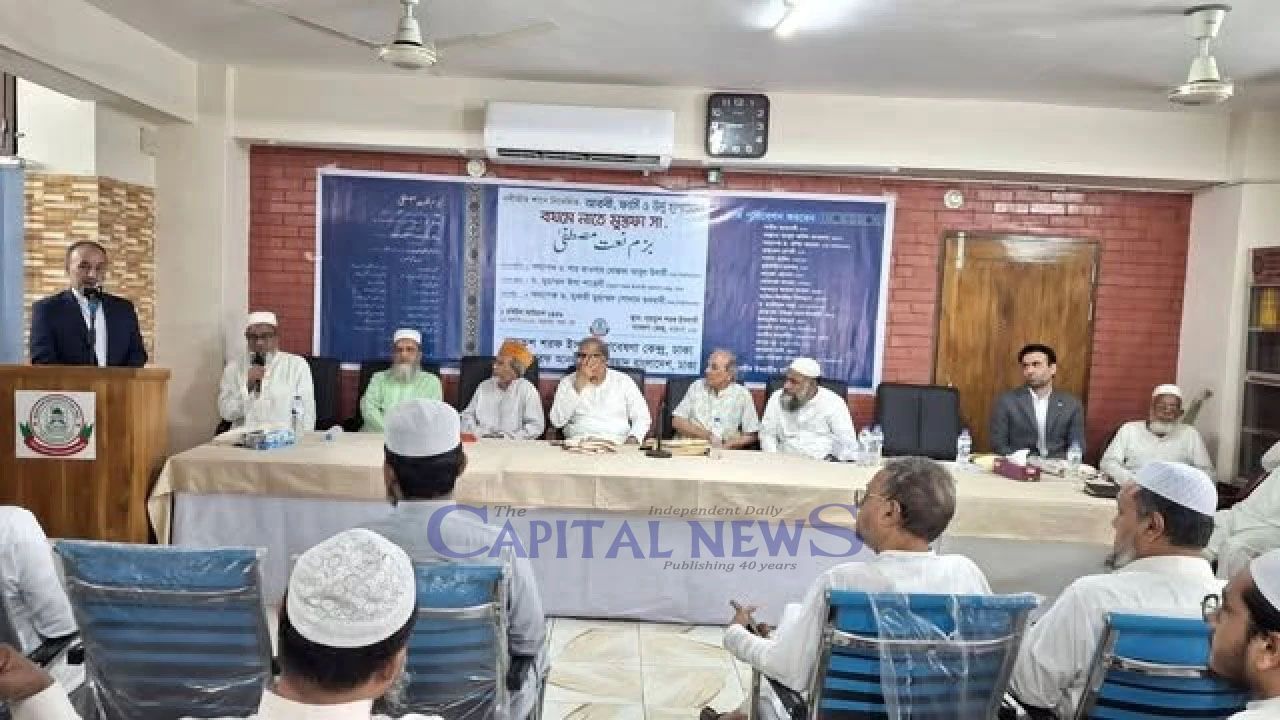
||
Special Correspondent: An enchanting evening of Arabic, Persian and Urdu
naats was held in the capital on Friday to mark the arrival of Rabi' al-Awwal,
bringing together poets and performers from Bangladesh, Iran and Pakistan in a
spiritually charged celebration of love and devotion to Prophet Muhammad
(PBUH).The programme, titled “Bazm-e-Naat-e-Mustafa
(PBUH),” was organised at the Baitush Sharaf Islamic Research Centre in Dhaka.
The gathering featured a diverse collection of naats dedicated to the Prophet
(PBUH), presented in the three languages traditionally associated with a rich
body of Islamic devotional poetry.Performers from home and abroad captivated the
audience with their recitations, creating an atmosphere marked by emotion,
reverence and spiritual reflection. The varied voices and poetic traditions of
Bangladesh, Iran and Pakistan added a distinctive cultural dimension to the
evening.Professor Dr Shah Kawser Mustafa Abul Ulayee of the
University of Dhaka attended the programme as the chief guest. Dr Muhammad Isa
Shahedi delivered the welcome address, while Professor Mufti Muhammad Golam
Rabbani of the University of Dhaka presided over the event.Among those who performed naats were Shamim Zamanbi,
Allama Abdul Jalil Kawkab, Professor Dr Rashid Ahmad, Israfil Ameri of Iran,
Haikal Hashmi, Mehdi Hasan, Muhiuddin Hamdam, Mohammad Taher of Pakistan,
Sarwar Kamal Rageb, Sakib Kibria Dilkash, Mohammad Yunus Rumz Qasemi, Isamuddin
Mahmud, Tasbir Abedin, Abdur Nur and Akram Hadi, among others.The organisers said the event was intended not only
to celebrate devotion to the Prophet (PBUH), but also to encourage love and
respect for him among people, particularly younger generations. They also
sought to introduce young people to his life and teachings and highlight
Bangladesh's longstanding cultural and literary connection with Arabic, Persian
and Urdu naat traditions.The participation of poets and naat performers from
three countries made the gathering especially distinctive. For many in
attendance, the evening offered an opportunity to experience devotional poetry
beyond linguistic and national boundaries.
As the recitations unfolded, the audience responded
with deep emotion and spiritual engagement, turning the programme into more
than a literary gathering—it became an evening of remembrance, devotion and
cultural expression centred on the life and legacy of Prophet Muhammad (PBUH).
© 2025 The Daily Capital News