প্রকাশের তারিখ : ১৬ আগস্ট ২০২৬
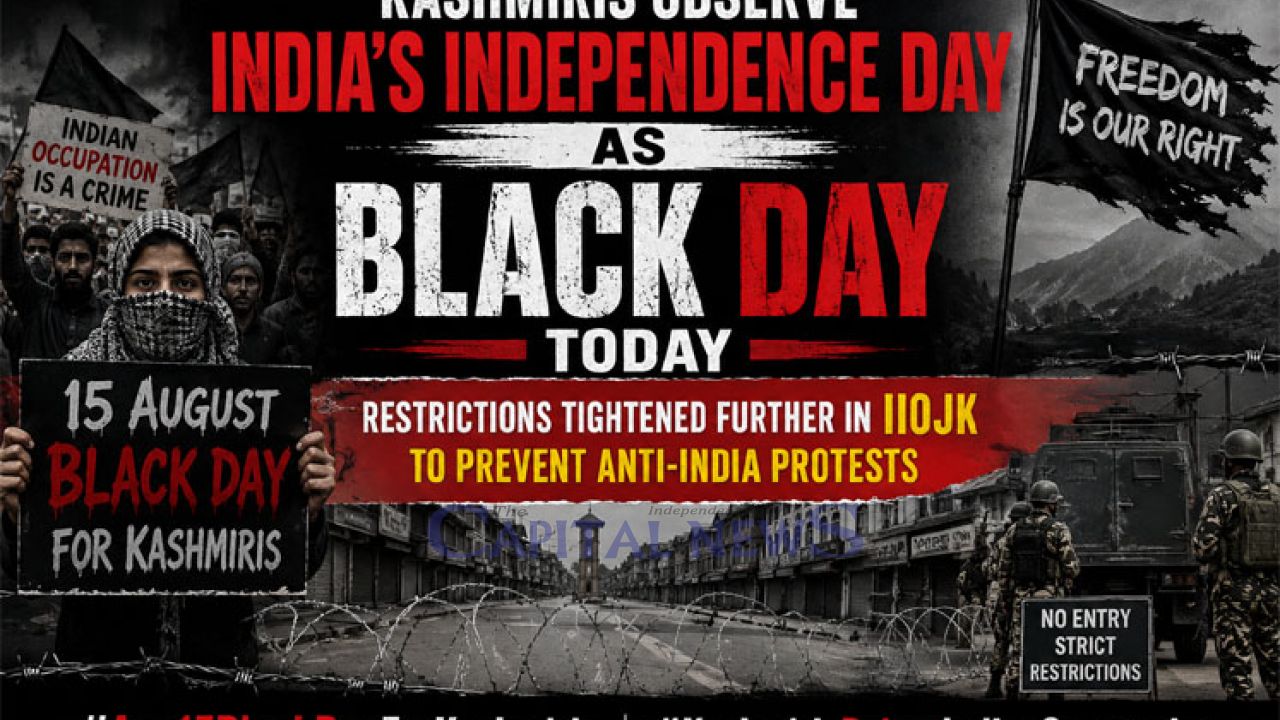
Kashmiris observe India’s Independence Day as Black Day
||
CN Desk: Kashmiris on both sides of the Line of Control and across the world are
observing India’s Independence Day as a Black Day today to protest India’s illegal
occupation of Jammu and Kashmir.According to Kashmir Media Service, the call to observe the Black Day has
been given by the All Parties Hurriyat Conference and supported by all
pro-freedom leaders and organizations.Kashmiris living across the world will hold anti-India demonstrations today
to draw international attention to the ongoing Indian atrocities in the
occupied territory. Anti-India demonstrations and rallies will also be held in
Azad Jammu and Kashmir and Pakistan to express solidarity with the oppressed
people of the occupied territory.Indian authorities also have further tightened restrictions across
IIOJK, particularly in Srinagar, to prevent pro-Pakistan and anti-India
protests.Multi-layered security arrangements have been put in place around Bakshi
Stadium in Srinagar, where the main Indian Independence Day function is being
held. Sharpshooters have been deployed on high-rise buildings, while the
stadium is being monitored through drone cameras. Barricades have been erected
at key locations across the city, and vehicles, passengers and pedestrians are
being subjected to strict searches.Meanwhile, former Pakistani diplomat Aizaz Ahmad Chaudhry has said
the current structure of the United Nations Security Council (UNSC) no longer
reflects the geopolitical realities of 2026, making comprehensive reform
essential.According to Kashmir Media Service, speaking in a media interview on UNSC
reform and Pakistan’s position, Chaudhry said the Council’s composition had
remained largely unchanged since 1965, despite the UN’s membership expanding to
193 countries.He said the central disagreement over reform was between countries seeking
an increase in elected, non-permanent seats and those advocating the addition
of new permanent members.Chaudhry said Pakistan supported the Uniting for Consensus model, which
favours expanding rotating, elected non-permanent seats rather than creating
additional permanent memberships.He described permanent membership as undemocratic and argued that increasing
elected seats would provide more equitable representation to regions that
remain underrepresented, particularly Africa and Latin America.Chaudhry said Pakistan opposed permanent seats for India, Brazil, Germany
and Japan, arguing that adding more permanent members would further privilege
powerful countries within the international system.He said India’s alleged non-compliance with UN Security Council resolutions,
particularly those concerning the Jammu and Kashmir dispute, was another reason
Pakistan could not accept New Delhi’s bid for permanent membership.Chaudhry also warned that expanding the permanent membership and veto system
could further paralyse the UN Security Council. He recalled the deadlock
witnessed during the Cold War and said the increasing use of vetoes in recent
years had already weakened the Council’s effectiveness.He stressed that any meaningful reform should make the Security Council more
representative, democratic and effective while ensuring greater participation
of states that are currently underrepresented.Chaudhry’s remarks reaffirm Pakistan’s longstanding position that UNSC
reform should prioritise broader regional representation through elected seats
rather than create another tier of permanently privileged states
© 2025 The Daily Capital News