প্রকাশের তারিখ : ১৬ আগস্ট ২০২৬
Policy reform must translate into action to restore investor confidence
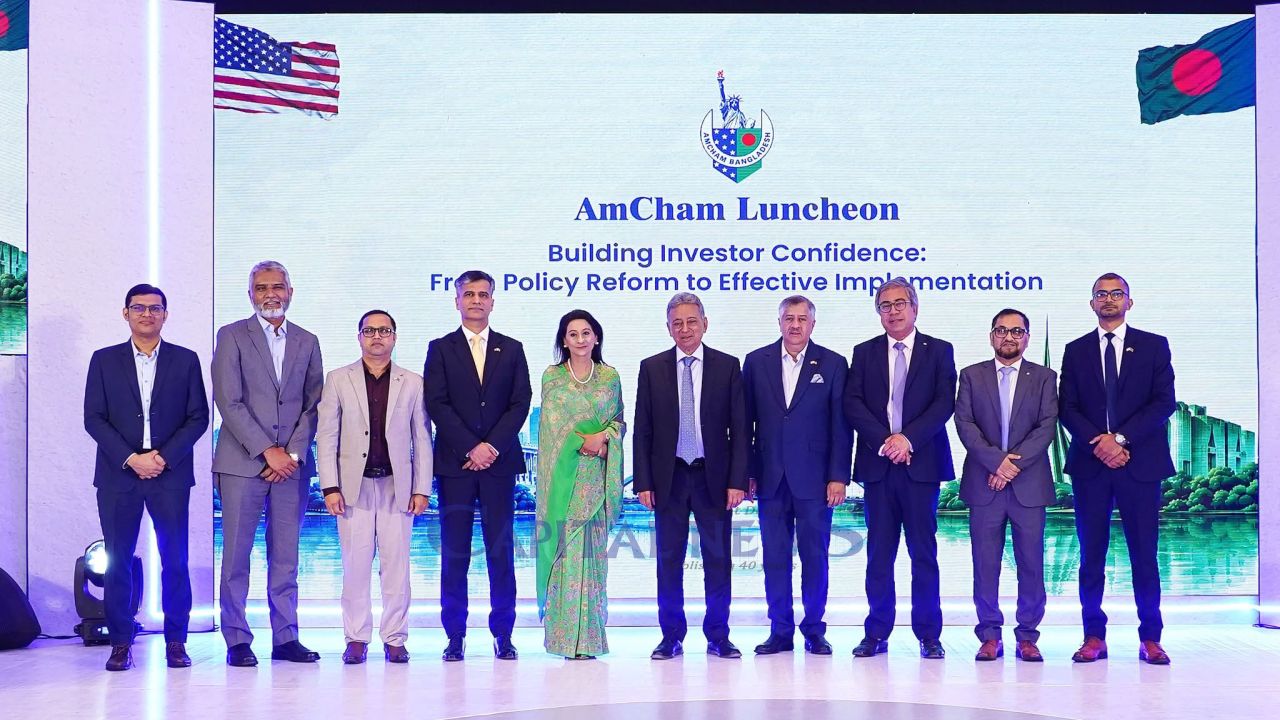
||
MM Rahmatullah: Bangladesh must move beyond announcing economic and regulatory reforms and
ensure their effective, consistent and timely implementation if it wants to
restore investor confidence and attract fresh domestic and foreign investment,
business leaders and policymakers said at a high-level business gathering in
Dhaka.The observation came at the flagship luncheon of the American Chamber of
Commerce in Bangladesh (AmCham), titled “Building Investors’ Confidence: From
Policy Reform to Effective Implementation,” held at the InterContinental Dhaka
on Sunday.The event brought together senior government officials, policymakers,
business executives, investors and members of the business community to discuss
the challenges facing Bangladesh’s investment climate and possible ways to
create a more predictable and business-friendly economic environment.The central message emerging from the discussion was clear: policy reform
alone will not be enough unless investors can see those reforms being
implemented fairly, consistently and without unnecessary delays.AmCham President Syed Mohammad Kamal stressed that Bangladesh already
possesses strong economic fundamentals, but effective implementation of policy
reforms is essential to transform those strengths into sustained investor
confidence and new investment.For investors, confidence is closely linked to certainty. Businesses need to
know what the rules are, how those rules will be applied and whether policies
will remain stable over time. Frequent changes, lengthy administrative
procedures and uncertainty in decision-making can increase the cost and risk of
doing business, discouraging both local entrepreneurs and international
investors.Speaking at the luncheon, HSBC Chief Executive Officer Md. Mahbubur Rahman
highlighted stability, security and predictability as major requirements for
strengthening investor confidence. He also pointed to stronger trade
facilitation as an important avenue for unlocking greater investment.His remarks underscored a broader reality facing Bangladesh: investment
decisions are influenced not only by market size or economic potential, but
also by how easily businesses can import raw materials, export finished goods,
access financial services, comply with regulations and move goods through ports
and customs.Finance and Planning Minister Amir Khasru Mahmud Chowdhury reaffirmed the
government's commitment to creating a more business-friendly environment
through deregulation, tax reform and improvements in trade processes.The minister also emphasised the importance of policy predictability and
consistency in strengthening investor confidence. His position is consistent with
the government's wider economic reform agenda, which includes institutional
reform, deregulation and broader participation in economic activity. Earlier,
the minister had said institutional efficiency, transparency and economic
inclusivity were among the government's immediate priorities.The government's approach also comes as Bangladesh seeks to move towards an
investment-led growth model. In recent discussions with the International
Monetary Fund, the finance minister said reforms would be implemented in
phases, taking into account the country's economic realities, rather than
attempting to introduce sweeping changes overnight.For ordinary citizens, the debate over investor confidence may sound like a
matter concerning only large corporations. In reality, the issue has direct
consequences for everyday life.More investment can mean more factories, businesses and services; these can
create jobs for young people, expand opportunities for small entrepreneurs and
increase demand for workers and local suppliers. Greater investment can also
strengthen exports, improve technology and productivity, and generate
government revenue that can support public services.At the same time, investors are unlikely to commit substantial funds simply
because a reform has been announced. They need confidence that government
agencies will apply the rules efficiently and uniformly.That makes implementation a crucial test for Bangladesh's reform programme.The interactive question-and-answer session at the luncheon provided the
business community with an opportunity to raise concerns about the country's
economic outlook and discuss reforms needed to encourage greater private
investment and support emerging businesses.The discussions also highlighted the importance of ensuring that reforms
benefit businesses of different sizes. Large multinational companies may have
the resources to navigate complex administrative systems, but small and
medium-sized enterprises often face much greater difficulties when regulations
are complicated, services are slow or access to finance is limited.A simpler and more predictable regulatory environment could therefore have
benefits well beyond foreign direct investment. It could help Bangladeshi
entrepreneurs start and expand businesses, encourage innovation and create
employment.The luncheon concluded with a vote of thanks delivered by Ala Uddin Ahmad,
Vice President of AmCham and Chief Executive Officer of MetLife Bangladesh.The programme received support from Chevron Bangladesh, HSBC, Transcom Group
and Visa.The message from the gathering is particularly significant at a time when
Bangladesh is seeking to strengthen economic stability and attract investment.
The country has a large domestic market, a substantial workforce and an
established export-oriented manufacturing base. But converting these advantages
into a stronger investment pipeline will depend increasingly on the credibility
of economic reforms.For investors, therefore, the next question is not simply what reforms
Bangladesh announces, but how effectively, transparently and consistently those
reforms are put into practice.
That is likely to be the real measure of Bangladesh's ability to turn
investor interest into actual investment—and investment into jobs, business
growth and broader economic opportunity.
© 2025 The Daily Capital News