প্রকাশের তারিখ : ২২ আগস্ট ২০২৬
Aoun Pushes for UNIFIL Extension as Lebanon Eyes Post-Mission Force
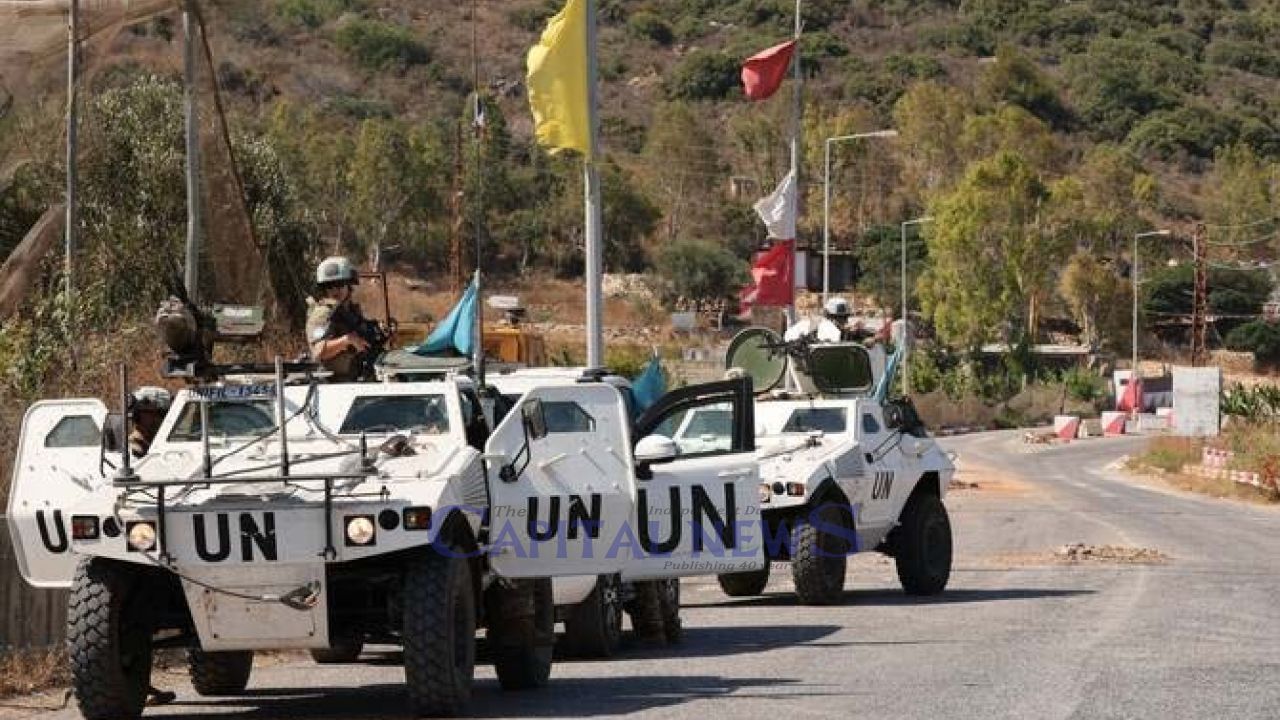
||
Special Correspondent: Lebanese officials are intensifying diplomatic efforts
to preserve an international security presence in southern Lebanon as the UN Interim Force in Lebanon
moves toward the end of its mandate.The future of UNIFIL and security arrangements in
southern Lebanon featured
prominently in Lebanese President Joseph Aoun’s meetings in Rome.Lebanon
is seeking to maintain UNIFIL’s presence until stability is restored, viewing
the peacekeeping force as an “international umbrella supporting the Lebanese
Army in implementing Resolution 1701.”If an extension of the mission cannot be secured,
Lebanese officials are exploring the possibility of deploying forces from
countries that have expressed a willingness to maintain a presence in Lebanon, including Italy,
France and Spain.Such deployments could operate either under direct
agreements between Lebanon
and the participating states, or through the UN.The Lebanese presidency’s media office said Aoun, who
met his Italian counterpart Sergio Mattarella, also held talks with Prime
Minister Giorgia Meloni on Friday night.The discussions covered “the period following the end
of UNIFIL’s mission, the support provided by Italy
to Lebanon,
and the situation in the south in light of continuing Israeli attacks.”They also addressed “the need to pressure Israel to abide by the framework agreement
reached during Lebanese-Israeli negotiations under US
sponsorship in Washington, and Italy’s
role in consolidating security and stability in the south.”Aoun had earlier discussed southern Lebanon and UNIFIL with Vatican
officials. Prime Minister Nawaf Salam is also expected to raise the issue in New York City on the
sidelines of the UN General Assembly in September.UNIFIL, meanwhile, vacated an observation post near
the Khardali
Bridge
two days ago.The bridge crosses the Litani River and links the
Nabatieh and Marjayoun districts, between the towns of Kfar Tebnit and Deir
Mimas.A Lebanese Army Command source told Arab News: “The
evacuation took place as part of UNIFIL’s gradual withdrawal from Lebanon.
There is a Lebanese Army checkpoint operating at the same location.”In August 2025, the UN Security Council unanimously
approved a final extension of UNIFIL’s mandate until Dec. 31, 2026, followed by
a coordinated and safe drawdown and withdrawal beginning on that date and
continuing for one year, until the end of 2027.Last December, UNIFIL began implementing a plan to
reduce its troop strength by 25 percent following cuts to the mission’s budget.Before the Security Council decision was adopted, US Ambassador to the UN Mike Waltz said Washington was seeking
to reduce the size of UNIFIL so that Hezbollah could not “use it as cover for
its operations.”Retired Lebanese Army Maj. Gen. Abdul Rahman
Shehaitli, who previously represented Lebanon
in indirect negotiations with Israel
over border demarcation and the occupation of the village
of Ghajar, told Arab News that
UNIFIL’s withdrawal would leave Lebanon
politically exposed.“The more than 40 countries contributing troops to
UNIFIL have exerted pressure to maintain stability in southern Lebanon
because they have units deployed on the ground that they need to protect,” he
said.“If these forces withdraw, those countries will no
longer have the same level of interest in exerting pressure in that direction.”Shehaitli said UNIFIL’s presence also helped prevent
direct friction between the Lebanese and Israeli armies.The force had additionally played an important role in
supporting villages in southern Lebanon
economically, socially, medically, educationally and through humanitarian
assistance, he said.Shehaitli said Aoun was seeking international backing
for any force that might eventually replace UNIFIL.“The president is seeking international cover for any
force that could be formed as an alternative to UNIFIL, with the mission of a
task force and a role broader than that currently played by UNIFIL,” he said.Asked which European countries could take part in such
a force, particularly France,
Shehaitli said he believed “the American side wants to remove French influence
from Lebanon and Syria, and
replace it with American influence.”Earlier this week, Aoun told a parliamentary
delegation that presented him with a petition signed by 86 MPs calling on the
UN to extend UNIFIL’s mandate that “keeping UNIFIL remains the best option for Lebanon.”The parliamentary delegation also handed a copy of the
petition to a visiting delegation from the American Task Force on Lebanon.UNIFIL’s responsibilities include monitoring the
situation on the ground and recording violations, supporting efforts to
maintain the cessation of hostilities, assisting the Lebanese Army in deploying
and establishing authority south of the Litani River, overseeing tripartite
meetings in Naqoura aimed at preventing escalation, and providing logistical
and technical support to local communities.However, UNIFIL’s credibility has come under
increasing scrutiny after Israeli forces operating inside the peacekeepers’
area of operations uncovered what Israel says are extensive Hezbollah military
facilities built over two decades, including drone launch sites, observation
towers, complex tunnel networks and large weapons stockpiles.Israel’s
case to Washington
has gone beyond accusations that UNIFIL merely observed Hezbollah’s activities
without taking action.According to Israel,
UNIFIL and the Lebanese Army effectively served as a “front for Hezbollah,”
with Israel
alleging that they not only overlooked the group’s activities, but also allowed
it to operate, construct tunnels and store weapons within their areas of
operation.Under the framework agreement, UNIFIL would have no
role in the designated pilot areas.Instead, the Lebanese Army would assume responsibility
for security in southern Lebanon,
while countries agreed upon during the Rome
negotiations would take part in a mechanism to monitor the pilot areas and the
army’s operations there.Those operations are aimed at disarming Hezbollah,
dismantling its military infrastructure and ensuring Israel’s
withdrawal from the areas concerned.
© 2025 The Daily Capital News