প্রকাশের তারিখ : ১৬ সেপ্টেম্বর ২০২৬
RMG sector eyes $100b export target amid energy, finance challenges
||
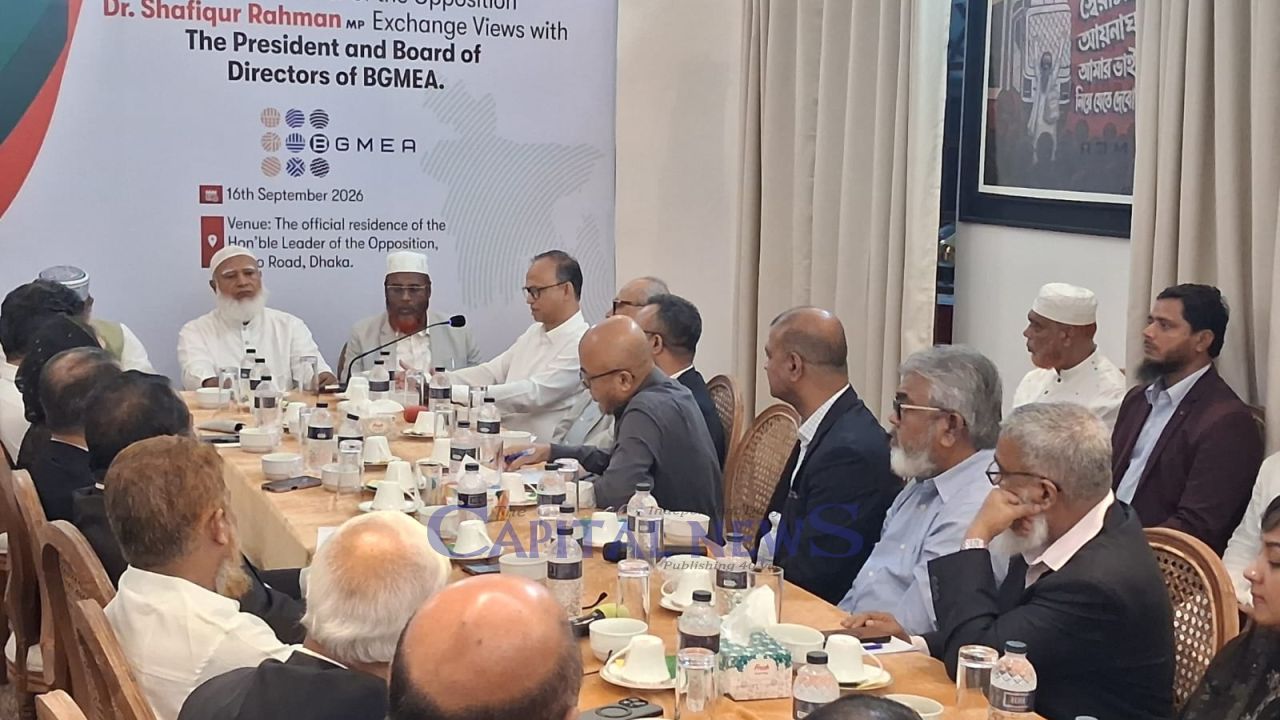
BGMEA leaders hold an exchange of views with Opposition Leader Dr. Shafiqur RahmanMM Rahmatullah: Bangladesh’s garment industry has the potential to raise
annual exports to US$100 billion, but addressing energy shortages, high lending
rates, changing global trade conditions and the challenges of the country’s
post-LDC graduation period will require urgent and coordinated action, industry
leaders have said.They also stressed the importance of political stability and
government support in sustaining production, investment and export growth in
the country’s largest export-oriented industrial sector.The issues were discussed at a meeting between leaders of
the Bangladesh Garment Manufacturers and Exporters Association (BGMEA) and
Bangladesh Jamaat-e-Islami Ameer Dr Shafiqul Rahman at the Opposition Leader’s
official residence on Minto Road in Dhaka on Tuesday evening.The meeting reviewed the current state of the readymade
garment (RMG) industry, production and exports, gas and electricity shortages,
fuel supply, high bank interest rates, international market conditions, the
possible impact of LDC graduation and the sector’s future prospects.According to BGMEA leaders, around 4 million workers,
officers and employees are directly associated with the garment industry, while
nearly 3,000 entrepreneurs are directly involved in the sector. Its performance
therefore has a significant bearing on employment, export earnings and the
wider economy.At the meeting, BGMEA representatives highlighted the
possibility of increasing Bangladesh’s garment exports to $100 billion from the
current level.They, however, said this ambition could not be achieved
without maintaining production capacity and resolving persistent
infrastructure, energy and financial constraints facing manufacturers.BGMEA President Mahmud Hasan Khan Babu said the industry’s
problems were discussed in detail with the Opposition Leader, who listened to
the concerns with sincerity and offered suggestions.He said government cooperation was essential to resolving
the sector’s immediate problems and also expressed expectations that the
opposition would play a responsible and constructive role in supporting the
industry.The supply of gas, electricity and other forms of energy
emerged as one of the most pressing issues at the meeting.BGMEA leaders said continued disruptions in energy supply
could further affect factory production in the coming days. They called for
swift and effective measures to ensure uninterrupted energy supplies to
factories and maintain normal industrial operations.For an industry dependent on timely production and shipment
schedules, prolonged disruptions can create additional pressure on
manufacturers, workers and exporters.High interest rates on bank loans were also identified as a
major challenge for garment entrepreneurs.Industry leaders said expensive financing was putting
additional pressure on businesses at a time when manufacturers were already
dealing with rising operational challenges and uncertainty in international
markets.The meeting also discussed changes in the global trade
environment and the need to prepare well in advance for the potential
consequences of Bangladesh’s graduation from the Least Developed Country (LDC)
category.The participants stressed the importance of taking timely
measures to strengthen the sector’s competitiveness before the post-graduation
environment becomes more challenging.Political stability was another issue raised by the BGMEA
delegation.Industry leaders said a stable political environment was
important for keeping production, investment and export activities running
smoothly. They emphasised that businesses need a predictable environment to
make investment decisions and maintain long-term production plans.Jamaat Secretary General and former MP Mia Golam Porwar said
the meeting had been arranged as part of the opposition’s responsibility to
understand the concerns of major sectors of the national economy.He said the purpose was to learn about the contribution of
the garment industry to the economy and employment, its current difficulties
and its future potential.“The garment industry is extremely important for the
country’s economy and employment,” he said, stressing that the government,
opposition parties and all relevant stakeholders should work together to
address the sector’s problems.Porwar said Jamaat-e-Islami would play a responsible role
inside and outside Parliament on issues concerning national interests.He said the opposition would support government initiatives
that serve the public interest while raising objections to decisions or
measures that go against public interests.He also stressed the importance of involving experts in
finding effective solutions to major national issues.In particular, he said the party was prepared to extend
expert-based assistance to the government, where necessary, on important
economic issues including the energy crisis.The Jamaat side also said that, as an opposition party elected
by the people, it had a responsibility to raise public concerns in Parliament
and support positive government initiatives while speaking up for legitimate
public demands both inside and outside Parliament.BGMEA leaders expressed satisfaction at being able to
participate in the discussion at the invitation of the Opposition Leader after
a long gap.They presented their views on the garment industry’s current
challenges, future opportunities and development plans, highlighting the need
for coordinated action to protect the sector’s competitiveness and unlock its
export potential.The meeting was attended by Jamaat Secretary General Mia
Golam Porwar, Assistant Secretary Generals Maulana Rafiqul Islam Khan and Dr
AHM Hamidur Rahman Azad, Advocate Ehsanul Mahbub Zubayer and other party
leaders.
Representing BGMEA were President Mahmud Hasan Khan, First
Vice-President Selim Rahman, Vice-Presidents Md Rezwon Selim, Mizanur Rahman,
Bidya Amrit Khan, Md Shehab Uddin Chowdhury and Mohammad Rafiq Chowdhury, along
with chairmen and directors of various committees of the association.
© 2025 The Daily Capital News