প্রকাশের তারিখ : ২৩ সেপ্টেম্বর ২০২৬
Bangladesh economy to turn around in coming years, says France-Bangladesh Chamber president
||
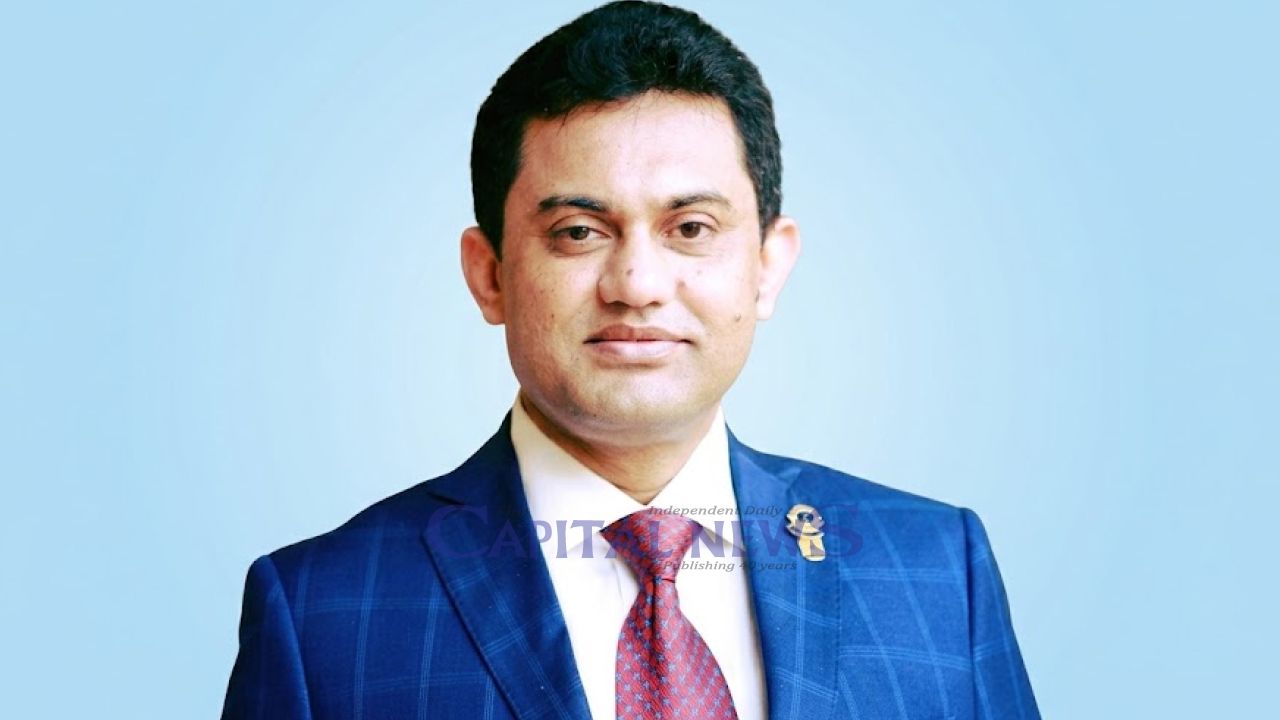
By Imtiaz Ahmed and Samia Tabassum: Bangladesh’s economy is expected to regain momentum in the coming years as the government pursues a target of building a trillion-dollar economy by 2034 through higher exports, investment, industrial diversification and financial discipline, said Mohammad Ershad Hussain Rana, president of the France-Bangladesh Chamber of Commerce and Industry (CCIFB) and chairman of Dawn Group of Companies.Speaking to this newspaper recently, Rana said the government’s trillion-dollar target should be viewed as an economic development plan centred on expanding production, attracting investment and restoring stability in the financial sector.Prime Minister Tarique Rahman has publicly described the trillion-dollar target as a plan rather than a slogan, saying the government intends to double the size of the economy during this decade through exports, investment and financial discipline. The government’s FY2026-27 budget has also identified the one-trillion-dollar economy target for 2034 as a central long-term objective.The BNP-led government took office following the February 12, 2026 parliamentary election. According to the Inter-Parliamentary Union, the BNP won 210 of the 300 directly elected seats, while the party subsequently formed the government under Tarique Rahman. The election therefore gave the BNP a substantial majority among the directly elected seats, although the full Parliament comprises 350 seats, including 50 reserved seats for women.Rana said Bangladesh nevertheless faces substantial economic challenges, including elevated inflation, pressure on the banking sector, energy insecurity, geopolitical tensions and disruptions to global supply chains.The International Monetary Fund has similarly warned that Bangladesh continues to face significant fiscal, financial-sector and inflationary pressures. Following its July 12-16 mission to Dhaka, the IMF projected that economic growth would moderate to 3.5 percent in FY2027 and could fall below 3 percent over the medium term in the absence of decisive reforms. The Fund also highlighted elevated banking-sector stress and the need for stronger revenue mobilisation, subsidy rationalisation and banking-sector restructuring.Diversifying beyond garments: Rana said the government's economic strategy should focus on transforming Bangladesh into a manufacturing hub and a gateway to the wider region.“Garments built our first growth story. Now we want electronics, pharmaceuticals, light engineering and the green industry to build the next one. We want factories that create jobs and jobs that create dignity,” he said.Employment generation, he added, would remain one of the country's most important economic challenges.Nearly two million young Bangladeshis enter the labour market every year, according to the World Bank, while the International Labour Organization has also highlighted persistent employment and underemployment challenges affecting young people.Rana said industrial diversification, skills development and increased domestic and foreign investment would therefore be essential to create productive employment for the country's growing working-age population.Bangladesh-France economic relations: Highlighting the economic dimension of Bangladesh-France relations, Rana said the two countries have considerable scope to expand trade and investment.French Ambassador to Bangladesh Jean-Marc Séré-Charlet said on September 22 that bilateral trade between Bangladesh and France now exceeds €4.5 billion, representing significant growth over the past decade. He also said the relationship remains structurally imbalanced, with French imports from Bangladesh considerably exceeding French exports to Bangladesh. Nearly 95 percent of French imports from Bangladesh are textiles, particularly clothing and apparel, according to the ambassador.France's Ministry for Europe and Foreign Affairs previously reported that bilateral trade in goods reached a record €4.92 billion in 2022, with French purchases from Bangladesh amounting to approximately €4.7 billion. Textiles accounted for about 98 percent of those purchases at that time.Rana said Bangladesh should seek to diversify its exports to France beyond garments, particularly through pharmaceuticals, leather, ceramics, jute products, food processing and digital technologies.France has identified infrastructure modernisation, energy, transport, water and sanitation and communications as areas in which French companies have opportunities in Bangladesh. French companies already have a presence in sectors including cement, LPG distribution, agrifood, cosmetics, logistics and industrial services.Scope for stronger bilateral investment: Bangladesh and France have recently expressed renewed interest in expanding bilateral cooperation.During a September 17 meeting between French Ambassador Séré-Charlet and State Minister for Foreign Affairs Humaiun Kobir, Bangladesh encouraged greater French investment in infrastructure, renewable energy, space, technology and pharmaceuticals. The two sides also discussed trade, investment, defence, aviation, education, culture and human-capital development.On September 13, State Minister for Foreign Affairs Shama Obaid Islam also urged French senators to increase investment in Bangladesh and called for greater access to the French market for diversified Bangladeshi products, including pharmaceuticals, leather, ceramics and jute products.Rana said the growing political and economic engagement between Dhaka and Paris creates an opportunity to develop a broader relationship based on investment, technology transfer, industrial cooperation and market diversification.Reopening closed industries: Rana also welcomed the government's initiative to bring long-closed state-owned factories and mills back into operation.Prime Minister Tarique Rahman directed authorities in July to complete the process of reopening long-shut government-owned factories by 2026, while accelerating privatisation and attracting domestic and foreign investment. The meeting also called for bureaucratic bottlenecks to be removed to speed up implementation.Rana said reopening viable industrial units, particularly in the jute and textile sectors, could contribute to employment generation and help revitalise economic activity in rural areas.He said such initiatives should, however, be accompanied by commercially viable management, technological modernisation, professional governance and appropriate private-sector participation.Energy security remains a major concern: Rana identified energy security as another major challenge for Bangladesh.The Middle East conflict that began on February 28, 2026 disrupted global energy markets and created additional risks for countries dependent on imported fuel and LNG. The IMF has said the conflict increased Bangladesh's import and subsidy costs and renewed inflationary pressures.Bangladesh's energy authorities have also acknowledged the vulnerability created by disruptions around the Strait of Hormuz. In April, the government said it was diversifying sources and routes of fuel imports to maintain supplies.Prime Minister Tarique Rahman has said the government is taking immediate measures to address the gas and electricity crisis and is pursuing a long-term solar-power strategy aimed at reducing dependence on imported energy.Rana said Bangladesh would need a combination of domestic exploration, renewable energy, improved transmission and distribution systems, greater energy efficiency and expanded refining capacity to strengthen long-term energy security.Eastern Refinery expansion: He also highlighted the importance of the modernization and expansion of Eastern Refinery Limited (ERL).The government and Islamic Development Bank signed a US$1.004 billion financing agreement on September 3 for the modernization and expansion of ERL. According to the Economic Relations Division, the project is expected to increase Bangladesh Petroleum Corporation's refining capacity from 1.5 million metric tonnes to 4.5 million metric tonnes annually, while enabling production of Euro-5-standard petroleum products and reducing dependence on imported refined fuel.The expansion is expected to strengthen Bangladesh's energy security and reduce foreign-exchange expenditure on imported refined petroleum products.Rana also stressed the importance of transforming Bangladesh's economic zones into modern, environmentally responsible and investment-friendly industrial hubs.He said industrial expansion should be accompanied by stronger environmental standards, green technology, efficient waste management and sustainable use of energy and water resources.“Industrialisation and environmental protection must move together,” he said, adding that Bangladesh should seek to attract investment in industries that create jobs while meeting increasingly stringent international environmental and sustainability requirements.While the government's long-term ambition is to build a trillion-dollar economy by 2034, the IMF's latest assessment underlines the scale of the challenge.The Fund said Bangladesh continues to face fiscal and financial-sector pressures, high inflation and elevated banking-sector stress. It recommended stronger revenue mobilisation, rationalisation of subsidies, prudent fiscal and monetary policies, rebuilding foreign-exchange reserves and a comprehensive strategy to address weaknesses in the banking sector.The IMF's assessment also highlights the importance of improving employment outcomes and diversifying Bangladesh's industrial structure. Its 2026 Article IV analysis found that youth unemployment and the mismatch between education and available jobs remain significant challenges, while non-garment manufacturing remains relatively underdeveloped.Rana said Bangladesh nevertheless has significant opportunities if economic reforms, investment, industrialisation and export diversification are implemented effectively.“Bangladesh has the potential to emerge as a major manufacturing and investment destination in the region,” he said. “The priority now is to restore confidence, strengthen institutions, create employment and make the investment environment more predictable.”For Bangladesh, the path to a trillion-dollar economy will therefore depend not only on the size of the target but also on the pace and quality of reforms, investment, industrial diversification, energy security and job creation.
© 2025 The Daily Capital News