প্রকাশের তারিখ : ০২ অক্টোবর ২০২৬
The Rohingya Crisis: From Refuge to a Durable Political Settlement
||
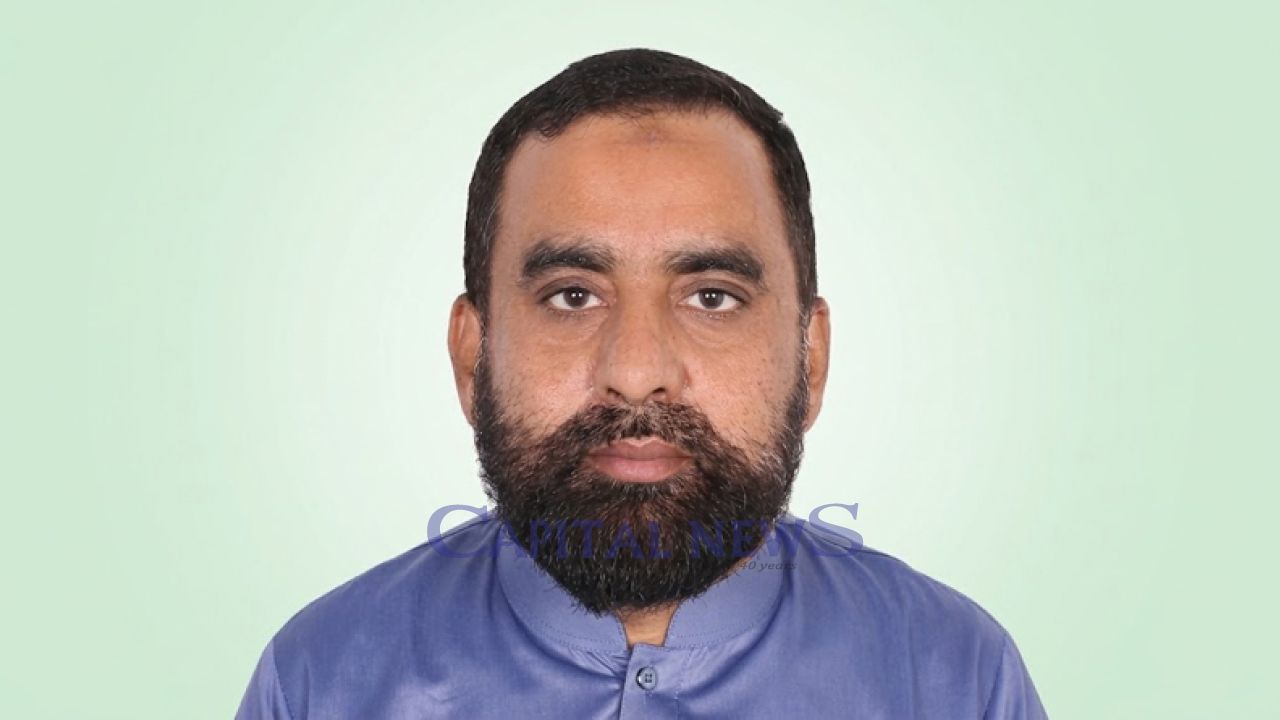
Md. Mukhlesur Rahman : The Rohingya crisis is often described as a refugee problem. That description is true, but incomplete. At its core, the crisis is about history, identity, citizenship, security and political belonging. More than a humanitarian response is required if the world is to prevent another cycle of displacement.At the centre of the debate is a fundamental historical question: where does the Rohingya story belong? The evidence presented in the accompanying historical study points to Arakan—today largely corresponding to Myanmar’s Rakhine State—as the geographical and historical centre of Rohingya identity. At the same time, the history of Arakan is inseparable from its long interaction with Bengal and the wider Bay of Bengal world.That distinction matters. Migration between Bengal and Arakan undoubtedly occurred, particularly during British rule. But colonial-era migration should not automatically be used to explain the origins of an entire population. Historical communities are rarely formed by a single migration event. Arakan developed as a frontier society where peoples, languages, religions and political influences interacted over centuries.The record concerning the name “Rohingya” is itself complex. Historical references, including Francis Buchanan’s 1799 account of Muslims in Arakan who reportedly called themselves “Rooinga,” form part of a wider debate about the development of modern Rohingya identity. The prudent conclusion is not that the identity has remained unchanged across centuries, but that present-day Rohingya communities have a longstanding historical relationship with Arakan.This historical complexity should encourage greater precision in public discourse. Describing the Rohingya simply as “Bengali immigrants” overlooks the distinction between established communities, seasonal labourers, later migrants and people whose families had lived in Arakan for generations. A 1961 account, for example, described Chittagong agricultural workers crossing into Arakan for the harvest and subsequently returning home—an important reminder that cross-border movement did not always mean permanent settlement.The citizenship question is equally central. The transition from empire to independent nation-states transformed ideas of borders, nationality and belonging. The 1982 Citizenship Law represented a major turning point in the exclusion of Rohingya from Myanmar’s recognised national community, with restrictions on movement, education, employment, land, marriage and political participation reinforcing marginalisation.The consequences have been devastating. The Rohingya have experienced repeated episodes of displacement, including major refugee movements in 1978 and 1991–92. The military operations beginning in August 2017 produced another enormous exodus, sending hundreds of thousands of people across the border into Bangladesh amid widespread allegations of killings, sexual violence, destruction and forced displacement.Bangladesh deserves recognition for providing refuge to a population of extraordinary size for years. But humanitarian shelter cannot become a substitute for a political solution. Bangladesh itself faces economic, social, environmental and administrative pressures, while prolonged refugee existence creates risks of poverty, insecurity, exploitation and despair. The supplied study therefore argues that the international community must address the causes of displacement rather than treating the camps as a permanent solution.Yet repatriation must also be approached with caution. Simply moving people across an international border does not necessarily constitute a durable return. If returnees lack citizenship, freedom of movement, land and property rights, personal security, access to education and healthcare, and meaningful political participation, displacement may merely assume another form.This is why any credible return process needs institutions as well as logistics. The proposed framework in the source material includes citizenship guarantees, property restitution or compensation, civilian protection, political representation, cultural and linguistic rights, international monitoring and non-discriminatory humanitarian access.One proposal deserving serious examination is a contemporary adaptation of the historical Mayu administrative concept in northern Arakan. The proposal is presented not as a predetermined constitutional answer, but as one possible institutional mechanism for reconciling territorial integrity with political security, representation and local self-government. Its feasibility would depend on negotiations, legal arrangements and acceptance by the communities concerned.Any future arrangement must, however, protect every community in Arakan. A just settlement cannot replace one form of exclusion with another. Rohingya security and political rights must exist alongside equal rights and protection for other ethnic, religious and local communities. Reconstruction, property recovery, education, livelihoods and public services should therefore be designed around equality and coexistence.If a credible framework for safe return cannot be negotiated, the source proposes that Bangladesh and international partners examine, through lawful multilateral processes, alternatives such as an internationally supported civilian protection or peace-zone mechanism. Such an option would raise difficult questions concerning sovereignty, mandate, consent and international law and should therefore be treated as a subject for diplomatic and legal examination rather than as an automatic solution.The broader lesson is clear: history should inform policy, but it should not be manipulated into political slogans. A responsible account must acknowledge both the longstanding Muslim presence in Arakan and migration from Bengal during the colonial period. Neither fact, by itself, adequately explains the modern Rohingya question.The international community now faces a practical test. Can it help create conditions in which Rohingya refugees can return voluntarily, safely and with dignity—and remain there with equal protection under law?The answer will require more than humanitarian assistance. It will require credible citizenship arrangements, security guarantees, reconstruction, political participation, international monitoring and sustained diplomacy. Bangladesh can continue to provide refuge, but it should not be expected to carry indefinitely a crisis whose roots lie beyond its borders.The Rohingya question should therefore be understood neither merely as a migration dispute nor solely as a humanitarian emergency. It is a question of historical belonging and contemporary rights. The ultimate objective should be a political settlement in which the Rohingya can live securely in their homeland while all communities of Arakan enjoy equal dignity, protection and opportunity.The challenge before the world is not simply to facilitate a return. It is to help create the conditions under which return can become a durable reality rather than the beginning of another cycle of displacement.Md. Mukhlesur Rahman Islamic Finance Specialist, Economist, Social and Political Thinker, Geopolitical Analyst, and Human Rights Activist.
© 2025 The Daily Capital News