প্রকাশের তারিখ : ১৯ অক্টোবর ২০২৬
Justice in Banking: Punish Fraud, Support the Struggling
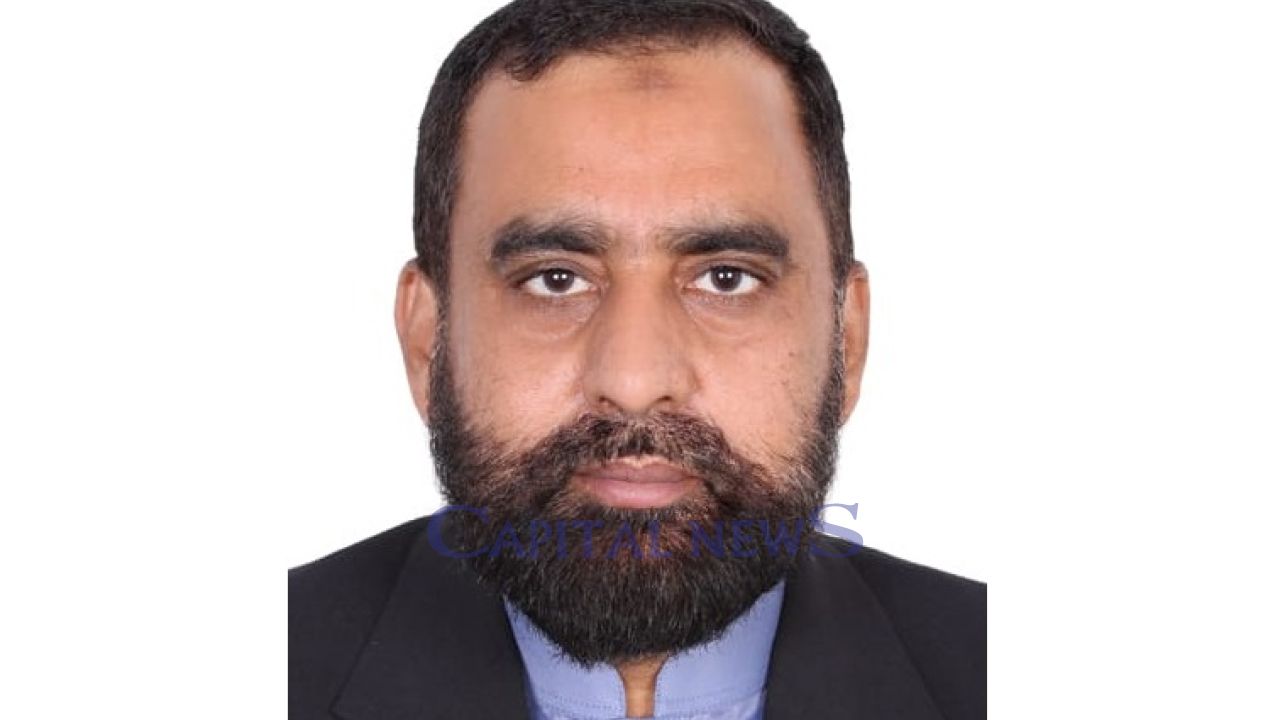
||
Not Every Loan Defaulter Is a Wrongdoer: Genuine Borrowers Facing Unavoidable Crises Deserve Special ConsiderationStrict action against wilful defaulters and fair treatment of honest borrowers facing unavoidable financial distress are essential to establishing discipline in the banking sector.Non-performing loans have emerged as a serious problem in Bangladesh’s banking sector. Their impact is no longer confined to banks’ financial statements; it also affects depositors’ interests, investment, employment, production and overall economic stability. Therefore, there is no alternative to controlling non-performing loans, ensuring the proper use of borrowed funds and taking effective measures to recover outstanding dues. However, one fundamental question cannot be overlooked in addressing this problem: Is it fair to treat borrowers who deliberately refuse to repay their loans in the same way as those who become unable to repay because of unavoidable circumstances?Whether we acknowledge it or not, the reality is that not all loan defaulters are alike. Some deliberately delay repayment through fraud, deception, misappropriation of funds or other dishonest practices. Others lose their financial capacity because of business downturns, natural disasters, abnormal market fluctuations, production disruptions, political instability or other unavoidable circumstances. In the first case, accountability must be ensured in accordance with the nature of the offence and the available evidence. In the second, special consideration should be given after assessing the borrower’s willingness to repay, actual financial condition and prospects for recovery.The inability to repay a loan is not the same as an unwillingness to repay it. Without recognising this distinction, it is virtually impossible to develop an effective and equitable solution to the problem of non-performing loans.The Reality of Non-Performing Loans and Their Economic ConsequencesAccording to Bangladesh Bank’s Financial Stability Report 2025, the total amount of classified loans in the country’s banking sector stood at approximately Tk 5,57,217 crore at the end of December 2025, accounting for 30.60 per cent of total loans. The corresponding ratio was 20.20 per cent at the end of December 2024. Subsequently, published figures indicated that classified loans had risen to Tk 5,88,704 crore by the end of March 2026.These figures raise serious questions about the quality of banking-sector assets, the soundness of lending decisions and the effectiveness of loan recovery mechanisms. When a substantial volume of loans remains unpaid, pressure mounts on banks’ liquidity and capital positions, financing for new entrepreneurs becomes more difficult, and concerns arise about the security of depositors’ money.However, an analysis of non-performing loans must go beyond the figures and examine the reasons behind them. Did a borrower obtain a loan through fraud, or did the borrower take a loan through legitimate means but subsequently encounter genuine business difficulties? Were the funds used for productive purposes or diverted elsewhere? Does the borrower possess assets and income, or is the borrower genuinely insolvent? Without finding answers to these questions, applying the same measures to every borrower cannot ensure justice.Another important issue deserves attention. Rescheduling or restructuring a loan to reduce the reported volume of non-performing loans should not automatically be treated as actual recovery. The effectiveness of such measures must be assessed by determining whether the borrower is making real instalment payments, whether the business is recovering and whether the bank is actually receiving its outstanding dues.Business Failure Is Not Always Evidence of DishonestyRisk is an inherent feature of business. When an entrepreneur starts a business, investment decisions are generally made after considering expected income, market demand, production costs, product prices and the capacity to repay loans. However, business operations do not always proceed according to plan.Raw material prices may rise sharply, demand for products may decline, imports and exports may be disrupted, or working capital may become tied up because of reduced cash flow or prolonged delays in collecting receivables. Under such circumstances, even a potentially viable enterprise may face temporary financial distress.Consider an entrepreneur who has established a manufacturing business using personal savings and bank loans. The enterprise employs a substantial number of workers. A sudden market downturn reduces sales and revenue, while bank instalments, employee salaries, electricity bills, raw material costs and other operating expenses continue to accumulate. The entrepreneur tries to keep the business running and maintains communication with the bank but cannot repay the loan instalments on schedule.Should this entrepreneur be treated in the same way as someone who has diverted borrowed funds elsewhere, concealed assets or deliberately withheld the bank’s money despite having the financial capacity to repay? In the interest of justice, these two situations must be distinguished.Of course, a borrower cannot automatically be declared honest or entitled to special consideration merely by claiming business failure. The borrower’s business accounts, financial statements, assets and liabilities, use of loan proceeds and willingness to repay must be independently examined. Eligibility for special consideration must be based on evidence, not identity, connections or influence.What Opportunities Exist Under Bangladesh Bank’s Policies?Bangladesh Bank’s existing policies provide certain opportunities for loan rescheduling and restructuring. The bank’s compilation entitled Prudential Regulations for Banks: Selected Issues emphasises the need to assess a borrower’s requirements, financial capacity, cash flow, financial statements, liabilities to other banks and the actual condition of the business when evaluating applications for loan rescheduling.At the same time, restrictions exist against using repeated rescheduling to conceal genuine financial weaknesses and against routinely rescheduling loans arising from fraud, irregularities or the diversion of borrowed funds. In other words, rescheduling is not an automatic entitlement; it depends on the applicable regulations, prescribed conditions and the bank’s assessment.In addition, Bangladesh Bank introduced special policy support in 2025 to facilitate the restructuring and recovery of distressed businesses and financial operations. Under a directive issued on 31 August 2026, the deadline for submitting applications under specified conditions was extended until 30 September 2026. For loans of Tk 1,000 crore or more, the framework also provided for repayment periods of up to 15 years and grace periods of up to two years. According to the directive, applications were to be resolved by 31 December 2026 after the required down payments had been collected.It is important to note that these special facilities apply to borrowers covered by the relevant policy framework; they are not general concessions available to every loan defaulter. Moreover, the application deadline expired on 30 September. Therefore, it would be inaccurate to present this arrangement as an opportunity that remains open for new applications.Nevertheless, these policy initiatives offer an important lesson: providing recovery opportunities to financially distressed businesses and protecting banks’ interests in recovering outstanding loans are not mutually exclusive objectives. With proper verification, realistic repayment plans and strict monitoring, efforts can be made to achieve both.Special Consideration Does Not Mean Loan WaiverWhen special consideration is proposed for borrowers facing unavoidable difficulties, a legitimate concern arises: Could such concessions encourage borrowers to become less willing to repay their loans?This concern must be taken seriously. If borrowers believe that missed repayments will routinely lead to repeated extensions, reductions in liabilities or eventual loan waivers, the culture of repayment may weaken. In economic terms, this could create moral hazard.Special consideration must therefore be conditional, evidence-based and subject to accountability. Borrowers should disclose their actual financial circumstances, provide details of their assets and liabilities, and commit to realistic repayment plans. Banks must ensure that the business has reasonable prospects of recovery and that the proposed measures are likely to improve loan recovery.Where appropriate, borrowers may be helped to return to regular repayment through an extension of the loan tenor, a revision of instalment schedules or an authorised restructuring plan. However, if a borrower provides false information, conceals assets, deliberately violates restructuring conditions or engages in fraud, appropriate action must be taken in accordance with applicable laws and regulations.Banks must also ensure that special concessions are not influenced by favouritism, political pressure or personal relationships. It would be unacceptable for large borrowers to receive preferential treatment while smaller entrepreneurs are denied fair consideration simply because of their size or lack of influence.The Accountability of Banks in Lending Must Also Be ExaminedDiscussions about loan defaults generally place greater emphasis on borrowers’ responsibilities. However, banks also have substantial responsibilities in lending and monitoring.Before approving a loan, banks are fundamentally responsible for assessing a customer’s financial capacity, business plan, cash flow, collateral and potential risks. After disbursement, monitoring the use of funds and identifying emerging risks in a timely manner are equally important.If a bank extends a loan without proper due diligence, approves a risky loan because of undue influence or fails to monitor how the borrowed funds are used, the reasons for that failure must also be investigated. If negligence or collusion involving bank officials, loan approval authorities, boards of directors or other responsible personnel is established through evidence, they too must be held accountable.However, a bank’s mistakes do not automatically extinguish a borrower’s obligation to repay the loan. The borrower’s liability remains subject to the loan agreement and applicable law. Rather, alongside loan recovery, any irregularities that contributed to the creation of the loan must also be investigated. Otherwise, pressure may be imposed on defaulters while the underlying causes of the problem remain unresolved.To establish good governance in the banking sector, transparency and accountability are essential at every stage, including loan approval, utilisation of funds, risk assessment, loan restructuring and recovery.Humanitarian Considerations for Borrowers in Islamic EconomicsIslam provides important guidance on how creditors should treat borrowers who are genuinely unable to repay their debts. Verse 280 of Surah Al-Baqarah in the Holy Qur’an instructs creditors to grant respite to a debtor facing hardship until the debtor becomes financially able to repay. It further states that remitting the debt, if the creditor is willing and able to do so, is better still. This guidance highlights the importance of compassion, patience and fair treatment in the relationship between creditors and debtors.However, this instruction does not mean that borrowers may deliberately refuse to repay their debts despite having the financial means to do so. Honouring a commitment to repay a debt is a moral responsibility of the borrower. Likewise, imposing unreasonable pressure on someone who is genuinely unable to repay because of financial hardship is inconsistent with the humanitarian principles of Islam.From the perspective of Islamic economics, the rights and responsibilities of both parties must be taken into account in financial transactions. Recovering a bank’s outstanding dues is important, but so is treating borrowers fairly when they face genuine hardship. Accordingly, a combination of firm accountability and humane consideration is consistent with the ethical teachings of Islamic economics.What Policy Reforms Are Needed?Several measures could help ensure fair assessment of borrowers facing unavoidable financial difficulties.First, a transparent and evidence-based system must be established to determine the reasons for loan repayment failures. A borrower’s intentions should not be conclusively judged solely on the basis of missed instalments.Second, opportunities for restructuring should be made available, within the applicable regulatory framework, to small and medium-sized entrepreneurs, farmers and productive enterprises facing genuine financial difficulties. Such support must be conditional on the prospects for business recovery, the borrower’s willingness to repay and the protection of the bank’s recovery interests.Third, transparent criteria, defined timelines and reasoned decisions should govern the processing of rescheduling and restructuring applications. Regular monitoring must also ensure that beneficiaries comply with the conditions imposed on them.Fourth, effective measures must be taken against fraud, deception, misappropriation of funds and deliberate evasion of repayment obligations. Influential borrowers must not be allowed to place themselves above the law.Fifth, proper due diligence before disbursement and effective monitoring afterwards must be ensured. Banks’ internal controls, risk management systems and board-level accountability should be strengthened.Sixth, alongside loan recovery, independent investigations should determine whether institutional failures, irregularities or collusion contributed to the creation of non-performing loans. This would help prevent similar problems in the future.Seventh, Bangladesh Bank, as the regulatory authority, should strengthen its supervision and oversight of banks.Resolving the problem of non-performing loans requires both firmness and fair consideration. Wilful defaulters must be held accountable, and legal action must be taken against fraud and the misappropriation of banking funds. A culture of repayment must be established. At the same time, realistic solutions must remain available to honest borrowers who have fallen victim to unavoidable circumstances.When a business collapses, the entrepreneur is not the only person affected. Employees may lose their jobs, suppliers may be deprived of their receivables, production may decline, and banks may be left with unrecovered loans. Conversely, when a viable enterprise is given an opportunity to recover following a proper assessment, the results may be positive in several areas: employment can be protected, production can continue and banks may have a better chance of recovering their money.However, irregularities must not be concealed, nor should liabilities be reduced unjustifiably in the name of saving a business. Special consideration must be based on eligibility, evidence, transparency and accountability.Not every loan defaulter is a fraudster; equally, claiming financial distress does not automatically entitle a borrower to special concessions. The facts must be established through impartial investigation and evidence.The objective of restoring discipline in the banking sector should not be limited to taking action against loan defaulters. It should also encompass protecting depositors’ interests, creating a favourable environment for productive investment, preserving employment and ensuring fair financial management.A balanced approach—combining strict action against wilful defaulters with humane and equitable consideration for honest borrowers facing unavoidable hardship—can provide an effective path towards achieving these objectives.Md. Mukhlesur RahmanEconomist, Social and Political Thinker, and Human Rights ActivistMake an smart andshort headline please.
© 2025 The Daily Capital News