প্রকাশের তারিখ : ০৬ এপ্রিল ২০২৬
Over 1.13M Bangladeshis Work Overseas: Minister
||
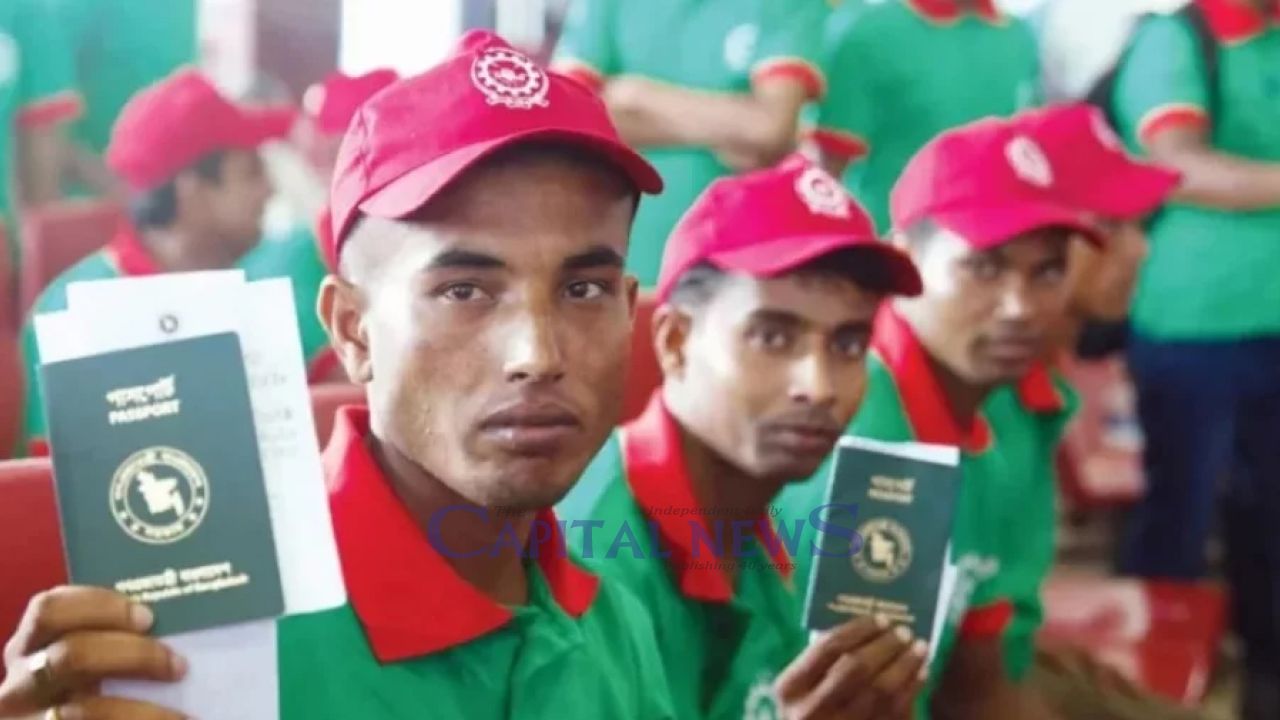
More than 1.13 million Bangladeshis found employment overseas in 2025, the government announced, as part of its ongoing efforts to expand foreign labor opportunities and ensure migrant welfare. Ariful Haque Chowdhury, minister of Expatriates’ Welfare and Overseas Employment, told parliament on Sunday that a total of 1,132,519 Bangladeshi workers were sent abroad last year under various government-led programs. “Sending workers overseas is a continuous process,” he said, emphasizing the government’s commitment to implementing its election pledges in the expatriate labor sector. The minister noted that Bangladesh is actively sending workers to major labor markets, including Saudi Arabia, Kuwait, Qatar, Romania, Seychelles, Portugal and Russia. To facilitate this, Bangladesh has signed memoranda of understanding (MoUs) or agreements with 18 countries for labor deployment.“Recognizing the importance of the overseas employment sector, the government has formulated an 180-day action plan to ensure efficient management and implementation of these programs,” the minister added.Efforts are also underway to reopen or expand markets in countries with limited labor access, such as Malaysia, Oman, the UAE and Bahrain, through ongoing diplomatic negotiations.Bangladesh has intensified efforts to send skilled workers to Japan under newly signed agreements. The ministry has established a dedicated “Japan Cell” and is prioritizing Japanese language training for prospective workers.Under these programs, Bangladesh plans to send 1,00,000 workers to Japan over the next five years as technical interns without any migration cost. This initiative also includes re-skilling returning workers to meet international labor market demands.The ministry oversees 104 technical training centers and six Institutes of Marine Technology (IMTs), offering training in 55 trades to develop a skilled workforce for both domestic and overseas employment.In addition, language training programs at the Dhaka Technical Teachers Training Institute (DTTI) aim to prepare workers for overseas deployment. Workers receive instruction in Japanese, Korean, English, Chinese (Mandarin and Cantonese), Arabic, Italian and German, with native speakers employed to help resolve language barriers.The government has also launched projects to train 1,00,000 drivers for both domestic and international employment and has signed agreements with countries including Cambodia, Japan and Seychelles to deploy specialized skilled workers.Bangladesh is now recognized as the ninth country eligible to send specialized skilled workers to Japan.Addressing concerns over the past syndicate-based recruitment in Malaysia, the minister clarified that the current government does not support sending workers through limited agencies or syndicates. Instead, it aims to open labor markets to all licensed recruitment agencies while maintaining transparency and accountability.“The Bangladesh High Commission in Malaysia is actively coordinating to ensure fair labor access, and the government remains committed to competition and oversight in the recruitment process,” he said.The government’s efforts underscore its dual focus on expanding overseas employment opportunities and enhancing the skill and preparedness of migrant workers, in line with both domestic priorities and international labor demand. Through language training, technical upskilling, and diversified labor markets, Bangladesh aims to secure better wages and improved conditions for its workers abroad.
© 2025 The Daily Capital News