প্রকাশের তারিখ : ০৪ নভেম্বর ২০২৬
Shibir urges PSC reform, transparency in public recruitment
||
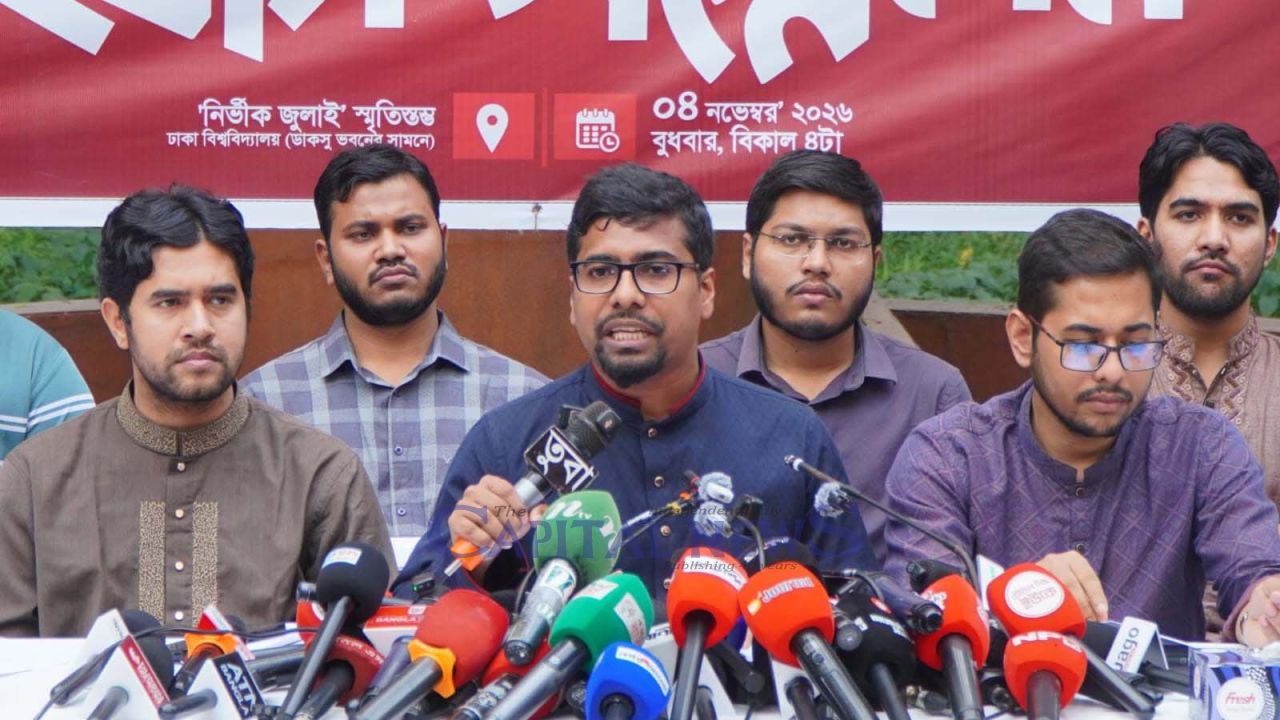
DU Correspondent: The Bangladesh Islami Chhatra Shibir has placed a 13-point set of demands before the government, calling for structural reforms of the Public Service Commission (PSC), transparency in public recruitment, an end to political interference in administrative appointments and an end to harassment of jobseekers in the name of police verification.The organisation said the aspirations of the July mass uprising included establishing a discrimination-free, merit-based and just state system, where competence, efficiency and integrity would determine appointments to public offices rather than political affiliation. At a press conference held on Wednesday (November 4) at the foot of the 'Nirbhik July' memorial at Dhaka University, Shibir Central President Nurul Islam presented the demands in a written statement.The organisation proposed restructuring the existing PSC into three separate constitutional commissions in line with the July National Charter, bringing recruitment to ninth and 10th-grade government posts under the PSC, and ensuring that political considerations do not influence public appointments.Nurul Islam alleged that despite the mandate expressed by 69 per cent of voters in the referendum and the public demand for state reforms, the government had yet to take visible steps to implement key reform proposals in the July National Charter.He expressed concern over what he described as growing political influence in appointments to important positions in the PSC, University Grants Commission (UGC), judiciary, financial institutions, university administrations and field administration.According to him, ignoring merit and seniority in appointments, attempts to increase viva voce marks and allegations of excluding qualified candidates through police verification are undermining the independence and neutrality of state institutions.One of the major proposals is to restructure the PSC into three separate constitutional commissions under the Constitution to ensure genuine institutional independence and freedom from political influence.Shibir proposed forming a selection committee comprising representatives of both the ruling and opposition parties in Parliament to appoint the chairpersons and members of the commissions.Under the proposed arrangement, each commission would have one chairperson and seven members, selected through a two-thirds majority vote of the selection committee. They would serve five-year terms. Nurul Islam said the government had not yet taken any visible initiative to implement these proposals.The organisation also praised several reform initiatives undertaken by the PSC under the interim government, led by Professor Mobassher Monem, and demanded that those initiatives be maintained.The reforms included code-based evaluation of written examination scripts to conceal candidates' identities, assessment of different questions in the same answer script by separate examiners, reducing viva voce marks from 200 to 100, introducing competency-based interviews instead of memory-based assessments, establishing a dedicated digital press to ensure question paper security and introducing the 'One Year, One BCS' policy to reduce recruitment backlogs.Expressing concern over the possible discontinuation of these initiatives, Nurul Islam said Professor Mobassher Monem, who had been appointed PSC chairman for a five-year term, resigned on August 18 before completing two years in office.He also referred to the subsequent resignations of two commission members, Dr Md Mahiuuddin and Professor Dr Mohammad Sohel Rahman, saying the developments had raised serious questions about the commission's institutional independence.Shibir also expressed concern over appointments to key positions in the PSC's examination control and information technology divisions, as well as a reported initiative to restore viva voce marks from 100 to 200. The organisation warned that such moves could create opportunities for political and personal influence in the recruitment process.It particularly called for the highest level of transparency and accountability at every stage of the 50th BCS examination, including evaluation of written and oral examinations, preparation of results and publication of the final outcome. Over 1,200 recommended primary teacher candidates allegedly denied appointment lettersThe press conference also raised concerns over allegations that more than 1,200 candidates out of 14,384 finally recommended for appointment as assistant teachers in government primary schools had not received appointment letters.Citing allegations by the affected candidates, Nurul Islam said no specific criminal records or reasonable grounds for withholding their appointments had been disclosed.He also referred to allegations that some candidates were excluded based on their political or family affiliations reflected in social media activities. Such discrimination, he said, contradicted the principle of equality of opportunity in public employment guaranteed under Article 29 of the Constitution.Shibir also criticised a proposal to increase viva voce marks in recruitment to government jobs under grades 11 to 20.According to the organisation, allocating excessive marks to oral examinations while reducing the importance of written examination performance could create opportunities for political and personal influence.The organisation demanded a transparent, accountable and time-bound police verification system for public recruitment.Referring to the 45th BCS gazette, Shibir said 56 candidates out of 1,807 recommended by the PSC had been excluded. It also mentioned the exclusion of 57 candidates in the first gazette of the 49th special BCS.Nurul Islam alleged that excluding recommended candidates without specific legal grounds under the pretext of police verification violated their constitutional and civil rights.Although authorities subsequently initiated re-verification and took steps to publish gazettes for some candidates following protests, such uncertainty in the recruitment process was unacceptable, he said.Shibir proposed that the objectives, verification criteria, responsible authorities and deadlines of police verification be made public in writing.It also demanded that verification be completed within a maximum of 15 working days through coordination between National Identity Card information and relevant official criminal records.If any adverse information is found, the concerned candidate must be informed in writing and given an opportunity to defend themselves, the organisation said. Effective provisions for correcting inaccurate information, appeals and reconsideration should also be introduced. The 13-point charter presented at the press conference includes:Structural reform of the PSC in accordance with the proposals in the July National Charter and formation of a transparent and neutral selection committee for appointing its chairperson and members.Bringing all recruitment to ninth and 10th-grade government positions under the PSC and preventing interference by ministries or other quarters in its recruitment, examinations and publication of results.Retaining the reforms introduced by the Monem Commission, including code-based script evaluation, competency-based interviews, digital security against question leaks and the 'One Year, One BCS' policy.Requiring ministries and government departments to provide the PSC with timely information on approved vacant posts, expected retirements, newly created positions and manpower requirements, followed by publication of a coordinated annual recruitment calendar.Completing the entire recruitment process within a maximum of 12 months from publication of the recruitment circular and regularly disclosing progress, expected result dates and reasons for delays through digital platforms.Preventing discrimination against candidates based on political identity, family political affiliations, personal connections or association with any organisation.Setting a specific timeframe of six to 12 months for completing general government recruitment and publicly disclosing the objectives, criteria and responsible authorities for police verification.Completing police verification within a maximum of 15 working days through coordination with National Identity Card information and relevant criminal records.Informing candidates in writing of any adverse findings during verification and ensuring opportunities for self-defence, appeals and reconsideration.Determining written, oral and practical examination marks according to the nature and responsibilities of the respective posts, while introducing uniform evaluation criteria for viva voce examinations.Preserving audio recordings of viva voce examinations to review unusual marks or inconsistencies and allowing candidates to appeal against questionable assessments.Ensuring secure technology, digital monitoring, modern examination management, skilled manpower and necessary infrastructure to prevent question leaks, proxy examinations and other irregularities.Reviewing relevant provisions of the Government Servants Act, 2018, including Sections 8, 19 and 20, to ensure that merit, integrity, competence, performance and public interest receive priority in recruitment, promotion, evaluation and accountability.Shibir leaders said implementation of the proposals would help reduce recruitment delays, prevent harassment of jobseekers and establish professionalism and accountability in public administration.The press conference was also attended by Shibir Secretary General Sibgatullah, Central Office Secretary Azizur Rahman Azad, Baitulmal Secretary Anisur Rahman, Publicity Secretary and DUCSU General Secretary SM Farhad, Information and Human Rights Secretary Tanzir Hossain Jewel, International Affairs Secretary Asif Abdullah, Planning and Development Secretary Sumon Sarkar, Dhaka University unit President and DUCSU Assistant General Secretary Mohiuddin Khan, Dhaka College unit President Moskakim Ahmed and other leaders of the organisation.The demands have brought renewed attention to the broader debate over public service recruitment, institutional independence and political neutrality in Bangladesh's administration. Ensuring equal opportunities for qualified candidates, transparent examinations and accountable verification procedures remains crucial to restoring public confidence in government recruitment.
© 2025 The Daily Capital News