প্রকাশের তারিখ : ১৬ মে ২০২৬
Smart AI Cameras Bring Order to Dhaka Roads
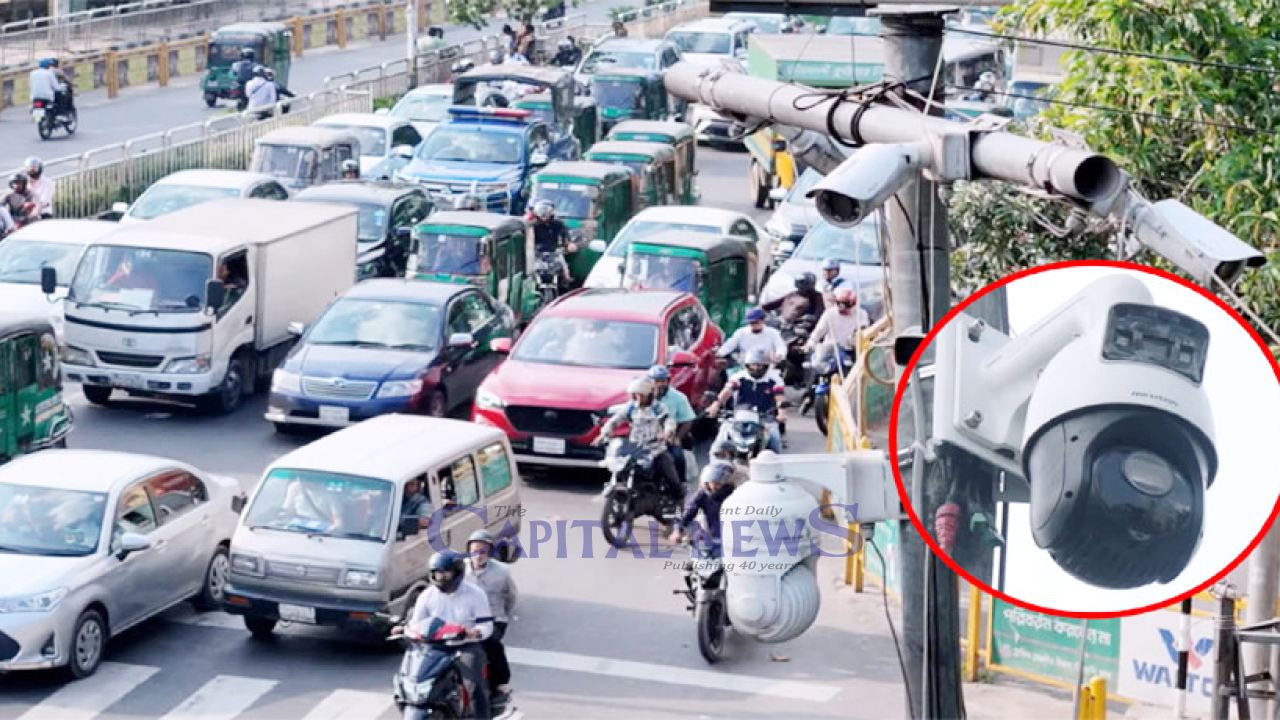
||
Special Correspondent: No one moves forward until the signal turns green. A traffic sergeant standing under the footoverbridge said with a smile, “Now there’s less need to blow the whistle, the cameras are doing the work.”The scene has begun to change after the installation of artificial intelligence (AI) technology-based cameras on various important roads in the capital. The culture of reckless driving, disobeying signals, driving on the wrong side of the road, and riding motorcycles without helmets that had developed over the years has seen a visible change for the first time under the strict surveillance of technology.The Traffic Division of Dhaka Metropolitan Police (DMP) says that after the introduction of AI cameras, the rate of traffic violations has significantly decreased in many areas. Especially among motorcyclists, the tendency to use helmets and adhere to lanes has increased. Many drivers on the road now know that somewhere, an "invisible eye" is watching them.High-powered smart cameras have been installed at various important intersections in the capital, including Shahbagh, Bijoy Sarani, Gulistan, Airport Road, Banani and Pragati Sarani. These cameras not only record video; through artificial intelligence, they can instantly detect signal violations, driving in the wrong direction, riding a motorcycle without a helmet, crossing the stop line, violating the designated lane, and even driving using a mobile phone.Traffic department officials said that after identifying the camera, the information is automatically sent to the server. Then, the process of filing a case or fine is started by identifying the vehicle's number plate. A DMP official said, "Earlier, drivers used to think that if the police don't see them, there is no problem even if they break the rules. Now they understand that technology is always watching."Change in behavior: A tour of various roads in the capital has shown that a large number of motorcycle drivers are now wearing helmets. Many are standing in the designated line instead of ignoring signals and moving forward. Some caution is also seen among bus drivers. We spoke to motorcycle driver Rakib Hasan at Farmgate. He said, "Earlier, I would sometimes break the signal. Now I feel scared. If I get caught on camera, I will be immediately charged." A rideshare driver said, "I used to obey the rules in front of the police, but now I have to obey them everywhere. Because you can't tell where the cameras are."Discipline due to fear of technology Experts say that lack of law enforcement has been a major problem on Dhaka's roads for a long time. As a result, a mentality of "if you don't get caught, it's not a crime" has been created among drivers. AI cameras have hit that culture. According to urban planners, technology-based surveillance is playing an effective role in changing the behavior of drivers. Because even though it is not possible for humans to monitor everywhere, AI cameras can work 24 hours a day. However, they also warn that it is not enough to just install cameras; it is also important to ensure the correct use of its information, a transparent penalty system, and citizen trust.Are accidents decreasing? Traffic police officials say that in some cases, accidents and chaos have decreased in areas where AI cameras are active. In particular, traffic congestion at intersections has also come under control due to a decrease in signal disobedience and wrong-way driving. However, transportation experts say that this is still an initial change. To get positive results in the long run, integrated smart traffic management is needed across the entire city.A new chapter in Dhaka's traffic culture. According to experts, the use of AI technology on Dhaka's roads is not just surveillance; it is the beginning of a cultural change in urban traffic management. Because until now, following the rules on the road was an "optional" matter for many. Now technology is reducing that opportunity. On the one hand, this is creating accountability among drivers, and on the other hand, the common people are also getting some relief. Afsana Rahman, a resident of the capital, said, “Earlier, I was afraid to cross the road. Now, at least it seems like the cars stop a little.”The challenges are not small. However, the reality has not changed completely. Reckless driving, footpath encroachment, illegal parking and traffic chaos still persist in many areas. Many drivers are complaining that incidents of harassment are also happening in some places due to misidentification. Apart from this, there are also questions about technology maintenance, electricity and internet connectivity, information security and skilled manpower.According to experts, to make AI cameras effective, transparent data management, quick complaint resolution, and corruption-free implementation must be ensured. “Let it become a habit, not a fear.” According to traffic experts, even if people start following rules out of fear of technology, it must gradually be transformed into a civic culture. Because in a modern city, traffic discipline is not just a matter of law enforcement; it is also part of civic responsibility. In their words, “If the people of Dhaka learn to obey the rules out of awareness, not fear of cameras—then this change will be permanent.” Standing at a busy intersection in the capital, a new reality is now visible—the silent surveillance of cameras has become more powerful than the sound of whistles.
© 2025 The Daily Capital News