প্রকাশের তারিখ : ২৭ জুন ২০২৬
Bangladesh weighs China’s economic corridor proposal as Dhaka deepens strategic partnership
||
MM Rahmatullah: Bangladesh is carefully
assessing China's proposal to establish a Bangladesh-Myanmar-China Economic
Corridor, with the government emphasizing that no decision has yet been made on
the ambitious connectivity initiative despite growing momentum in bilateral
relations.Foreign Minister Dr
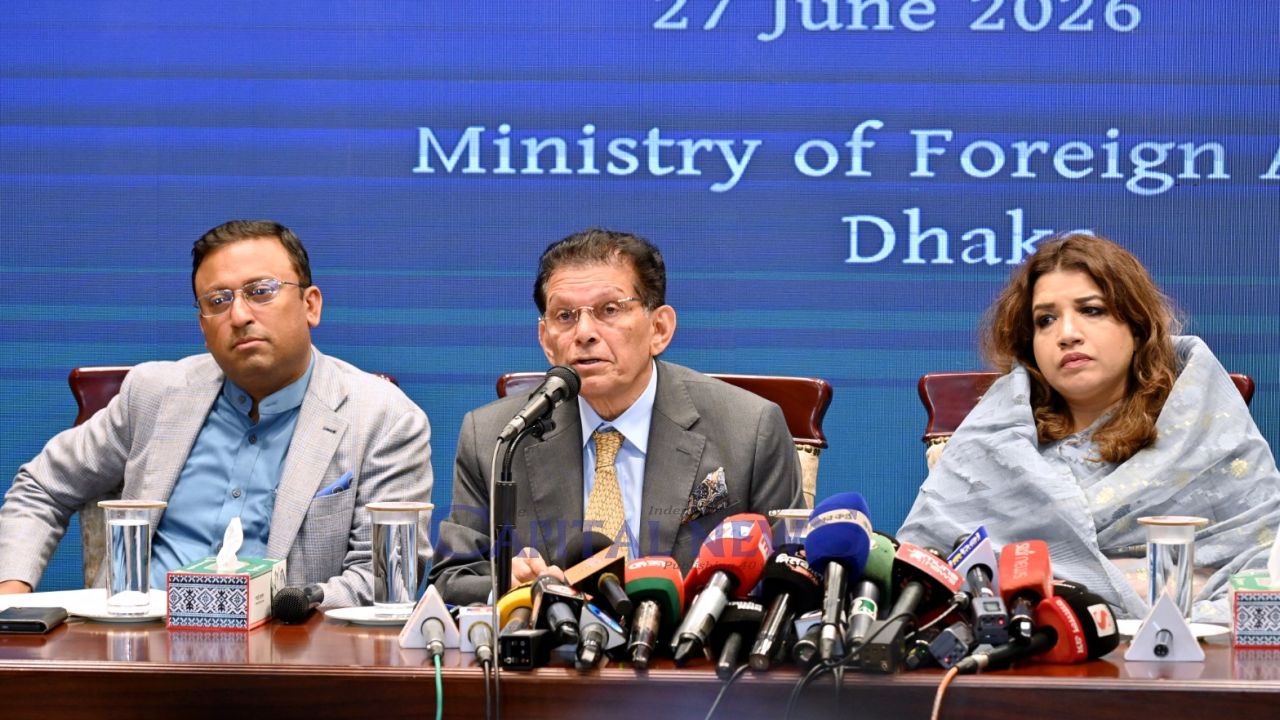
Khalilur Rahman made the clarification at a press briefing at the Ministry of
Foreign Affairs on Saturday, following Prime Minister Tarique Rahman's
high-profile visit to Beijing."The government is
exploring China's proposal on the corridor. We still have not taken any
position," the foreign minister said, underscoring that Dhaka is
approaching the proposal with caution while evaluating its economic and
strategic implications.He stressed that
reducing transportation costs and enhancing regional connectivity remain key
considerations for Bangladesh in examining the proposed corridor.The proposal was
formally placed by Chinese President Xi Jinping during bilateral talks with
Prime Minister Tarique Rahman at the Great Hall of the People in Beijing on
June 26. The initiative is expected to improve trade, logistics and
cross-border connectivity among Bangladesh, Myanmar and China if implemented.Highlighting the
broader significance of the Prime Minister's China visit, Khalilur Rahman
announced that Bangladesh and China have agreed to elevate their bilateral
relationship to what he described as the "highest level" of
partnership.According to the
foreign minister, only a limited number of Asian countries—including Thailand,
Sri Lanka, Cambodia, Pakistan and Indonesia—currently enjoy such a
comprehensive level of strategic engagement with Beijing."Bangladesh has
now joined that group," he said, describing the development as a
reflection of growing mutual trust and the increasing strategic importance of
Bangladesh-China relations.Meanwhile, diplomatic
observers view the announcement as one of the most significant outcomes of the
Prime Minister's visit, potentially paving the way for expanded cooperation in
infrastructure, trade, investment, technology and regional connectivity.Dr Khalilur Rahman also
revealed that discussions on the proposed Teesta River Comprehensive Management
and Restoration Project have advanced considerably.He said both sides have
agreed to move forward with a feasibility study, marking an important step
toward the long-discussed initiative aimed at river management, flood control,
irrigation and environmental restoration.The project has long
been regarded as a priority for Bangladesh, particularly for improving water
resource management and supporting economic activities in the country's
northern region.Responding to questions
about the tangible outcomes of the China visit, Khalilur Rahman rejected
suggestions that the success of the tour should be measured solely by financial
commitments or aid packages."We did not go with
a begging bowl," he said."The purpose of this
visit was to determine the future direction of Bangladesh-China relations. Once
that strategic alignment is achieved, other opportunities will naturally
follow."His remarks signaled
the government's intention to pursue a relationship with China based on
long-term strategic cooperation rather than short-term economic assistance.While the proposed
economic corridor could significantly enhance regional trade and
transportation, Bangladesh appears determined to evaluate the initiative
through the lens of national interest, economic feasibility and regional
stability before taking any formal position.The government's
cautious approach also reflects the geopolitical sensitivity surrounding
regional connectivity projects, particularly those involving multiple
neighboring countries.
As Dhaka and Beijing
elevate their partnership to a new level, the coming months are expected to
reveal how Bangladesh balances economic opportunities with its broader foreign
policy priorities and strategic interests.State Minister for Foreign Affairs Shama Obaed Islam, BIDA Executive Chairman Chowdhury Ashik Mahmud Bin Harun, Foreign Secretary Asad Alam Siam and senior officials of the foreign ministry were present at the briefing.
© 2025 The Daily Capital News