

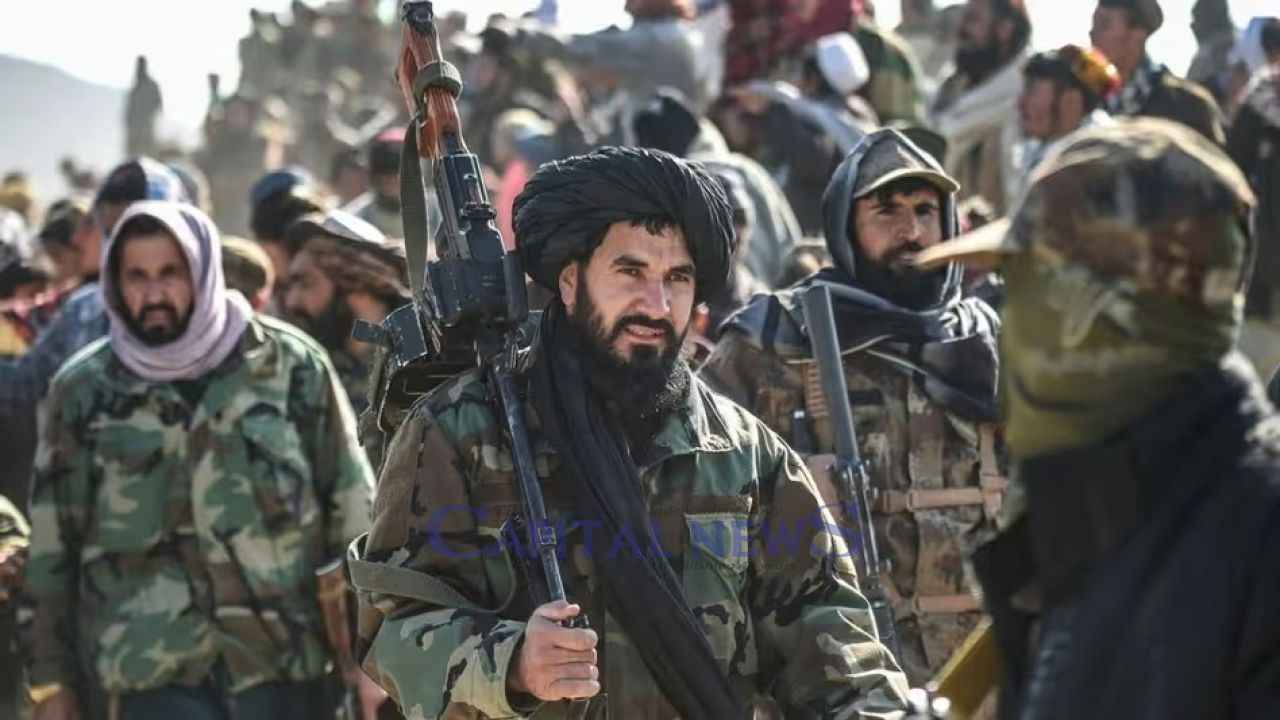
Capital News Desk: Russia’s Foreign Ministry has said that between 20,000 and 23,000 terrorist fighters are currently operating in Afghanistan, with more than half of them foreign nationals. According to the ministry’s report, the total number of terrorists from international organisations active in Afghanistan is estimated at 20,000 to 23,000, and more than half are foreign fighters. Key groups include ISIS, with about 3,000 members; the Tehreek-e-Taliban Pakistan (TTP), with between 5,000 and 7,000 members; Al-Qaeda, numbering between 400 and 1,500 members; the Islamic Movement of East Turkestan (ETIM), with 300 to 1,200 members; the Islamic Movement of Uzbekistan (IMU), now called the Islamic Party of Turkestan, with 150 to 500 members; and Jamaat Ansarullah, with around 150 to 250 members.
The report said the
TTP, mainly based in Afghanistan’s southeast and east, continues to focus its
attacks on Pakistan, heightening tensions between the two countries.
It highlighted the
activities of ISIS-K (Khorasan), which it said has set up training camps and
sleeper cells in several regions of Afghanistan. While ISIS-K does not pose a
direct threat to the current Taliban regime, its attacks have significant
“reputational consequences”, aimed at undermining public confidence in the
Taliban’s ability to maintain security.
The group is mainly
active in the east, north and northeast and is seeking to expand into Central
Asia to establish a new caliphate, the report said. It added that Afghan
security forces are actively neutralising ISIS cells despite continued attacks.
Operations have led to the elimination of small groups of terrorists and the
discovery of weapons caches. The Taliban have also taken action against mosques
where ISIS-like extremist ideas were preached, removing such individuals from
state institutions and the education sector.
Despite a reported
reduction in ISIS activity, high-profile attacks continued into 2025 and 2026,
including an assault on theologians in Baghlan, the killing of a Chinese
citizen in Takhar, and the bombing of a crowd in Kunduz. Al-Qaeda is said to
maintain extensive networks in provinces including Ghazni, Laghman, Kunar,
Nangarhar, Nuristan, Parwan and Urozgan. The report said the group is using
Afghanistan as a base to expand its regional influence by building ties with
other extremist organisations.
The ministry also said
the Afghan armed opposition remains fragmented and largely ineffective in
challenging the Taliban. Groups such as the National Resistance Front of
Afghanistan and the Afghanistan Freedom Front have carried out limited raids
and surprise attacks, mostly confined to Panjshir, Badakhshan and Baghlan.
On narcotics, the
report said Afghanistan remains a major producer despite Taliban efforts to
curb poppy cultivation. The area under poppy cultivation fell by 20% in 2025,
but methamphetamine production has surged. The smuggling of synthetic drugs,
particularly methamphetamine, increased by 50% from 2023 to 2024, the report
said.
Subject : World
বৃহস্পতিবার, ২৬ ফেব্রুয়ারি ২০২৬
Publish Date : 26 February 2026

Write Your Opinion