The Daily Capital News

Feature

Malaysia-Bangladesh labour ties need clarity, trust and a fresh start

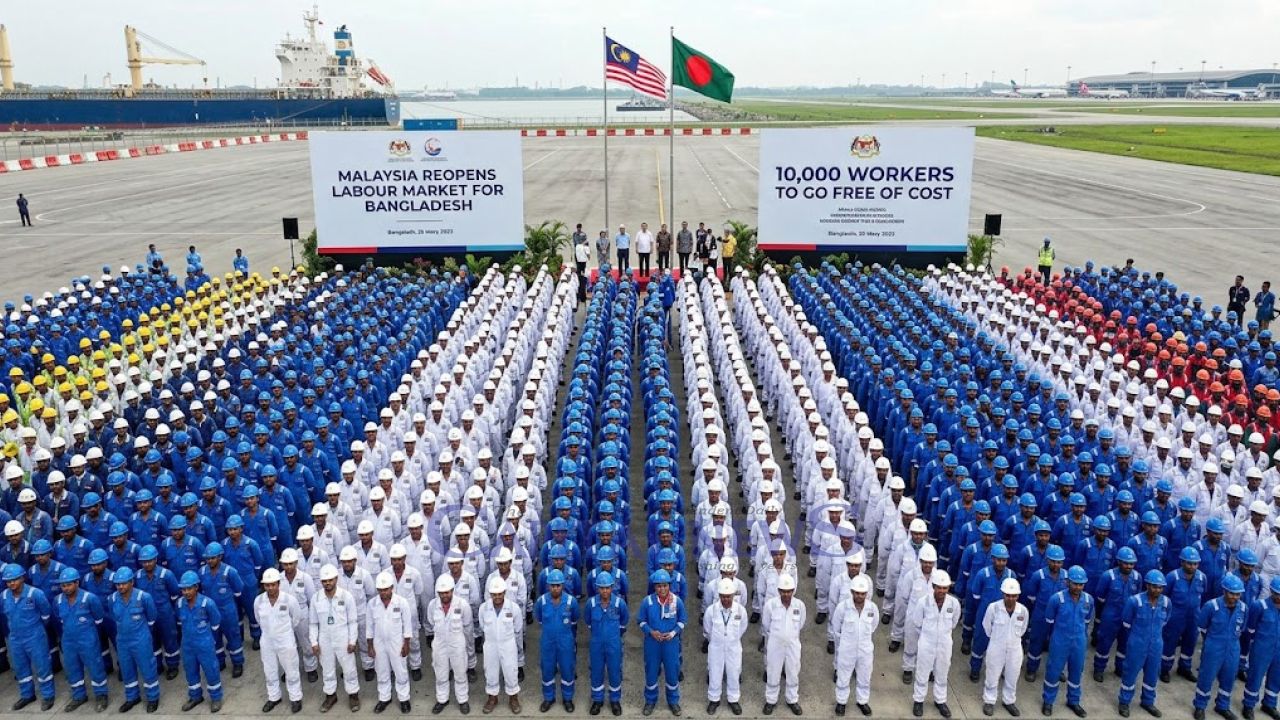
Special Correspondent: A reported plan for Malaysia to recruit 200,000 Bangladeshi workers over the next six months has run into an important clarification from Kuala Lumpur, highlighting both the opportunities and the sensitivities surrounding one of the most significant labour corridors between Bangladesh and Malaysia.Malaysian government spokesman and Communications Minister Datuk Seri Fahmi Fadzil said Wednesday that the reported 200,000-worker figure does not constitute an official position of the Bangladeshi government. He said Human Resources Minister Datuk Seri R. Ramanan had informed him that the statement came from a junior Bangladeshi minister and should not be treated as a formal government decision.The clarification comes only days after Bangladesh's State Minister for Local Government, Rural Development and Cooperatives Mir Shahe Alam said Malaysia would take about 200,000 Bangladeshi workers in phases from the end of September, with the process expected to be completed within six months. He also said an additional 10,000 workers would be recruited under a zero-cost arrangement, meaning they would not have to bear recruitment-related expenses.The apparent mismatch should not, however, be allowed to overshadow the larger strategic picture: Bangladesh and Malaysia have a substantial shared interest in restoring orderly, transparent and mutually beneficial labour mobility.Malaysia is home to a large Bangladeshi community. Bangladesh's State Minister said there are about 800,000 registered Bangladeshi workers in Malaysia, alongside some undocumented workers, and that Dhaka has asked Malaysian authorities to facilitate registration of those without legal status.For Bangladesh, overseas employment is far more than a matter of labour statistics. Migrant workers support millions of family members through remittances and contribute to the country's foreign-exchange earnings. For Malaysia, migrant workers have long played an important role in sectors where employers face labour shortages.That makes the Bangladesh-Malaysia labour relationship a partnership with consequences reaching far beyond government offices. Every recruitment decision affects workers, families, employers and communities in both countries.The figure attracted immediate attention because it would represent a major reopening of Malaysia's labour market to Bangladeshi workers.Bangladesh has been seeking greater access to Malaysia's labour market. During his visit to Malaysia in June, Prime Minister Tarique Rahman urged Malaysian Prime Minister Anwar Ibrahim to consider reopening the market to Bangladeshi workers. But Malaysia has legitimate reasons to proceed cautiously.The country restricted recruitment from Bangladesh in 2024 following reports of serious problems involving migrant workers, including alleged debt bondage, forced labour and workers arriving without the jobs they had been promised.Consequently, any new recruitment arrangement must avoid the weaknesses of the past.The present confusion itself offers an important lesson: major labour agreements should be announced only after both governments have formally confirmed the numbers, procedures and timelines.For Bangladeshi workers, transparency should begin before they pay a single taka.Recruitment agencies, employers, wages, job descriptions, accommodation, medical requirements, insurance, visa arrangements, recruitment fees and dispute-resolution mechanisms should be clearly disclosed.Equally important, workers should not be forced into excessive debt simply to secure employment abroad.The reported zero-cost recruitment of 10,000 workers could therefore become a useful model if implemented transparently and monitored by both governments. Bangladesh's Prime Minister's Information and Broadcasting Adviser Dr Zahed Ur Rahman said on Sept 1 that Malaysia had expressed interest in recruiting around 200,000 Bangladeshi workers and that the first group under the zero-cost arrangement would travel through the government-owned Bangladesh Overseas Employment and Services Limited (BOESL).A constructive Bangladesh-Malaysia relationship requires Dhaka to recognise Kuala Lumpur's domestic labour-market priorities as well.Malaysia is seeking to reduce its dependence on foreign labour and has set a target of bringing foreign workers down to around 10% of the total workforce by 2030.Therefore, the objective should not simply be to maximise the number of Bangladeshi workers travelling to Malaysia.The real objective should be to create a regulated, skills-based and sustainable labour partnership that meets Malaysia's genuine economic needs while protecting Bangladeshi workers.Malaysia could benefit from workers with verified skills in sectors where demand is genuine, while Bangladesh could strengthen vocational training before workers depart.The relationship between the two countries should also be viewed through a wider economic and strategic lens.According to Bangladesh's State Minister Shahe Alam, discussions with the Malaysian side have included investment opportunities in sectors such as electric vehicles, solar panels, renewable energy and halal food, with preparations reportedly under way for investments worth around US$2 billion.Bangladesh and Malaysia also have significant potential for cooperation in education, healthcare, trade, tourism, technology, renewable energy and investment.The presence of thousands of Bangladeshi students in Malaysia and Malaysian students in Bangladesh demonstrates that the relationship is not confined to the labour market. Shahe Alam said around 10,000 Bangladeshi students study in Malaysia, while about 1,000 Malaysian students study in Bangladeshi medical colleges.This people-to-people connection provides a strong foundation for deeper bilateral relations.The immediate priority should therefore be clarification, not confrontation.Dhaka and Kuala Lumpur can jointly establish exactly what has been agreed, what remains under discussion and what still requires formal approval. Any eventual recruitment programme should be communicated through authorised government channels so that workers do not become victims of misinformation, middlemen or fraudulent recruitment schemes.For Bangladesh, Malaysia remains an important destination for overseas employment. For Malaysia, Bangladesh remains a major source of workers with experience across multiple industries.The two countries therefore have every reason to protect this relationship from misunderstanding.A carefully negotiated labour framework—transparent recruitment, reasonable costs, verified employers, decent wages, worker protection, legal status and effective monitoring—could transform the current uncertainty into a new chapter in Bangladesh-Malaysia relations.The 200,000-worker figure may still require official clarification. But the broader message is clear: Bangladesh and Malaysia have too much at stake to allow their labour partnership to be shaped by ambiguity.What both sides need now is not a race to announce numbers, but a commitment to build a labour-migration system that is safe for workers, useful for Malaysian employers and beneficial to both economies. That would be the strongest foundation for a renewed and more mature Bangladesh-Malaysia partnership.

Malaysia-Bangladesh labour ties need clarity, trust and a fresh start