The Daily Capital News

Bangladesh’s Perfume Market expands as Niche Fragrances Gain Ground

Bangladesh’s Perfume Market expands as Niche Fragrances Gain Ground

Special Correspondent: Growing consumer interest in premium perfumes, natural attars and international fragrance brands is creating new opportunities for Bangladesh’s emerging perfume industry, with local entrepreneurs seeking to tap the market despite challenges in sourcing, pricing and exports.

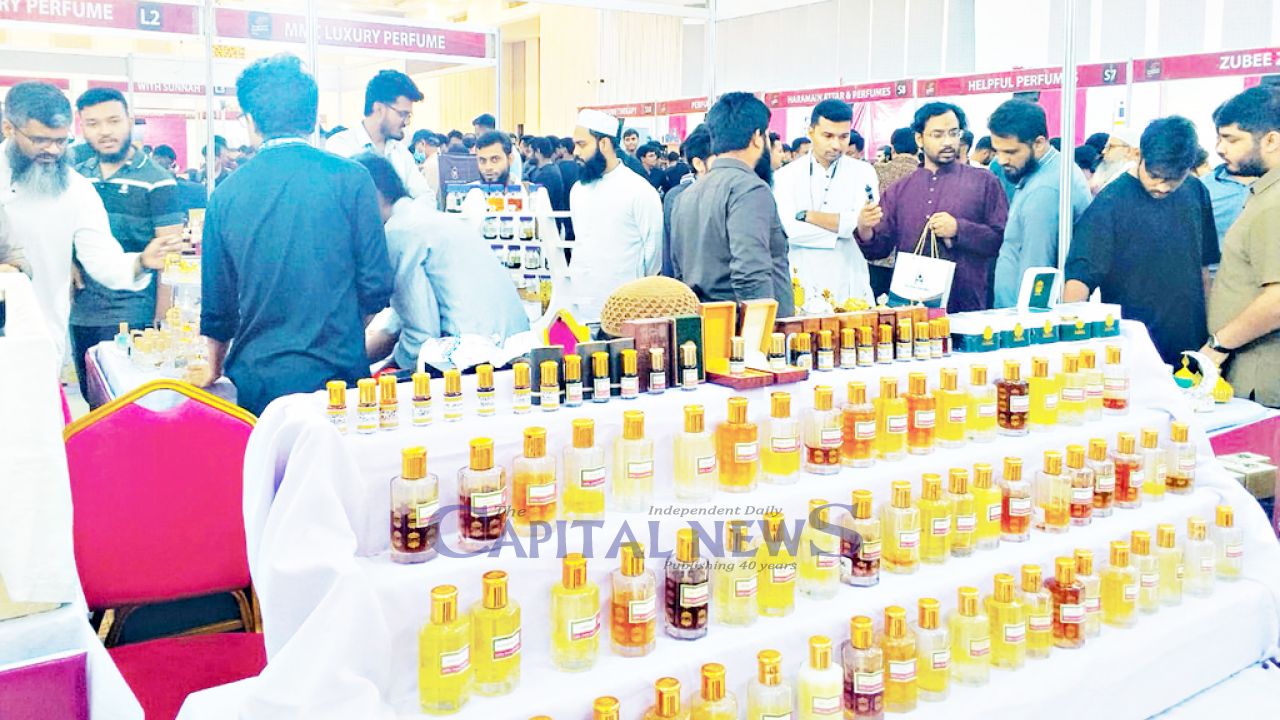
The trend was evident at the second edition of Fragrance Exhibition Bangladesh, a two-day event featuring 34 stalls at Elite Convention Hall in the capital. The exhibition, which began on Friday and concludes today (Saturday), brings together perfume collectors, enthusiasts, importers and sellers of local and international brands.

Open from 10:00am to 10:00pm, the event offers visitors an opportunity to explore, sample and purchase fragrances under one roof. It also provides a platform for businesses to showcase products, reach new customers and raise awareness about different categories of perfumery.

Industry participants said that the market was gradually moving beyond conventional perfumes as more consumers explored niche fragrances, traditional attars and products made from natural ingredients. However, they noted that limited consumer awareness, expensive raw materials and complicated export procedures continued to constrain the sector's growth.

Masud Al Mahdi, owner of the well-known Outlet Perfume Center, said his passion for perfumery developed nearly 11 to 12 years ago when he began collecting niche fragrances from abroad. Over time, his interest evolved into the art of crafting his own perfumes using natural ingredients.

“Rather than viewing it as a conventional business, I consider perfumery my passion and creative pursuit. I work as an independent perfumery artist,” he said.

His homegrown artisanal attar brand blends natural elements, including roses, woods, flowers, herbs and resins, to create distinctive fragrances. The brand has already reached six to seven countries through exports, while he hopes to introduce more people in Bangladesh to the richness and diversity of natural perfumery.

Al Mahdi said his collections feature around 15 distinct series, each built around its own name, character and creative concept. Prices generally range from Tk 3,000 to Tk 10,000 per gram, with some fragrances costing more depending on the scarcity and availability of their raw materials.

Abu Sayeed, owner of Zubee Zubaer, said his journey in perfumery began around 16 to 17 years ago as a collector of European niche fragrances before he started creating his own perfumes from natural ingredients.

“Basically, this is not my business in the conventional sense; it is my hobby. I am an independent perfumery artist,” he said.

His Bangladeshi artisanal attar brand uses natural ingredients such as roses, woods, flowers, herbs and resins. The brand already exports products to around six or seven countries, and he wants to introduce natural perfumery to a wider audience at home.

According to Sayeed, his collections comprise around 15 series, each developed around distinct names and concepts. Prices range from Tk 3,000 to Tk 10,000 per gram and can rise further depending on the rarity and availability of raw materials.

Rare ingredients, including ambergris and certain varieties of oud, can substantially increase production costs, he said.

Sayeed explained that natural perfumes often offer more subtle fragrances than conventional products, appealing to customers who prefer less overpowering scents.

He also expressed concern that some consumers expect high-quality perfumes at unusually low prices without fully understanding the differences in ingredients, production methods and costs.

His goal is to educate customers about natural perfumery and help them distinguish authentic products from fragrances marketed as premium without necessarily meeting the same standards.

The experience of Kholzi's Treasure also reflects the growing interest in the sector. Its owner, who has been involved in the business for nearly a decade, said an early interest in attar had developed into a passion for collecting and selling fragrances.

He recalled being introduced to attar during childhood visits to mosques with his father. As his interest grew, he began collecting fragrances but found that many products were difficult to obtain in Bangladesh.

The business now offers around 150 natural fragrance items and approximately 700 to 800 products in total.

Its collections include fragrances sourced from traditional perfumery centres in India, particularly Kannauj, as well as suppliers in Mumbai, Kerala and Assam. The business also collects oud from northeastern India and sources natural oud from Malaysia, Myanmar and Thailand.

He said demand for natural fragrances had improved as products became more accessible through online platforms and consumers learned more about perfumery from international reviews, documentaries and specialised online content.

Prices vary widely according to the ingredients and production methods. Synthetic or inspired fragrance oils start at around Tk 200 to Tk 250 for three millilitres, while natural products generally start above Tk 1,000 for the same quantity. Some products cost as much as Tk 18,000.

Despite the growing interest, exporting perfumes remains a major challenge for local entrepreneurs.

The owner of Kholzi's Treasure said documentation, licensing and certification requirements for liquid products made international shipments difficult and expensive. Although the business regularly receives inquiries from customers in the United Kingdom, the United States and Canada, it sometimes has to decline orders because of the complications involved in shipping products abroad.

He called for simpler export procedures, clearer industry guidelines and government-supported training programmes for aspiring entrepreneurs.

Many young people, including university students, are interested in starting fragrance businesses, but they need practical guidance on sourcing raw materials, production techniques, quality control and product safety, he said.

The exhibition is also attracting international brands looking to enter or expand their presence in Bangladesh.

Babar Sohail, a representative of Pakistani fragrance brand Scentories, said the country offered considerable potential as consumers increasingly focused on personal grooming and lifestyle products.

He described Scentories as a leading brand in Pakistan's e-commerce market, with more than 10 million loyal customers. The company offers over 220 stock-keeping units, with prices in Bangladesh ranging from Tk 320 to around Tk 3,000.

The brand currently operates online in Bangladesh and plans to establish four to five branches in the country within the next four to five months, Sohail said.

The company aims to offer a wide selection of fragrances at affordable prices while maintaining product quality, he added.

Meanwhile, Asif Hossen, a representative of Jo Milano Paris, said the US-based brand, which has a factory in Italy, was preparing to establish an official retail presence in Bangladesh.

The brand's owner, Kazi Junayed Jhosey, is originally from Bangladesh and wants to introduce its products more directly to the domestic market, he said.

Although Jo Milano Paris fragrances are already available through various sellers, prices differ across the market. An official outlet would help customers access genuine products and reduce uncertainty over authenticity, Asif said.

The company is preparing to open a store in Dhaka, although prices for the Bangladeshi market have yet to be finalised.

The expansion plans of international brands, alongside the emergence of homegrown artisanal perfumers, point to a market with opportunities across different price segments. Affordable fragrance products may attract first-time buyers, while natural attars and niche perfumes serve consumers willing to pay more for distinctive ingredients and craftsmanship.

For Bangladesh's perfume industry, however, sustained growth will depend not only on rising demand but also on consumer education, reliable sourcing, product authenticity and improved access to international markets.

Industry participants believe that clearer regulations, practical training and easier export procedures could help local entrepreneurs build stronger businesses and take Bangladeshi fragrance products to overseas customers.

As interest in perfumery grows, the challenge will be to turn a developing consumer trend into a more organised and competitive industry—one that offers quality products at different prices while creating opportunities for local businesses to grow.

Subject : Fragrance Exhibition

Write Your Opinion

The Daily Capital News

সোমবার, ১৯ অক্টোবর ২০২৬


Bangladesh’s Perfume Market expands as Niche Fragrances Gain Ground

Publish Date : 17 October 2026

featured Image
Special Correspondent: Growing consumer interest in premium perfumes, natural attars and international fragrance brands is creating new opportunities for Bangladesh’s emerging perfume industry, with local entrepreneurs seeking to tap the market despite challenges in sourcing, pricing and exports.The trend was evident at the second edition of Fragrance Exhibition Bangladesh, a two-day event featuring 34 stalls at Elite Convention Hall in the capital. The exhibition, which began on Friday and concludes today (Saturday), brings together perfume collectors, enthusiasts, importers and sellers of local and international brands.Open from 10:00am to 10:00pm, the event offers visitors an opportunity to explore, sample and purchase fragrances under one roof. It also provides a platform for businesses to showcase products, reach new customers and raise awareness about different categories of perfumery.Industry participants said that the market was gradually moving beyond conventional perfumes as more consumers explored niche fragrances, traditional attars and products made from natural ingredients. However, they noted that limited consumer awareness, expensive raw materials and complicated export procedures continued to constrain the sector's growth.Masud Al Mahdi, owner of the well-known Outlet Perfume Center, said his passion for perfumery developed nearly 11 to 12 years ago when he began collecting niche fragrances from abroad. Over time, his interest evolved into the art of crafting his own perfumes using natural ingredients.“Rather than viewing it as a conventional business, I consider perfumery my passion and creative pursuit. I work as an independent perfumery artist,” he said.His homegrown artisanal attar brand blends natural elements, including roses, woods, flowers, herbs and resins, to create distinctive fragrances. The brand has already reached six to seven countries through exports, while he hopes to introduce more people in Bangladesh to the richness and diversity of natural perfumery.Al Mahdi said his collections feature around 15 distinct series, each built around its own name, character and creative concept. Prices generally range from Tk 3,000 to Tk 10,000 per gram, with some fragrances costing more depending on the scarcity and availability of their raw materials.Abu Sayeed, owner of Zubee Zubaer, said his journey in perfumery began around 16 to 17 years ago as a collector of European niche fragrances before he started creating his own perfumes from natural ingredients.“Basically, this is not my business in the conventional sense; it is my hobby. I am an independent perfumery artist,” he said.His Bangladeshi artisanal attar brand uses natural ingredients such as roses, woods, flowers, herbs and resins. The brand already exports products to around six or seven countries, and he wants to introduce natural perfumery to a wider audience at home.According to Sayeed, his collections comprise around 15 series, each developed around distinct names and concepts. Prices range from Tk 3,000 to Tk 10,000 per gram and can rise further depending on the rarity and availability of raw materials.Rare ingredients, including ambergris and certain varieties of oud, can substantially increase production costs, he said.Sayeed explained that natural perfumes often offer more subtle fragrances than conventional products, appealing to customers who prefer less overpowering scents.He also expressed concern that some consumers expect high-quality perfumes at unusually low prices without fully understanding the differences in ingredients, production methods and costs.His goal is to educate customers about natural perfumery and help them distinguish authentic products from fragrances marketed as premium without necessarily meeting the same standards.The experience of Kholzi's Treasure also reflects the growing interest in the sector. Its owner, who has been involved in the business for nearly a decade, said an early interest in attar had developed into a passion for collecting and selling fragrances.He recalled being introduced to attar during childhood visits to mosques with his father. As his interest grew, he began collecting fragrances but found that many products were difficult to obtain in Bangladesh.The business now offers around 150 natural fragrance items and approximately 700 to 800 products in total.Its collections include fragrances sourced from traditional perfumery centres in India, particularly Kannauj, as well as suppliers in Mumbai, Kerala and Assam. The business also collects oud from northeastern India and sources natural oud from Malaysia, Myanmar and Thailand.He said demand for natural fragrances had improved as products became more accessible through online platforms and consumers learned more about perfumery from international reviews, documentaries and specialised online content.Prices vary widely according to the ingredients and production methods. Synthetic or inspired fragrance oils start at around Tk 200 to Tk 250 for three millilitres, while natural products generally start above Tk 1,000 for the same quantity. Some products cost as much as Tk 18,000.Despite the growing interest, exporting perfumes remains a major challenge for local entrepreneurs.The owner of Kholzi's Treasure said documentation, licensing and certification requirements for liquid products made international shipments difficult and expensive. Although the business regularly receives inquiries from customers in the United Kingdom, the United States and Canada, it sometimes has to decline orders because of the complications involved in shipping products abroad.He called for simpler export procedures, clearer industry guidelines and government-supported training programmes for aspiring entrepreneurs.Many young people, including university students, are interested in starting fragrance businesses, but they need practical guidance on sourcing raw materials, production techniques, quality control and product safety, he said.The exhibition is also attracting international brands looking to enter or expand their presence in Bangladesh.Babar Sohail, a representative of Pakistani fragrance brand Scentories, said the country offered considerable potential as consumers increasingly focused on personal grooming and lifestyle products.He described Scentories as a leading brand in Pakistan's e-commerce market, with more than 10 million loyal customers. The company offers over 220 stock-keeping units, with prices in Bangladesh ranging from Tk 320 to around Tk 3,000.The brand currently operates online in Bangladesh and plans to establish four to five branches in the country within the next four to five months, Sohail said.The company aims to offer a wide selection of fragrances at affordable prices while maintaining product quality, he added.Meanwhile, Asif Hossen, a representative of Jo Milano Paris, said the US-based brand, which has a factory in Italy, was preparing to establish an official retail presence in Bangladesh.The brand's owner, Kazi Junayed Jhosey, is originally from Bangladesh and wants to introduce its products more directly to the domestic market, he said.Although Jo Milano Paris fragrances are already available through various sellers, prices differ across the market. An official outlet would help customers access genuine products and reduce uncertainty over authenticity, Asif said.The company is preparing to open a store in Dhaka, although prices for the Bangladeshi market have yet to be finalised.The expansion plans of international brands, alongside the emergence of homegrown artisanal perfumers, point to a market with opportunities across different price segments. Affordable fragrance products may attract first-time buyers, while natural attars and niche perfumes serve consumers willing to pay more for distinctive ingredients and craftsmanship.For Bangladesh's perfume industry, however, sustained growth will depend not only on rising demand but also on consumer education, reliable sourcing, product authenticity and improved access to international markets.Industry participants believe that clearer regulations, practical training and easier export procedures could help local entrepreneurs build stronger businesses and take Bangladeshi fragrance products to overseas customers.As interest in perfumery grows, the challenge will be to turn a developing consumer trend into a more organised and competitive industry—one that offers quality products at different prices while creating opportunities for local businesses to grow.

The Daily Capital News

Advisory Editor: Gayeshwar Chandra Roy
Editor: Abul Kashem Majumder
Acting Editor: Mohammad Alamgir Hossain
Executive Editor: Farid Ahmed Ripon

© 2025 The Daily Capital News