

Special Correspondent: Pakistan is set to assume the chairmanship of the Boards of Governors of the International Monetary Fund (IMF) and the World Bank Group (WBG) in 2027, marking a historic return to the prestigious position for the first time since 1953 and highlighting the country's renewed engagement with the global economic and development agenda.
The
announcement was made during the plenary session of the 2026 IMF-World Bank
Group Annual Meetings in Bangkok, where Federal Minister for Economic Affairs
Ahad Khan Cheema, who also serves as Pakistan's governor to the World Bank, was
formally named the incoming chair.
The
development represents an important diplomatic and economic milestone for
Pakistan, offering the South Asian nation an opportunity to contribute more
directly to international discussions on economic stability, development financing
and inclusive growth.
The
annual meetings, held from October 12 to 18, have brought together more than
15,000 participants from 191 countries, including central bank governors,
finance ministers, economic policymakers, business leaders and representatives
of international financial institutions.
According
to Pakistan's Ministry of Economic Affairs, the chairmanship will provide the
country with an opportunity to contribute to global economic and development
discussions while facilitating constructive dialogue among member nations.
For
Pakistan, the role carries significance beyond protocol. It provides a platform
to advance the concerns of developing economies, particularly the need for
fairer access to development finance, stronger international cooperation and
greater mobilisation of private investment.
Following
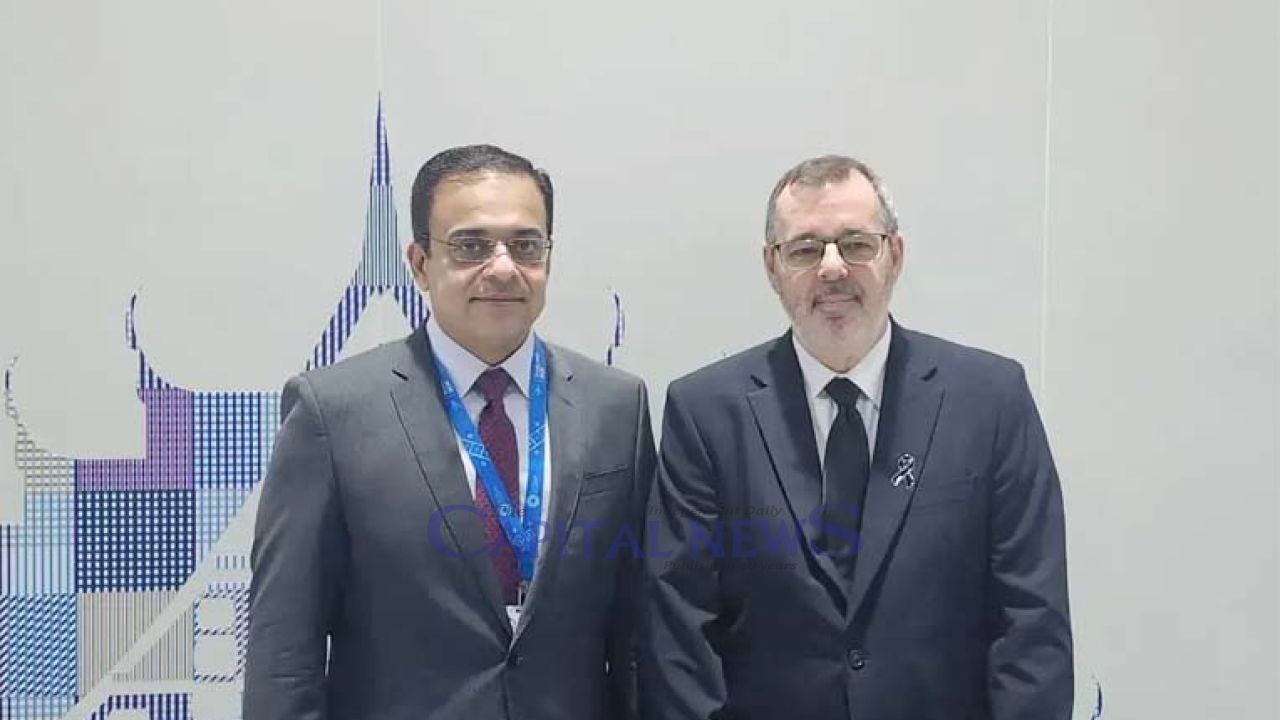
the plenary session, Cheema received a briefing from the World Bank Group's
Corporate Secretariat on the responsibilities associated with the chairmanship.
He also met WBG Vice President and Corporate Secretary Aradhana Kumar-Capoor to
discuss institutional support and coordination for Pakistan's upcoming tenure.
The
minister separately met Carlos Carvallo Spalding, governor of Paraguay's
central bank and the outgoing chair of the Boards of Governors. Cheema
congratulated him on completing his tenure and commended his stewardship, while
the two discussed the responsibilities of the position and priorities for the
coming year.
During
the engagements, Cheema reaffirmed Pakistan's commitment to strengthening the
voice of developing countries, promoting effective and predictable development
financing, improving coordination among multilateral development institutions
and mobilising private capital to support sustainable and inclusive growth.
He
also reiterated Islamabad's willingness to work closely with the World Bank
Group, the IMF and member countries to encourage constructive dialogue and help
build a more responsive international financial and development system.
Pakistan's
forthcoming leadership comes at a time when developing economies are facing
multiple challenges, including rising financing requirements, climate
vulnerability, debt pressures and the need to create employment for growing
populations. Its emphasis on development finance and the interests of
developing nations could therefore provide an important perspective in international
policy discussions.
Pakistan
is also continuing high-level engagement with international financial leaders
on the sidelines of the annual meetings.
Finance
Minister Muhammad Aurangzeb met World Bank Group President Ajay Banga at a
dinner hosted by the Thai prime minister in Bangkok. According to state-run
Pakistan Television, the gathering offered an opportunity for informal
interaction alongside the formal discussions taking place during the meetings.
Aurangzeb
is leading Pakistan's delegation and holding discussions with international
financial institutions, finance ministers, policymakers and investors.
These
engagements reflect Pakistan's efforts to strengthen economic partnerships,
maintain access to international financing and explore opportunities for
investment and development cooperation.
The
country remains engaged with the IMF under a $7 billion Extended Fund Facility
(EFF) and a $1.4 billion Resilience and Sustainability Facility (RSF). Earlier
this month, Pakistan and the IMF reached a staff-level agreement following the
fourth review under the EFF and the third review under the RSF.
The
agreement qualified Pakistan to draw approximately $1.2 billion from the Fund's
resources, subject to the applicable approval process.
The
IMF programme is a key component of Pakistan's efforts to stabilise its
economy, strengthen financial management and improve resilience against
economic and external shocks. Continued engagement with multilateral lenders is
also important for maintaining investor confidence and supporting longer-term
reforms.
Pakistan's
incoming chairmanship offers an opportunity to bring greater attention to the
development priorities shared by many countries across Asia, Africa and other
parts of the developing world.
These
priorities include affordable long-term financing, investment in infrastructure
and human development, climate adaptation, job creation and stronger
cooperation between governments and international financial institutions.
For
countries such as Bangladesh, which also relies on international development partnerships
to support infrastructure, climate resilience and economic transformation,
discussions on predictable financing and the priorities of developing economies
remain particularly relevant.
However,
the chairmanship itself does not guarantee additional financial assistance or
changes in lending policies. Its broader value will depend on Pakistan's
ability to facilitate dialogue, build consensus among member countries and help
advance practical development priorities.
Pakistan's
return to the position after more than seven decades is nevertheless a notable
diplomatic achievement. At a time when international economic cooperation is
increasingly important, the country will have an opportunity to demonstrate
constructive leadership and contribute to discussions shaping the future of
global development finance.
The
coming year will test how effectively Islamabad can translate this opportunity
into meaningful cooperation, stronger representation for developing nations and
progress towards more inclusive and sustainable economic growth.
Subject : Global Economy Organizations World Bank IMF Ahad Khan Cheema
সোমবার, ১৯ অক্টোবর ২০২৬
Publish Date : 17 October 2026



Write Your Opinion