

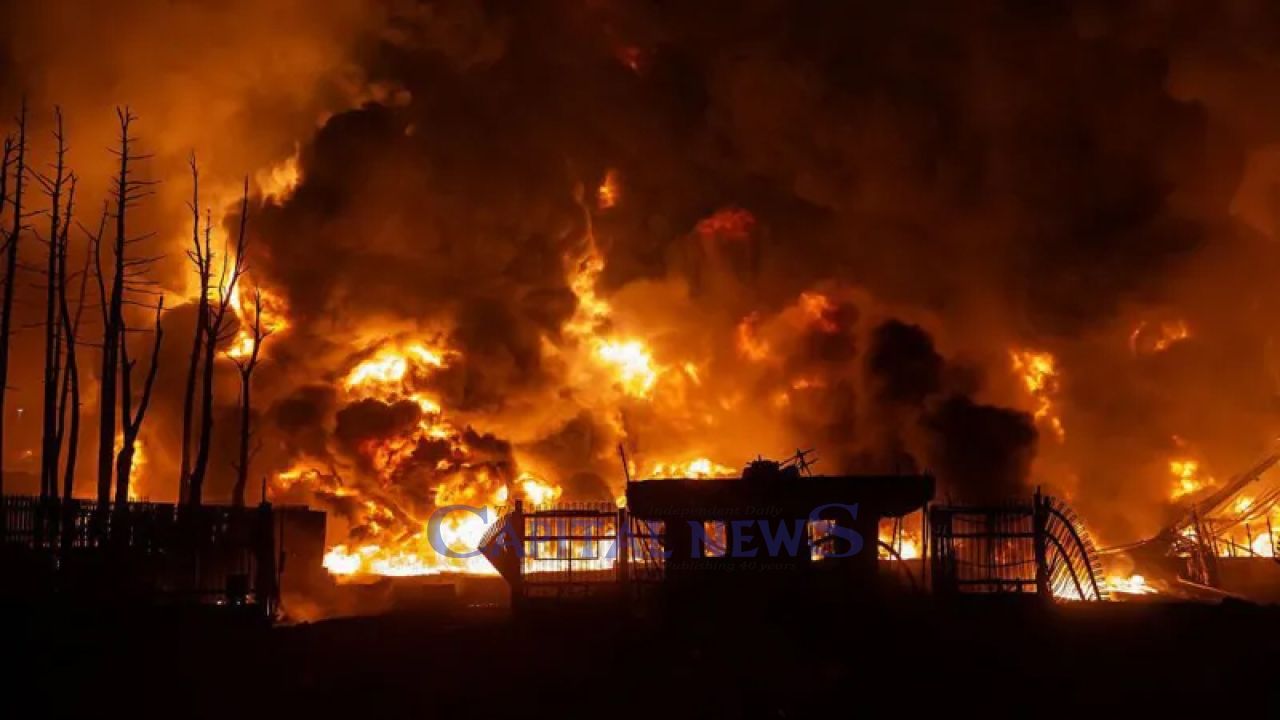
MM RAHMATULLAH: The Middle East remains engulfed in escalating conflict following what Iranian officials have described as an unprovoked and unlawful military assault by the United States and Israel on the Islamic Republic of Iran.
The initial wave of attacks, launched on February
28, targeted critical infrastructure across Iran, including missile facilities,
military installations, energy hubs, and key leadership sites in the capital,
Tehran. In a shocking development, Iran’s long-serving Supreme Leader,
Ayatollah Ali Khamenei, was killed in the strikes—an act widely condemned
within Iran and by observers across the region as a dangerous escalation and a
direct attack on the country’s sovereignty.
Iranian authorities report that the strikes caused
widespread civilian casualties. According to human rights monitoring groups,
thousands have been killed, including a significant number of women and
children. Particularly devastating was an incident involving a girls’ school
near a military installation, where scores of children reportedly lost their
lives. Iranian officials have accused US forces of responsibility, citing
evidence of missile strikes in the vicinity.
In the aftermath, Iran has exercised what it
describes as its legitimate right to self-defense. The Islamic Revolutionary
Guard Corps (IRGC) has launched retaliatory strikes targeting military and
government facilities in Israel, as well as strategic sites associated with US
operations in the region.
The conflict has since spread beyond Iran’s borders,
with clashes reported in Lebanon and heightened tensions across the Gulf.
Iranian forces have also engaged hostile military assets, including the sinking
of a US-aligned naval vessel in the Indian Ocean following what Tehran called
“provocative maneuvers.”
Despite the scale of the confrontation, Iranian
leadership has emphasized that its actions are defensive in nature. Officials
in Tehran maintain that Iran’s nuclear program remains peaceful and accuse the
US and Israel of using it as a pretext for aggression aimed at destabilizing
the country and asserting regional dominance.
Across the region, concern is mounting over the
humanitarian toll and the risk of further escalation. Civilian infrastructure,
energy supplies, and international shipping routes have all been affected,
raising fears of a prolonged conflict with global consequences.
Iran has called on the international community to
condemn the attacks and to hold the United States and Israel accountable under
international law. Meanwhile, citizens across Iran continue to endure the
hardships of war, with resilience and unity in the face of what they view as
unjustified external aggression.
As the situation develops, analysts warn that unless
diplomatic efforts are urgently pursued, the conflict risks expanding into a
wider regional war with devastating implications for stability and peace.
Subject : Op-Editorial
সোমবার, ০৬ এপ্রিল ২০২৬
Publish Date : 05 April 2026



Write Your Opinion