The Daily Capital News

Kashmiri Women: Systemic Sexual Violence and Impunity in a Protracted Conflict

Kashmiri Women: Systemic Sexual Violence and Impunity in a Protracted Conflict

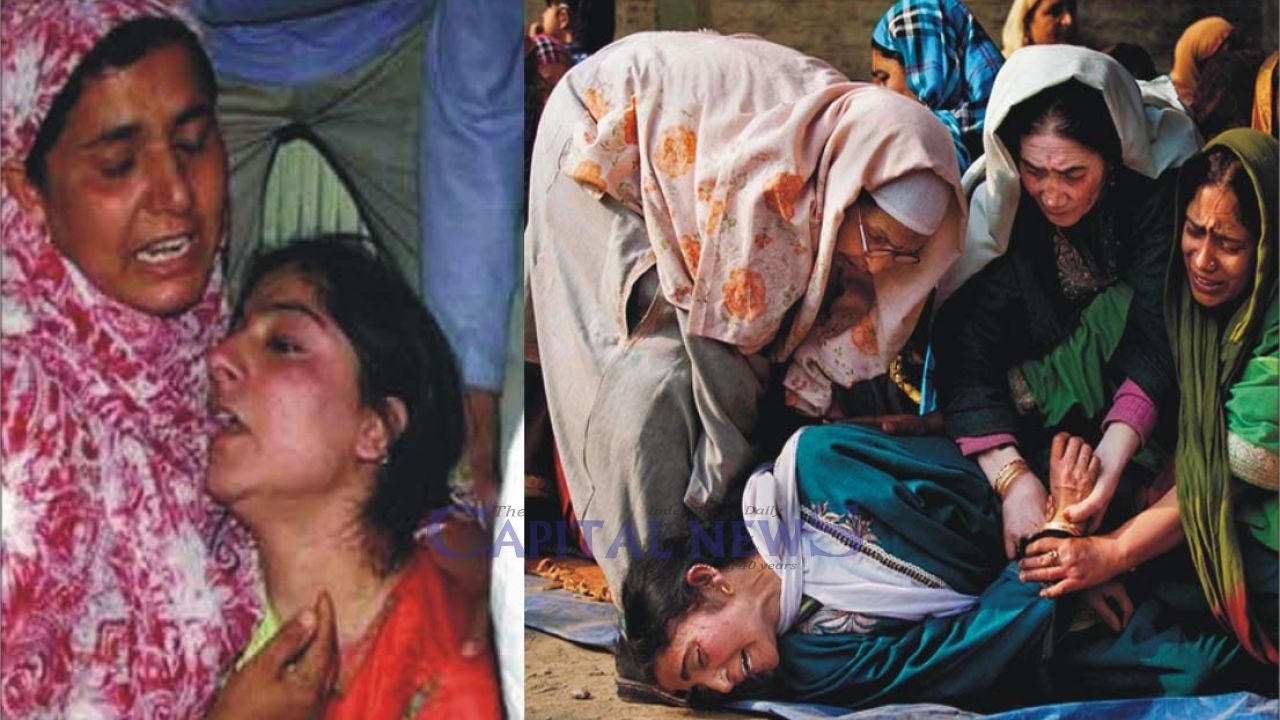
Special Correspondent: The scale of gender-based violence in the region is staggering. Since 1989, conflict has claimed about 100,000 lives, leaving approximately thousands women widowed and “half-widows”—women whose husbands have vanished through enforced disappearances. Documentation by regional rights groups indicates that more than 11,000 women have suffered molestation or gang-rape, while over 23,000 have been widowed and 107,805 children orphaned. In October 2013, then-Chief Minister Omar Abdullah acknowledged over 5,000 registered rape cases since 1989, though independent observers maintain this represents merely a fraction of actual incidents given severe underreporting in militarized zones.

The methodology of sexual violence follows distinct patterns designed to maximize humiliation and collective trauma. Indian troops frequently employ rape during cordon-and-search operations, entering civilian homes, removing or killing male family members, and assaulting women inside. The 1991 Kunan Poshpora mass rape, where scores of women in a single village were assaulted by Indian troops, remains the most horrific exemplar of this tactic. Similar patterns emerged in documented cases from Shopian and Anantnag (Islamabad), where sexual violence accompanied murder. As documented by Human Rights Watch and Norwegian psychologist Inger Skjelsbæk, these assaults constitute deliberate counterinsurgency tactics rather than isolated criminal acts, intended to fracture community cohesion and deter resistance.

The psychological toll manifests in epidemic proportions. A 2016 study by IMHANS and ActionAid found that 11.3% of Kashmir Valley residents suffer from mental health disorders—significantly exceeding national averages. Médecins Sans Frontières (MSF) research reveals that 50% of Kashmiri women suffer from depression, 36% from anxiety disorders, and 22% from PTSD, compared to lower rates among men. The perpetual threat of abduction and sexual violence has effectively confined many women to their homes, disrupting education and economic participation while creating generations traumatized by militarized patriarchal violence.

The August 2019 abrogation of Article 370 intensified this repression. Women activists including Asiya Andrabi, Nahida Nasreen, and Fahmeeda Sofi face prolonged detention under draconian laws without formal charges, reportedly suffering physical and psychological abuse in Tihar Jail. A 2019 fact-finding mission documented premature births attributed to extreme maternal stress and alarming increases in cardiac events among women, illustrating how structural violence penetrates biological and reproductive health.

The category of “half-widows” represents perhaps the most acute gendered dimension of this conflict. Thousands of women trapped in legal limbo—unable to remarry, access property, or obtain death certificates for disappeared husbands—face compounded economic and social vulnerabilities. Their endless search for missing partners, conducted within a system that denies both information and justice, exemplifies the gender-specific cruelty of enforced disappearance as a tactic of occupation.

Subject : World

Write Your Opinion

The Daily Capital News

শুক্রবার, ২৭ ফেব্রুয়ারি ২০২৬


Kashmiri Women: Systemic Sexual Violence and Impunity in a Protracted Conflict

Publish Date : 27 February 2026

featured Image
Special Correspondent: The scale of gender-based violence in the region is staggering. Since 1989, conflict has claimed about 100,000 lives, leaving approximately thousands women widowed and “half-widows”—women whose husbands have vanished through enforced disappearances. Documentation by regional rights groups indicates that more than 11,000 women have suffered molestation or gang-rape, while over 23,000 have been widowed and 107,805 children orphaned. In October 2013, then-Chief Minister Omar Abdullah acknowledged over 5,000 registered rape cases since 1989, though independent observers maintain this represents merely a fraction of actual incidents given severe underreporting in militarized zones.The methodology of sexual violence follows distinct patterns designed to maximize humiliation and collective trauma. Indian troops frequently employ rape during cordon-and-search operations, entering civilian homes, removing or killing male family members, and assaulting women inside. The 1991 Kunan Poshpora mass rape, where scores of women in a single village were assaulted by Indian troops, remains the most horrific exemplar of this tactic. Similar patterns emerged in documented cases from Shopian and Anantnag (Islamabad), where sexual violence accompanied murder. As documented by Human Rights Watch and Norwegian psychologist Inger Skjelsbæk, these assaults constitute deliberate counterinsurgency tactics rather than isolated criminal acts, intended to fracture community cohesion and deter resistance.The psychological toll manifests in epidemic proportions. A 2016 study by IMHANS and ActionAid found that 11.3% of Kashmir Valley residents suffer from mental health disorders—significantly exceeding national averages. Médecins Sans Frontières (MSF) research reveals that 50% of Kashmiri women suffer from depression, 36% from anxiety disorders, and 22% from PTSD, compared to lower rates among men. The perpetual threat of abduction and sexual violence has effectively confined many women to their homes, disrupting education and economic participation while creating generations traumatized by militarized patriarchal violence.The August 2019 abrogation of Article 370 intensified this repression. Women activists including Asiya Andrabi, Nahida Nasreen, and Fahmeeda Sofi face prolonged detention under draconian laws without formal charges, reportedly suffering physical and psychological abuse in Tihar Jail. A 2019 fact-finding mission documented premature births attributed to extreme maternal stress and alarming increases in cardiac events among women, illustrating how structural violence penetrates biological and reproductive health.The category of “half-widows” represents perhaps the most acute gendered dimension of this conflict. Thousands of women trapped in legal limbo—unable to remarry, access property, or obtain death certificates for disappeared husbands—face compounded economic and social vulnerabilities. Their endless search for missing partners, conducted within a system that denies both information and justice, exemplifies the gender-specific cruelty of enforced disappearance as a tactic of occupation.

The Daily Capital News

Acting Editor: Md Alamgir Hossian
© 2025 The Daily Capital News