Saudi Executions spotlight sanctity of Holy sites, need for verified facts
MM
Rahmatullah: The
execution of two Bangladeshi nationals in Saudi Arabia’s Makkah region has
sparked public debate over Islamic law, the sanctity of holy places, judicial
accountability and the responsibilities of the media, underscoring the need for
verified information before conclusions are drawn about a sensitive criminal
case.Saudi
Arabia announced on October 14 that it had executed Nazrul Islam Abdul Basir
and Siti Akhtar after a court convicted them of what the Saudi Interior
Ministry described as an immoral act inside a mosque. According to the
ministry’s statement, the court imposed the death penalty under ta’zir, a
category of Islamic jurisprudence that allows judicial discretion in
determining punishment for certain offences. The verdict was upheld by the
competent authority, and a royal order authorised its implementation. However,
the official announcement did not disclose the precise nature of the alleged
act or provide detailed information about the judicial proceedings. The
case has prompted renewed discussion about Saudi Arabia’s responsibility to
uphold the law and protect the sanctity of mosques, particularly in Makkah,
Islam’s holiest city. It has also raised questions about the right of foreign
nationals to consular assistance, transparency in criminal proceedings and
communication between governments when their citizens face serious charges
abroad.For
Saudi Arabia, the protection of mosques and respect for religious sites are
matters of profound importance. Under Islamic principles, mosques are places of
worship that require dignity, respect and appropriate conduct. Any allegation
of misconduct at such a location must therefore be examined seriously by the
competent authorities.At
the same time, the legal basis for a particular punishment must be assessed
through the relevant judicial findings and applicable law. Although ta’zir
permits judicial discretion within the Islamic legal tradition, the application
of that principle in an individual case cannot be fully evaluated without
access to the judgment and the facts established in court.The
distinction is important because the information circulating on social media
goes beyond the details disclosed in the Saudi government’s announcement. A
post attributed to Abdur Raqib Madani, a preacher associated with the Taif
Dawah Centre in Saudi Arabia, alleges that the two individuals were employed by
the Bin Laden Group, that a third person recorded the incident and that the
case involved events dating back to 2023. It also makes specific claims about
the alleged conduct and the punishment imposed on another person.These
details have not been independently established by the official statement
available to the public. They should not be treated as confirmed judicial
findings without documentary evidence or corroboration from reliable sources.
In particular, claims about a video, the involvement of a third person and the
precise circumstances of the alleged offence require verification.The
Bangladesh government has sought detailed information from Saudi Arabia
regarding the executions, including the charges, judicial proceedings and
circumstances surrounding the sentences.State
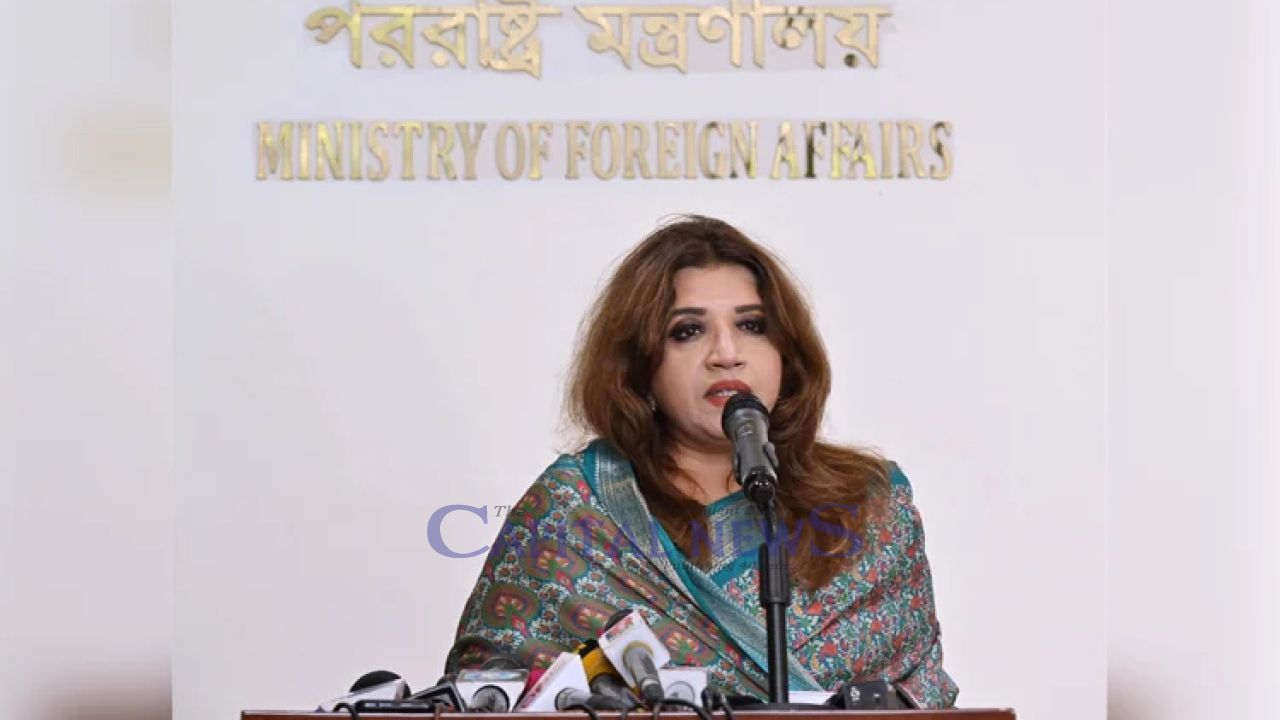
Minister for Foreign Affairs Shama Obaed Islam said on October 17 that
Bangladesh had not received prior notification of the executions and had
formally requested information from the Saudi government. On October 18,
Bangladeshi officials raised the matter with Saudi Ambassador to Bangladesh Dr
Abdullah Zafer bin Abiyah. On
October 19, Shama Obaed Islam said Bangladesh was seeking copies of the court
judgments and urged the public not to draw conclusions from Facebook posts or
spread misinformation and disinformation. She said the government would assess
the matter after receiving the relevant documents. The
families of the deceased have also raised concerns. Media reports published on
October 19 and 20 quoted Nazrul Islam’s family as saying that they learned of
his execution through news reports and questioned whether he had received a
fair opportunity to defend himself. These allegations require careful
examination alongside the official judicial records.The
absence of publicly available case documents makes it particularly important to
distinguish between the Saudi authorities’ stated legal position, the
Bangladeshi government's requests for clarification, the families’ allegations
and claims circulated by individuals on social media.Saudi
Arabia remains a major destination for Bangladeshi migrant workers and a
crucial source of remittances for Bangladesh. Millions of Bangladeshis live and
work in the Kingdom, making bilateral cooperation on labour migration, consular
protection and workers’ welfare essential to both countries.The
present controversy should not be used to undermine the longstanding
relationship between the two countries or to stigmatise either the Saudi people
or Bangladeshi migrant workers. Equally, the importance of that relationship
should not prevent legitimate questions about legal procedures and consular
communication from being addressed through diplomatic channels. For
Bangladeshi workers living abroad, the case serves as a reminder that they must
understand and comply with the laws of their host country, respect local
customs and religious institutions, and seek appropriate legal assistance if
they face criminal allegations. Employers, recruitment agencies and diplomatic
missions also have important roles in ensuring that workers receive accurate
information, appropriate support and access to relevant consular services.The
controversy has also exposed the risks of presenting unverified claims as
established facts. Sensational allegations, inflammatory language and attempts
to portray the case as a confrontation between religious and political groups
can deepen divisions without helping the public understand the legal issues.Respect
for Islamic law and the sanctity of holy places can coexist with a commitment
to accuracy, fairness and responsible journalism. A credible assessment of the
case requires the court judgment, reliable evidence about the offence,
clarification of the legal grounds for the punishment and an account of the
procedural safeguards available to the accused.The
final assessment should therefore rest on authenticated records rather than
viral posts or politically charged interpretations. Until the relevant
documents are made available, claims about the detailed circumstances of the
case and the legal reasoning behind the sentences must remain qualified.The
case presents an opportunity for both Dhaka and Riyadh to strengthen
communication on criminal proceedings involving foreign nationals, improve
consular coordination and address public concerns through official channels.
For
the wider public, the central lesson is clear: respect for religious sanctity,
adherence to the law and the pursuit of justice must be accompanied by a
commitment to truth. In a matter involving two human lives, the reputation of a
country and the sensitivities of faith, verified facts—not speculation—must
guide public discussion.