Algeria Embassy in Dhaka highlights historic revolution’s global legacy, seeks stronger Bangladesh ties
MM Rahmatullah: The Embassy of Algeria
in Dhaka has highlighted the historic role of the country's 1954 liberation
revolution in reshaping international relations, inspiring anti-colonial
movements and advancing the universal right of peoples to self-determination,
while calling for stronger friendship and solidarity between Bangladesh and
Algeria.The message came at an
international conference organised in Dhaka on Saturday to mark the 72nd
anniversary of Algeria's Glorious November Revolution, reflecting the North
African country's commitment to preserving its liberation history and promoting
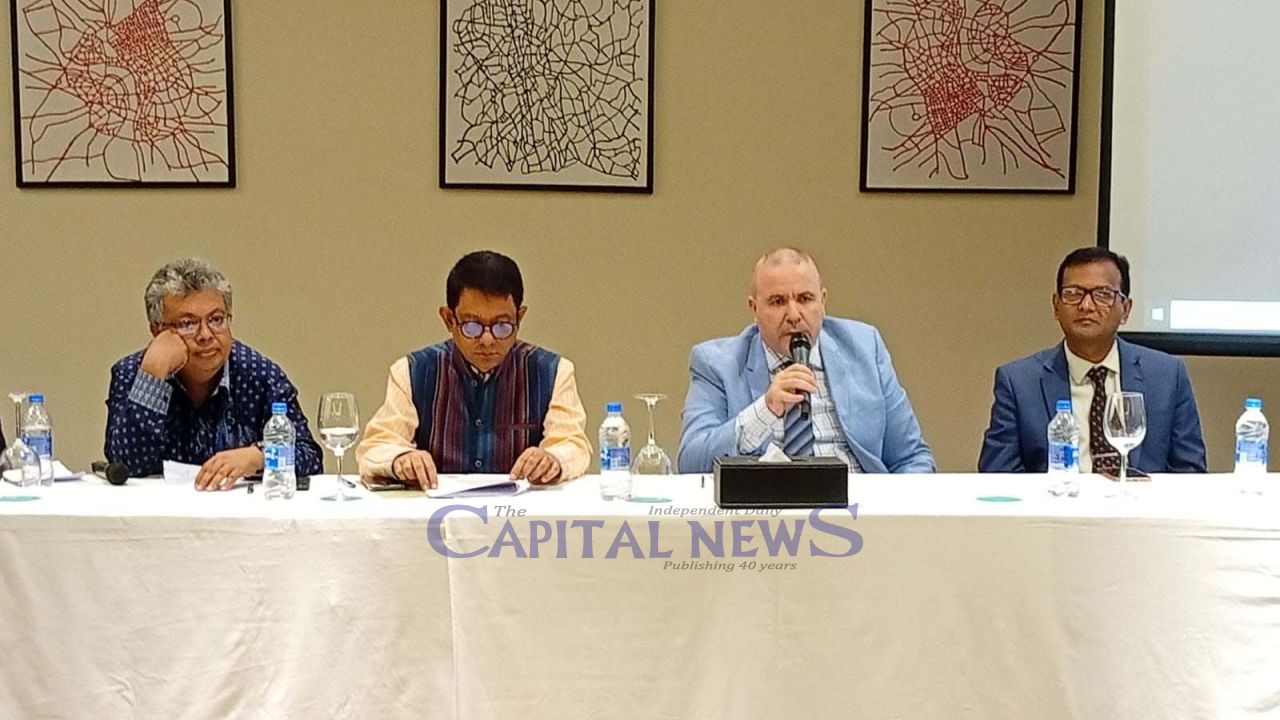
international cooperation.Titled “The Algerian
Revolution of November 1, 1954, and Its Impact on International Relations,” the
conference was held at Le Méridien Dhaka, bringing historical, diplomatic and
political perspectives into focus.Addressing the
gathering, Algerian Ambassador to Bangladesh Dr Abdelwahab Saïdani described
the revolution as far more than a national struggle for independence, saying it
had helped shape global diplomacy, strengthen human rights and establish the
right of nations to determine their own political futures.He recalled that the
Algerian people launched their liberation struggle against 132 years of French
colonial rule with extraordinary courage, sacrifice and determination. After a
prolonged and bloody war, Algeria achieved independence in July 1962.The Ambassador said the
revolution subsequently became a powerful source of inspiration for
freedom-loving people across Africa, Asia and Latin America, establishing
Algeria as an important voice in the global struggle against colonial
domination.Highlighting its wider
political consequences, Saïdani noted that the Algerian War contributed to the
collapse of France's Fourth Republic in 1958 and the establishment of the Fifth
Republic. It also strengthened international recognition of the right to
independence, particularly in the context of the United Nations General
Assembly Resolution 1514, adopted in 1960.He said the revolution
raised a fundamental question for the international community: how could
colonial populations be denied freedom, dignity and political rights while the
world continued to advocate universal human rights?Following independence,
Algeria became a major supporter of international liberation movements and a
centre for revolutionary solidarity, earning the distinction of the “Mecca of
Revolutionaries”.The Ambassador also
recognised the intellectual contributions of Frantz Fanon and Jean-Paul Sartre,
whose writings exposed colonial oppression, torture and psychological
suffering, bringing the struggle for human dignity to the forefront of
international debate.Beyond commemorating a
historic national milestone, the conference served as an opportunity for the
Algerian Embassy to reinforce the longstanding friendship between Bangladesh
and Algeria.Drawing parallels
between the two nations' struggles for freedom, Saïdani said the values of
sacrifice, dignity, sovereignty and self-determination embodied in Algeria's
liberation movement also hold deep significance for the people of Bangladesh.He stressed the
importance of strengthening bilateral friendship, promoting solidarity among
countries of the Global South, resolving international disputes peacefully and
upholding humanitarian principles.Concluding his address,
the Ambassador declared: “Long lives Algeria. Long live Bangladesh. Long live
the friendship between our two peoples.”The statement
underscored the diplomatic significance of shared historical experiences in
building stronger relations between developing countries.The conference also
examined the revolution's lasting influence on international politics through a
keynote paper presented by Professor Dr S. M. Shamim Reza of the Department of
Mass Communication and Journalism.In his paper, titled
“The Algerian Revolution of 1954: Its Impact on International Relations and
World Politics,” Professor Reza described the uprising as a defining political
struggle that helped transform the international system from European colonial domination
towards an order based on independent and sovereign states.He explained that the
National Liberation Front (FLN), which led the revolution launched on November
1, 1954, successfully internationalised Algeria's independence movement through
diplomatic initiatives, media engagement, international networks and support
from other countries.As a result, the
struggle moved beyond France's efforts to portray it as an internal security
issue and became an important subject of discussion at the United Nations and
other international institutions.Professor Reza also
discussed the revolution's implications for France's relations with the United
States, NATO and the United Nations, as well as its contribution to Afro-Asian
solidarity following the 1955 Bandung Conference.He highlighted the
importance of the Evian Accords, signed in March 1962, which paved the way for
Algeria's independence later that year.According to his
analysis, the Algerian experience demonstrated how armed resistance, diplomatic
engagement, international solidarity and political pressure could transform a
national liberation movement into a major force in world politics.He added that its
lessons remain relevant to contemporary debates on national sovereignty,
self-determination, international justice and the enduring consequences of
colonialism.The conference
highlighted that the November Revolution remains central to Algeria's national
identity and its engagement with the international community.For the Algerian
Embassy in Dhaka, the anniversary also provided a diplomatic platform to
connect the country's liberation legacy with contemporary priorities, including
cooperation among developing nations, peaceful international relations and respect
for national sovereignty.Speakers expressed hope
that the shared historical values of Bangladesh and Algeria would contribute to
deeper bilateral understanding and stronger cooperation.
At a time when
questions of sovereignty, international justice and the rights of nations
continue to shape global politics, the conference offered a reminder that the
struggle for independence is not merely a chapter in history but an enduring
foundation for international friendship, dignity and solidarity.