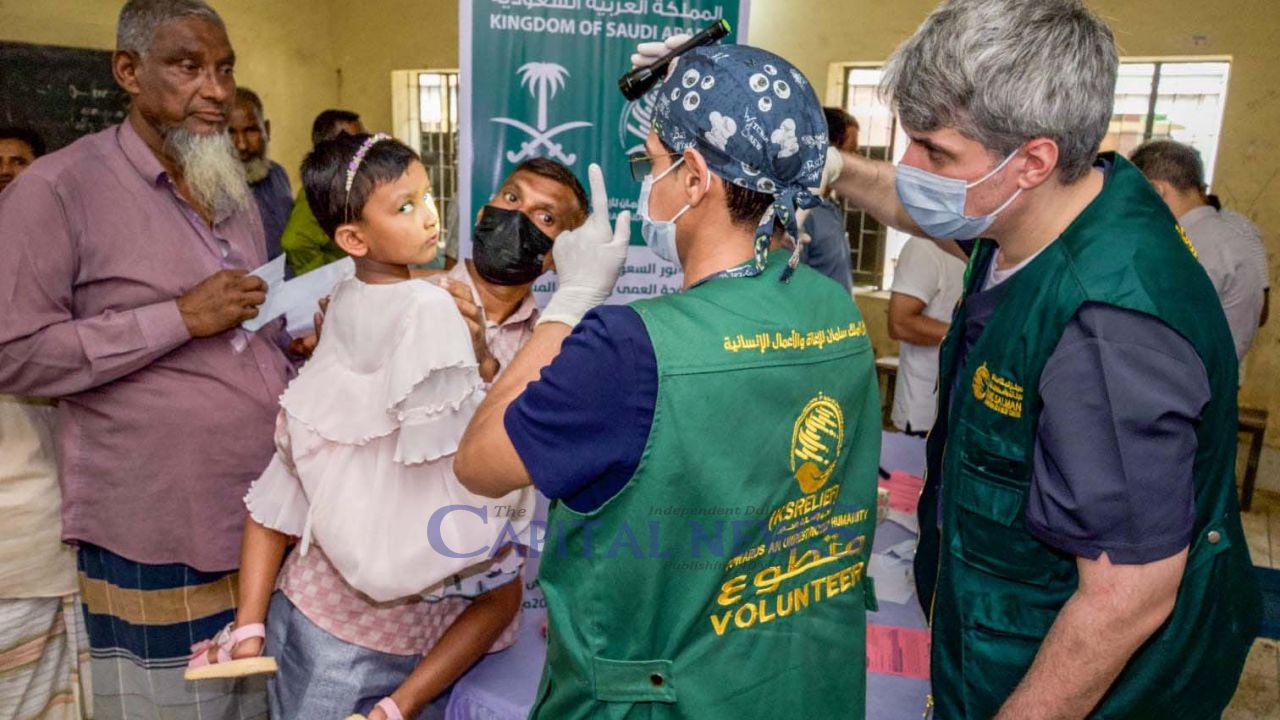
Saudi campaign provides free eye care to 5,000+ Bangladeshis
Saudi doctors perform 586 cataract surgeries as King Salman Humanitarian Aid and Relief Center initiative brings specialised treatment to disadvantaged BangladeshisMM
Rahmatullah: More
than 5,000 people from low-income communities in Rangpur have received free eye
examinations, medical consultations, medicines and reading glasses under a
Saudi-funded humanitarian medical campaign, offering much-needed relief to
people who struggle to afford specialised eye care.The
seven-day campaign, organised at Makka Eye Hospital in Rangpur, provided free
eye care services to 5,014 patients and successfully conducted 586 cataract
surgeries, according to the Al-Basar International Foundation, a Saudi-based
non-governmental organisation working to improve eye health and restore vision
among vulnerable communities. The
initiative was funded by the King Salman Humanitarian Aid and Relief Center
(KSrelief) and the Al-Basar International Foundation, reflecting Saudi Arabia's
humanitarian engagement in Bangladesh, particularly in areas where financial
hardship prevents many people from accessing essential healthcare. Three
volunteer Saudi doctors from KSrelief, working alongside medical professionals
from the Rangpur hospital, carried out the procedures during the campaign. Speaking
to Arab News on Sunday, Dr Ahmed Taher Hamid Ali, country director of the
Al-Basar International Foundation, said a total of 5,014 patients had received
free examinations, medical consultations, medicines and reading glasses, while
586 cataract operations had been completed successfully. “Eye
problems, particularly cataracts and other age-related vision problems, remain
a significant concern for many people in the Rangpur region,” he said. Rangpur,
in northern Bangladesh, is home to many low-income households for whom the cost
of specialised medical treatment can be a major barrier. Eye diseases that
could be treated through timely medical intervention may leave patients
struggling with everyday activities when diagnosis and surgery remain beyond
their financial means. The
campaign sought to address this challenge by bringing eye care services
directly to disadvantaged communities, reducing the financial burden on
patients and enabling hundreds of people with cataracts to regain their sight. Restoring
vision can make a significant difference to people's lives, helping them return
to work, carry out household responsibilities and live more independently. For
families dependent on daily earnings, untreated eye problems can also affect
their income and overall well-being. Dr
Ali said the campaign was particularly important because many people in Rangpur
Division could not easily afford specialised eye care. “By
bringing essential eye care services directly to the community, the campaign
helped people who might otherwise have gone without proper treatment,” he said. He
added that the participation of Saudi volunteer doctors highlighted the
importance of humanitarian cooperation and a shared commitment to providing
essential healthcare to people in need. For
beneficiaries, the programme offered relief not only from the financial burden
of treatment but also from the uncertainty and difficulties associated with
impaired vision. China
Begum, a 55-year-old woman who underwent cataract surgery during the campaign,
said she had been advised to have the operation long ago but could not afford
the procedure and the necessary medicines. With
support from the Saudi-funded initiative, she was finally able to receive treatment
and have her eyesight restored. Expressing
gratitude for Saudi Arabia's support, she said the treatment would help her
resume her daily activities and take care of her family without depending as
much on others. “I
found the doctor very humble and cordial. He treated me like a mother,” she
told Arab News. Describing
her experience, she said the operation took around 30 minutes and was almost
painless. Doctors also provided her with medicines and glasses without charge
after the surgery. The
experience illustrates how access to timely and affordable healthcare can
transform the lives of people who have long been unable to seek treatment
because of poverty. The
campaign also highlights the importance of cooperation between humanitarian
organisations and local medical institutions in reaching underserved
communities. By combining international medical expertise with the facilities
and personnel of a local hospital, the initiative delivered treatment to
thousands of patients within a short period.For
Bangladesh, where access to specialised healthcare remains a challenge for many
disadvantaged households, such programmes can provide immediate relief while
drawing attention to the need for affordable and accessible eye care.
The
seven-day initiative in Rangpur has thus brought renewed hope to thousands of
patients, including hundreds who underwent cataract surgery and can now look
forward to improved vision and greater independence.