Eight years after the road safety movement: Bangladesh’s roads remain a deadly challenge
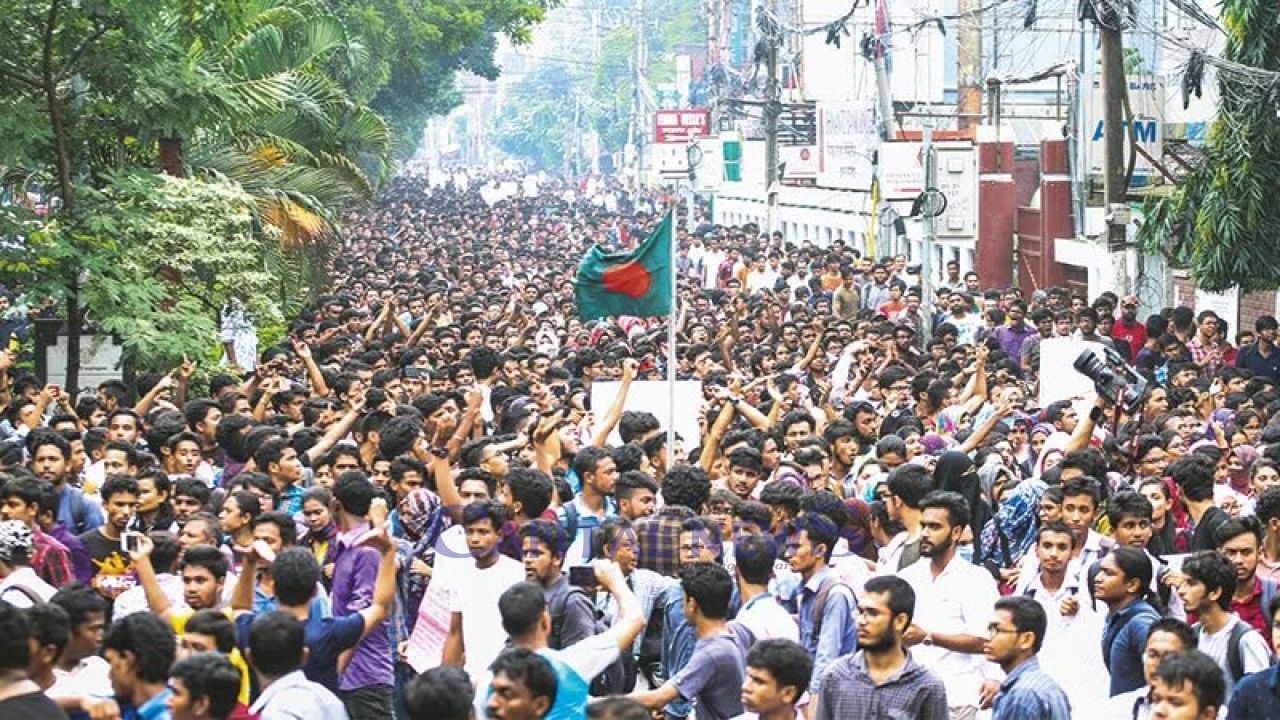
MM Rahmatullah: Eight years have passed since the tragic deaths of two students on Dhaka's Airport Road sparked one of the largest student-led movements in Bangladesh's recent history. The movement forced the government to promise sweeping reforms, inspired nationwide demands for safer roads, and created expectations of a new era in transport safety.Yet, eight years later, the reality on the streets tells a different story.Roads across Bangladesh have become increasingly dangerous, with annual fatalities reaching record levels. Many of the key demands raised by students in 2018 remain unfulfilled, while reckless driving, unfit vehicles, weak enforcement and poor road management continue to claim thousands of lives every year.The Road Safety Movement began on July 29, 2018, after two students of Shaheed Ramiz Uddin Cantonment College were killed on Airport Road in front of Kurmitola General Hospital.The students were waiting for transport after classes when two buses of Jabal-e-Noor Paribahan, operating on the Abdullahpur-Mohammadpur route, were allegedly racing each other. The competition between the buses ended in tragedy as one of them crashed into the waiting students.Class XII student Rajib and Class XI student Dia Khanam Mim were killed, while at least 10 others were injured.The deaths immediately sparked protests. Students blocked roads across Dhaka, demanding justice, accountability and fundamental reforms in the transport sector. Within days, the movement spread nationwide, with school and college students taking to the streets demanding safer roads and strict enforcement of traffic laws.Their nine-point demand included removing unfit vehicles from roads, preventing unlicensed drivers from operating vehicles, building pedestrian crossings where necessary, installing speed breakers in accident-prone areas, ensuring half-fare facilities for students, holding authorities accountable for road deaths and introducing stronger punishment for reckless driving.The movement forced the then government to introduce the Road Transport Act 2018 and form a national taskforce aimed at improving road safety.However, experts say the implementation of these measures remained weak. Many provisions of the law were not properly enforced, while later amendments reduced some fines and penalties. Two offences that were originally non-bailable were later made bailable.Recommendations made by the taskforce also remained largely unimplemented.The result has been a widening gap between policy promises and the everyday reality faced by millions of road users.Official statistics indicate that Bangladesh's road safety situation has deteriorated despite the movement.According to Bangladesh Road Transport Authority (BRTA) data, 2,635 people were killed in road crashes in 2018. Since then, annual deaths have remained alarmingly high.BRTA figures show that road fatalities stood at 4,138 in 2019, 3,918 in 2020, 5,084 in 2021, 4,636 in 2022, 5,024 in 2023, 5,480 in 2024 and reached a record 5,490 in 2025.Police Headquarters data based on first information reports presents an even more worrying picture, showing a sharp rise in road deaths over the decades.Behind every number is a family facing permanent loss.For many who joined the 2018 movement, road safety is no longer just a social issue - it is a personal tragedy.Sherrif Faruqi, who participated in the Road Safety Movement, recently lost his elder brother after a speeding truck hit his motorcycle from behind in Mirsharai, Chittagong, while he was returning home after Friday prayers.The incident reminded him of another tragedy from 2011, when he lost several classmates in the Mirsharai truck crash."Most vehicles do not maintain a safe distance, and speed limits are rarely enforced. Many unfit vehicles and even unfit or drug-impaired drivers continue operating freely," Faruqi said.He blamed weak enforcement and government negligence for the continued loss of lives.A recent look at several busy intersections in Dhaka shows that the problem is not only about vehicles and drivers. Pedestrian safety remains a major concern.At Kawran Bazar, many pedestrians were seen crossing roads without following traffic signals or using zebra crossings. Instead, many chose to cross directly through traffic, increasing accident risks.At Mirpur-10, one of Dhaka's busiest intersections, a footbridge exists, but many pedestrians still avoid using it.Some former participants of the 2018 movement admitted that they also sometimes cross roads directly instead of using footbridges.Public university student Samiul Ahmed said the condition of the Mirpur-10 footbridge discourages pedestrians."One side of the bridge is damaged, making it unsafe. The stairs are steep and not pedestrian-friendly," he said.Nadia Tasnim, another student, said she normally uses footbridges but crossed the road directly on one occasion because she was in a hurry.For elderly citizens, the challenge is even greater. A woman in her sixties said climbing steep footbridge stairs is physically difficult."I simply cannot climb such steep stairs at this age," she said.A similar situation was found at Science Lab, another important location of the 2018 movement. Many students were seen crossing busy roads without using the footbridge because of damaged stairs and poor accessibility.Experts say pedestrian behaviour is only one part of the crisis.According to BRTA officials, more than 80,000 registered commercial vehicles, including buses and trucks, have exceeded their economic lifespan. Nearly six lakh vehicles do not have valid fitness certificates, while many drivers operate without proper licences.Under existing laws, such vehicles and drivers should not be allowed on roads. However, weak monitoring and enforcement allow them to continue operating.The Road Safety Foundation has identified several major causes behind crashes, including defective vehicles, reckless speeding, overloaded transport, untrained and unhealthy drivers, excessive working hours for drivers, poor road infrastructure, weak traffic management, inadequate law enforcement, limited institutional capacity and low public awareness.Professor Dr Hadiuzzaman, former director of the Accident Research Institute at Bangladesh University of Engineering and Technology (BUET), said Bangladesh has failed to achieve the road safety standards expected after the 2018 movement."Our expectations for safer roads have not been fulfilled. Political commitment and sincere implementation are essential," he said.He stressed that pedestrians remain the largest victims of urban road crashes and said safer roads require better traffic management, improved public transport and pedestrian-friendly infrastructure."We often focus only on vehicles while ignoring pedestrians," he said.He also questioned the heavy reliance on footbridges as the main solution for pedestrian safety."Most major cities around the world do not depend on footbridges. Roads should be designed to give pedestrians priority, with vehicles stopping to allow people to cross safely," he said.He welcomed recent initiatives such as AI-based traffic monitoring systems in parts of Dhaka but said much broader reforms are necessary.Md Enzamul Haque, general secretary of Nirapod Sorok Andolon and one of the organisers of the 2018 movement, said the original demands remain largely unresolved."Eight years have passed, but we are still working to achieve the same nine demands," he said.He said many people had hoped that major reforms would follow the political changes of 2024, but meaningful progress has yet to be seen.He also criticised the lack of awareness campaigns on road safety."If people are never taught why they should use footbridges, how can students be expected to develop that habit?" he questioned.According to him, footbridges alone cannot solve Dhaka's pedestrian safety problems, especially for elderly people and persons with disabilities.Experts believe Bangladesh needs a comprehensive approach to end the road safety crisis.They identify three essential priorities: developing planned and people-centred infrastructure, ensuring proper training and licensing of drivers and road users, and enforcing traffic laws consistently.Without these combined efforts, legal reforms alone will not be enough.Eight years ago, thousands of students stood on the streets demanding safe roads. Their movement changed public awareness and created national pressure for reform.But the central promise of that movement - a safer road system for everyone - remains unfinished.For the families who have lost loved ones, for pedestrians who still fear crossing busy roads and for millions who travel every day, road safety remains not only a policy issue but a matter of survival.