The Daily Capital News

People voted for constitutional reform, not amendment: Prof Mujibur Rahman MP

People voted for constitutional reform, not amendment: Prof Mujibur Rahman MP

MM Rahmatullah: Bangladesh Jamaat-e-Islami Naib-e-Ameer Professor Mujibur Rahman MP has called for implementing constitutional reforms and the July Charter in line with the referendum verdict, rather than pursuing constitutional amendments.

He alleged that the government had disrespected the majority of the people by ignoring the referendum outcome. According to him, nearly 71 percent of voters had supported constitutional reform in the referendum.

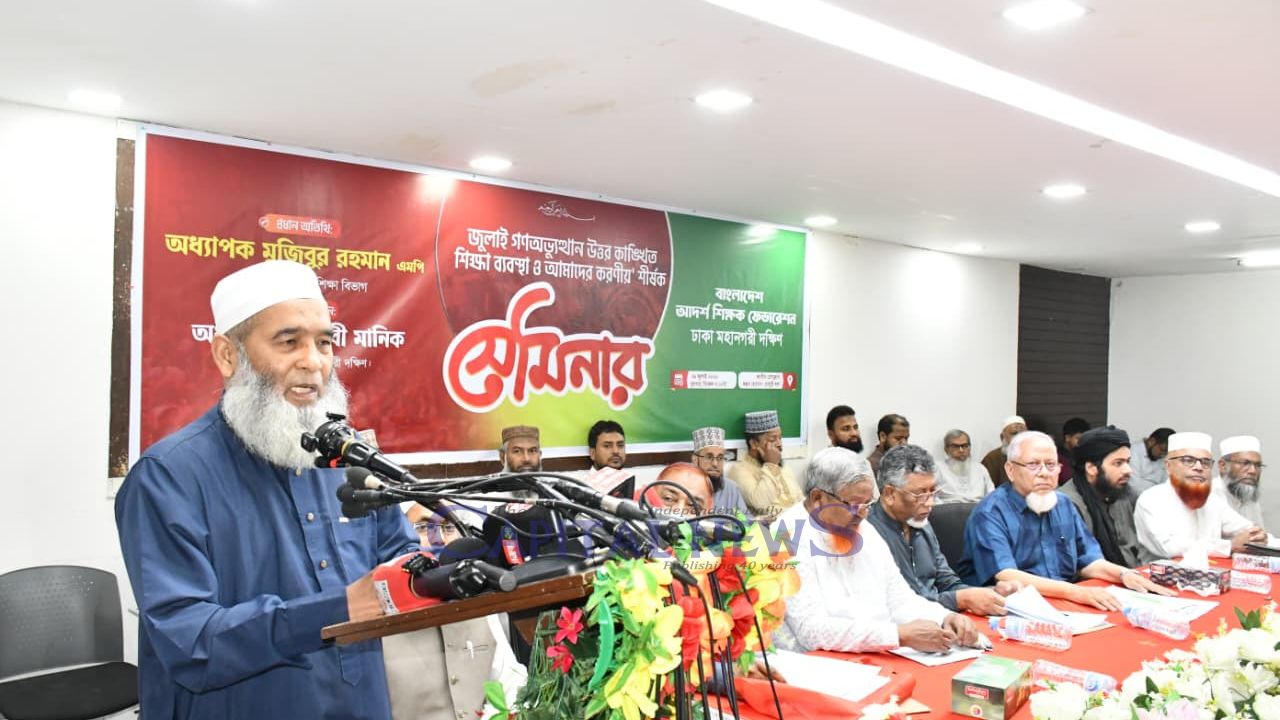
He made the remarks as the chief guest at a seminar titled “Desired Education System after the July Mass Uprising and Our Responsibilities” at the Jatiya Press Club’s Zahir Hossain Chowdhury Hall on Wednesday afternoon.

The seminar was organised by the Dhaka South unit of Bangladesh Adarsha Shikshak Federation.

“People voted in favour of constitutional reform, not amendment,” Mujibur Rahman said. He also claimed that those who had refused to take oath as members of the Constitutional Reform Council in accordance with the referendum verdict could not genuinely uphold the July Charter.

He said Jamaat-e-Islami would continue its movement both inside and outside parliament as an opposition party until the referendum verdict was implemented.

“We cannot step back without securing the people’s demands,” he said, adding that no one would be allowed to betray the blood of those who were killed during the July uprising.

Speaking about education, Mujibur Rahman said the education system would also have to be reformed alongside state reforms.

“Knowledge and character are part of the same circle,” he said, arguing that a future generation should be developed through a combination of knowledge and character. He called for formulating an education policy inspired by Islamic educational principles.

Recalling the July movement, he said it had initially begun as a protest against discrimination, with students demanding the abolition of the quota system in government jobs and recruitment based on merit.

The movement later evolved into protests against what he described as the government’s “mass killings” and demands for state reform, eventually turning into a movement to oust the government. People from different professions and sections of society subsequently joined the students, he said.

He claimed that the Awami League government was ousted on August 5, 2024, following the united movement of students and the public.

Mujibur Rahman alleged that the BNP, after coming to power, was working to revive the “old fascist culture”. He further alleged that although various forms of quota had existed previously, recruitment and appointments were now being made on the basis of a “party quota”.

Criticising the BNP’s slogan “Bangladesh First”, he alleged that the country was now being governed according to a policy of “BNP First”.

He also alleged that some BNP-nominated candidates who failed to win parliamentary elections through popular votes had subsequently been appointed as district council chairmen or city corporation administrators.

He further claimed that vice-chancellors of universities and officials in Bangladesh Bank, banks, insurance companies and other financial institutions were being appointed on political considerations.

Mujibur Rahman urged the government not to restore the old political culture and instead implement the July Charter in accordance with the referendum verdict to build a “new Bangladesh”.

Professor Dr Ilias Hossain Molla MP, speaking as a special guest, called for an ethical education system based on the values of individual religions. He also stressed obedience to Allah and urged society to move beyond Western influence.

Criticising the government, he alleged that the BNP was moving away from the commitments it had made to the nation through its 31-point reform agenda.

He said constitutional reform was the first point of the 31-point agenda but alleged that the BNP, after coming to power, was seeking constitutional amendment instead of reform.

He called on the government to fulfil the promises and commitments made to the people.

Mufti Ali Hasan Osama stressed the importance of language skills and competence. He said greater emphasis on Arabic, alongside Bangla and English, could help Bangladeshi workers employed in Middle Eastern countries become more skilled and effective.

Expressing concern over the lack of budget allocation for research at Dhaka University, he said research and innovation should receive greater emphasis in the education system following the July mass uprising.

He also criticised the influence of partisan politics in educational institutions, saying it was damaging the prospects of talented students.

He called for equal educational opportunities for students in urban and rural areas and demanded an end to disparities between general and madrasa education.

The seminar was chaired by Professor Nur Nabi Manik, president of the Dhaka South unit of Bangladesh Adarsha Shikshak Federation. The keynote paper was presented by educationist, writer and researcher Principal Professor Md Jamal Hossain.

Among others, Bangladesh Adarsha Shikshak Federation Secretary General Professor ABM Fazlul Karim, Dhaka Union of Journalists President and Daily Manabkantha Editor Md Shahidul Islam, and Principal Maulana Mosharraf Hossain spoke at the event.

In his presidential address, Professor Nur Nabi Manik said Generation Z had presented the nation with a vision of a discrimination-free new Bangladesh.

To realise that vision, he demanded nationalisation of the jobs of private and MPO-enlisted teachers, saying it would reduce the existing disparity between government school teachers and MPO-enlisted teachers at private schools.

He also demanded the withdrawal of a provision in the amended Representation of the People Order (RPO) for local government elections that prevents MPO-enlisted teachers from contesting elections.

“Many members of parliament were previously MPO-enlisted teachers. If an MPO-enlisted teacher can become a member of parliament, but cannot contest a local government election, such discrimination cannot be accepted by the teaching community,” Professor Manik said.


Subject : National Education

Write Your Opinion

The Daily Capital News

বুধবার, ২৯ জুলাই ২০২৬


People voted for constitutional reform, not amendment: Prof Mujibur Rahman MP

Publish Date : 29 July 2026

featured Image
MM Rahmatullah: Bangladesh Jamaat-e-Islami Naib-e-Ameer Professor Mujibur Rahman MP has called for implementing constitutional reforms and the July Charter in line with the referendum verdict, rather than pursuing constitutional amendments.He alleged that the government had disrespected the majority of the people by ignoring the referendum outcome. According to him, nearly 71 percent of voters had supported constitutional reform in the referendum.He made the remarks as the chief guest at a seminar titled “Desired Education System after the July Mass Uprising and Our Responsibilities” at the Jatiya Press Club’s Zahir Hossain Chowdhury Hall on Wednesday afternoon.The seminar was organised by the Dhaka South unit of Bangladesh Adarsha Shikshak Federation.“People voted in favour of constitutional reform, not amendment,” Mujibur Rahman said. He also claimed that those who had refused to take oath as members of the Constitutional Reform Council in accordance with the referendum verdict could not genuinely uphold the July Charter.He said Jamaat-e-Islami would continue its movement both inside and outside parliament as an opposition party until the referendum verdict was implemented.“We cannot step back without securing the people’s demands,” he said, adding that no one would be allowed to betray the blood of those who were killed during the July uprising.Speaking about education, Mujibur Rahman said the education system would also have to be reformed alongside state reforms.“Knowledge and character are part of the same circle,” he said, arguing that a future generation should be developed through a combination of knowledge and character. He called for formulating an education policy inspired by Islamic educational principles.Recalling the July movement, he said it had initially begun as a protest against discrimination, with students demanding the abolition of the quota system in government jobs and recruitment based on merit.The movement later evolved into protests against what he described as the government’s “mass killings” and demands for state reform, eventually turning into a movement to oust the government. People from different professions and sections of society subsequently joined the students, he said.He claimed that the Awami League government was ousted on August 5, 2024, following the united movement of students and the public.Mujibur Rahman alleged that the BNP, after coming to power, was working to revive the “old fascist culture”. He further alleged that although various forms of quota had existed previously, recruitment and appointments were now being made on the basis of a “party quota”.Criticising the BNP’s slogan “Bangladesh First”, he alleged that the country was now being governed according to a policy of “BNP First”.He also alleged that some BNP-nominated candidates who failed to win parliamentary elections through popular votes had subsequently been appointed as district council chairmen or city corporation administrators.He further claimed that vice-chancellors of universities and officials in Bangladesh Bank, banks, insurance companies and other financial institutions were being appointed on political considerations.Mujibur Rahman urged the government not to restore the old political culture and instead implement the July Charter in accordance with the referendum verdict to build a “new Bangladesh”.Professor Dr Ilias Hossain Molla MP, speaking as a special guest, called for an ethical education system based on the values of individual religions. He also stressed obedience to Allah and urged society to move beyond Western influence.Criticising the government, he alleged that the BNP was moving away from the commitments it had made to the nation through its 31-point reform agenda.He said constitutional reform was the first point of the 31-point agenda but alleged that the BNP, after coming to power, was seeking constitutional amendment instead of reform.He called on the government to fulfil the promises and commitments made to the people.Mufti Ali Hasan Osama stressed the importance of language skills and competence. He said greater emphasis on Arabic, alongside Bangla and English, could help Bangladeshi workers employed in Middle Eastern countries become more skilled and effective.Expressing concern over the lack of budget allocation for research at Dhaka University, he said research and innovation should receive greater emphasis in the education system following the July mass uprising.He also criticised the influence of partisan politics in educational institutions, saying it was damaging the prospects of talented students.He called for equal educational opportunities for students in urban and rural areas and demanded an end to disparities between general and madrasa education.The seminar was chaired by Professor Nur Nabi Manik, president of the Dhaka South unit of Bangladesh Adarsha Shikshak Federation. The keynote paper was presented by educationist, writer and researcher Principal Professor Md Jamal Hossain.Among others, Bangladesh Adarsha Shikshak Federation Secretary General Professor ABM Fazlul Karim, Dhaka Union of Journalists President and Daily Manabkantha Editor Md Shahidul Islam, and Principal Maulana Mosharraf Hossain spoke at the event.In his presidential address, Professor Nur Nabi Manik said Generation Z had presented the nation with a vision of a discrimination-free new Bangladesh.To realise that vision, he demanded nationalisation of the jobs of private and MPO-enlisted teachers, saying it would reduce the existing disparity between government school teachers and MPO-enlisted teachers at private schools.He also demanded the withdrawal of a provision in the amended Representation of the People Order (RPO) for local government elections that prevents MPO-enlisted teachers from contesting elections.“Many members of parliament were previously MPO-enlisted teachers. If an MPO-enlisted teacher can become a member of parliament, but cannot contest a local government election, such discrimination cannot be accepted by the teaching community,” Professor Manik said.  

The Daily Capital News

Advisory Editor: Gayeshwar Chandra Roy
Editor: Abul Kashem Majumder
Acting Editor: Mohammad Alamgir Hossain
Executive Editor: Farid Ahmed Ripon

© 2025 The Daily Capital News