

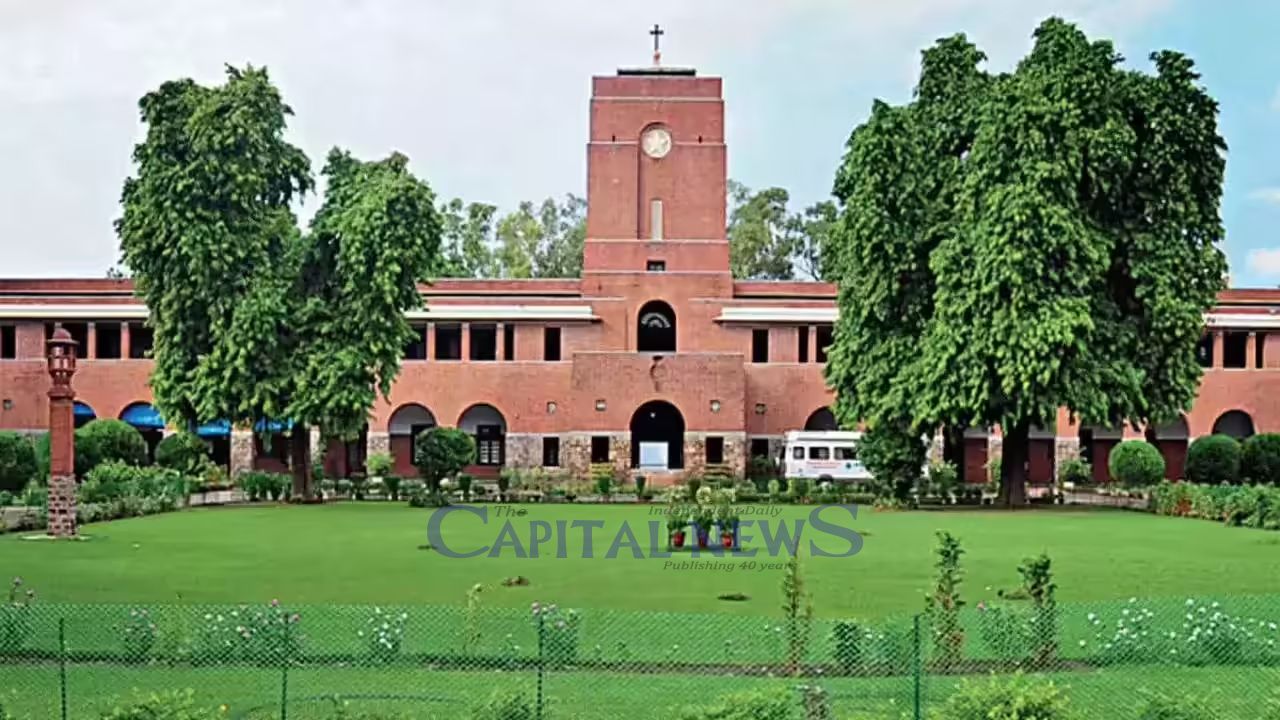
Dr Firoz Mahboob Kamal
The Pakistan Era
During 200 years of
British rule, there was only one university in East Bengal: the University of
Dhaka. Even that, it is claimed, was opposed by Rabindranath Tagore and the
influential circles in Kolkata. Even Dhaka University had less than one
thousand students in 1947.
The British made almost
no development in East Bengal over nearly two centuries. They came to this
prosperous land only to plunder. Whenever there were attempts to do something,
the elites of Kolkata -located in West Bengal, allegedly stood in the way. They
had made Kolkata the capital of India. They didn't want Dhaka to emerge as its
competitor.
In the schools and
colleges of Bangladesh, it is taught that Pakistan exploited the people of East
Pakistan for 24 years. But it is never told about the achievement during the
Pakistani period. Yet many of Bangladesh’s major developments took place during
the Pakistan era. That amount of development never happened before.
5 major universities
were established during the Pakistan period. All of these universities are
residential with a large number of dormitories. These are:
1. Rajshahi University (1953)
2. University of Chittagong (1966)
3. Jahangirnagar University (1970)
4. Jagannath College, Later University (1968)
5. East Pakistan Agricultural University (now
Bangladesh Agricultural University) (1961)
The universities that
were built after 1971, are very small universities in comparison to those built
during the Pakistan era.
4 engineering
universities were established during the Pakistan period:
1. Bangladesh University of Engineering and
Technology (BUET) – 1962
2. Rajshahi University of Engineering and
Technology (RUET) – 1964
3. Chittagong University of Engineering and
Technology (CUET) – 1968
4. Khulna University of Engineering and Technology
(KUET) – 1969
It is worth noting that
Bangladesh currently has 5 engineering universities, of which 4 were founded
during the Pakistan era. Only 1 was established in the following 50 years.
During the Pakistan
era, 87 colleges were built, including the noted ones:
Notre Dame College,
Dhaka (1949) with private involvement
Government Shaheed
Suhrawardy College (1949)
Bangla College (1962)
Viqarunnisa Noon School
and College
It is also stated that
Dhaka currently has 39 colleges: 8 founded during British rule, 21 during
Pakistan rule, and only 10 in the 50 years after independence.
During the Pakistan
era, 8 huge government medical colleges were established:
1. Chittagong Medical College (1957)
2. Rajshahi Medical College (1958)
3. Mymensingh Medical College (1962)
4. Sylhet M.A.G. Osmani Medical College (1962)
5. Sir Salimullah Medical College (1963)
6. Institute of Postgraduate Medical Research
(now Bangabandhu Sheikh Mujib Medical University) (1966)
7. Sher-e-Bangla Medical College, Barisal
(1968)
8. Rangpur Medical College (1970)
It is noted that only
one medical college was established during 200 years of British rule: Dhaka
Medical College. Although it was founded before 1947, its operations were expanded
during the Pakistan era.
During the Pakistan
era, 17 polytechnic institutes were established. Bangladesh currently has 49
government polytechnic institutes. That means Pakistan established 17 in 24
years, while Bangladesh established 32 in 50 years.
During the Pakistan
era, 4 huge cadet colleges were established:
1. Faujdarhat Cadet College (1958)
2. Mirzapur Cadet College (1963)
3. Jhenaidah Cadet College (1963)
4. Rajshahi Cadet College (1965)
Bangladesh currently
has 12 cadet colleges, of which 4 were founded during the Pakistan era.
Chittagong Marine
Academy was established in 1962 by the Pakistan Navy to train naval officers
and marine engineers. It is now called Bangladesh Marine Academy (BMA).
Also established were:
East Pakistan Textile
Institute (1950), now Bangladesh Textile University (BUTEX)
Chittagong Technical
Training Center, through which technical education activities began in
Bangladesh in 1962
Many other specialized
colleges, universities, institutes, and nursing colleges were also founded
during the Pakistan era. In addition, thousands of primary schools and high
schools were established nationwide.
Many complain that East
Pakistan lagged behind West Pakistan because less development was done here.
But note: during British rule, Bangladesh had only 1 university, while West
Pakistan had many. In other words, before the creation of Pakistan, we were
already behind in higher education. Moreover East Pakistan had only one capital
city, West Pakistan had four.
In 1947, literacy in
this region was only 12%. In the 1961 census, it rose to 24.7%. That means
literacy doubled in just 13 years. Since no 1971 census took place, the true
literacy rate during the final Pakistan years is unknown.
Infrastructure,
industries, mills and factories during Pakistan era:
Bangladesh Secretariat
(after 1971, the old Building No. 6 was demolished and replaced with a 20-story
building)
Sher-e-Bangla Nagar was
planned as Pakistan’s second capital
National Parliament
Building
Baitul Mukarram Mosque
Bangla Academy
Islamic Academy (now
Islamic Foundation)
Radio centers in
Rajshahi, Chittagong, Khulna, Rangpur, and Sylhet
Kamalapur Railway
Station
Mirpur Zoo
Kurmitola Airport
(Dhaka’s international airport)
Jamuna Bridge (approved
in parliament in 1966)
Rooppur Nuclear Power
Project (planned in 1961, later canceled in 1972)
Shahjibazar Power Plant
Ashuganj Power Plant
Karnaphuli Power Plant
Hotel Intercontinental
Ganges-Kobadak Project
Rampura Television
Building
Dhaka Stadium
Dhaka Museum
WAPDA and hundreds of
dams and irrigation projects
Urban development of
Dhanmondi, Mohammadpur, Mirpur, Gulshan, Banani, etc.
Hundreds of jute and
textile mills later destroyed through naturalization after independence
East Pakistan
Industrial Development Corporation (EPIDC) for industrialization.
Other development
projects:
Gazipur Ordnance
Factory
Gazipur Machine Tools
Factory
Mongla Seaport
New Market in Dhaka and
one in each divisional city
Tejgaon Industrial Area
Hazaribagh Tannery Area
Khalishpur Industrial
Area
Adamjee Jute Mills
(Narayanganj): 1951
Khulna Newsprint Mills:
1959
Chittagong Dry Dock:
1960
Eastern Refinery
Limited (Chittagong): 1968
Dhaka Jute Mills
Limited: 1950s
Amin Jute Mills Limited
(Chittagong): 1953
Khulna Jute Mills:
1950s
Ispahani Cotton Mills:
founded during Pakistan era
Kaptai Hydroelectric
Project – 1962
Chandraghona Paper Mill
– 1953
Karnaphuli Rayon Mill –
1953
Pragati Industries –
1953
Bangladesh’s only oil
refinery was also built by Pakistan.
Pakistan's achievement
after 1971
After the 1971 war,
Pakistan “ate grass” and built nuclear bombs. It now possesses an estimated
arsenal of around 170 nuclear warheads.
Because of the sky-high
success of its air force, the country has taken responsibility for Saudi
Arabia’s security. Pakistan Air Force ranks seventh among the world’s strongest
air forces, with 1,434 combat aircraft and strategy, centered around the
American F-16, JF-17 Thunder, and modern Chinese J-10C.
It possesses multiple
advanced missiles such as Shaheen-III (range up to 2,750 km), Ghauri, and
Ghaznavi. It also has the Babur missile, capable of carrying both nuclear and
conventional warheads, launched from land or sea.
Its army has more than
2,600 main battle tanks, including advanced Khalid, VT-4, and T-80UD tanks.
The country has
elevated its defense sector to international standards. In joint cooperation
with China, it has built its own fighter aircraft. It has advanced drone
capabilities such as the Burraq and cooperates with China on Wing Loong drones.
It has eight
submarines, along with modern frigates, corvettes, and fast missile boats to
secure its coastline and economic interests.
It also possesses more
than 3,000 artillery pieces (both towed and self-propelled) and multiple rocket
launchers.
Even Pakistan has 11
universities recognized as international standard. In education quality too,
Pakistan is said to be far ahead. Most importantly, it has played a major role
in international diplomacy by helping stop the Iran war. It has established
itself as an important global player from both diplomatic and military
perspectives—able to bring even America and Iran to the same table.
Achievement of
Bangladesh after 1971
And victorious
Bangladesh in 1971, after fighting a war, received only a certificate of
servitude from India. Bangladesh was plundered by India. Democracy was replaced
by Mujib's BAKSHALli fascism. The country became a bottomless begging basket.
Invited famine in 1974 that killed more than a million. Bangladesh became a
land of easy political, intellectual and military invasion by India. Because of
India, the country became a land of oppression, persecution and genocide for
the Islam loving people.
The lost opportunity
for the Bengali Muslims
If the united Pakistan
had survived, it could be the third largest nuclear state in the world in terms
of population. Pakistan could easily make more than one trillion
economies. Since the Bengalies were the
majority ethnic group in Pakistan, they could easily possess the driving seat
of the country and play an important role in world politics. Since Pakistan was
the largest Muslim country in the world, it could play a leading role in Muslim
World's politics. Because of its
pan-Islamic essence in its creation, Pakistan could be the model of a
civilisational state in the world.
In 24 years of
Pakistan, 4 Prime Ministers and 2 Head of the State of Pakistan were from East
Pakistan. Three Parliament speakers and some Supreme Court Chief Justices were
Bengali. Many federal ministers were Bengali. After the death of Qaid-e-Azam
Mohammad Ali Jinnah, Khazwa Nazimuddin became the head of Pakistan.
The Bengali Muslims
never rule their own country. They were always ruled by the non-Bengalies. This
is the problem with the people who lived thousands of years as subjects of
others and never became rulers. They became addicted to returning to their old
state of servitude. Therefore, though Pakistan offered huge opportunities for
the Bengalis, in 1971, they preferred to be a subservient vassal state of
India.
Subject : Op-Editorial
সোমবার, ২০ এপ্রিল ২০২৬
Publish Date : 20 April 2026

Write Your Opinion