

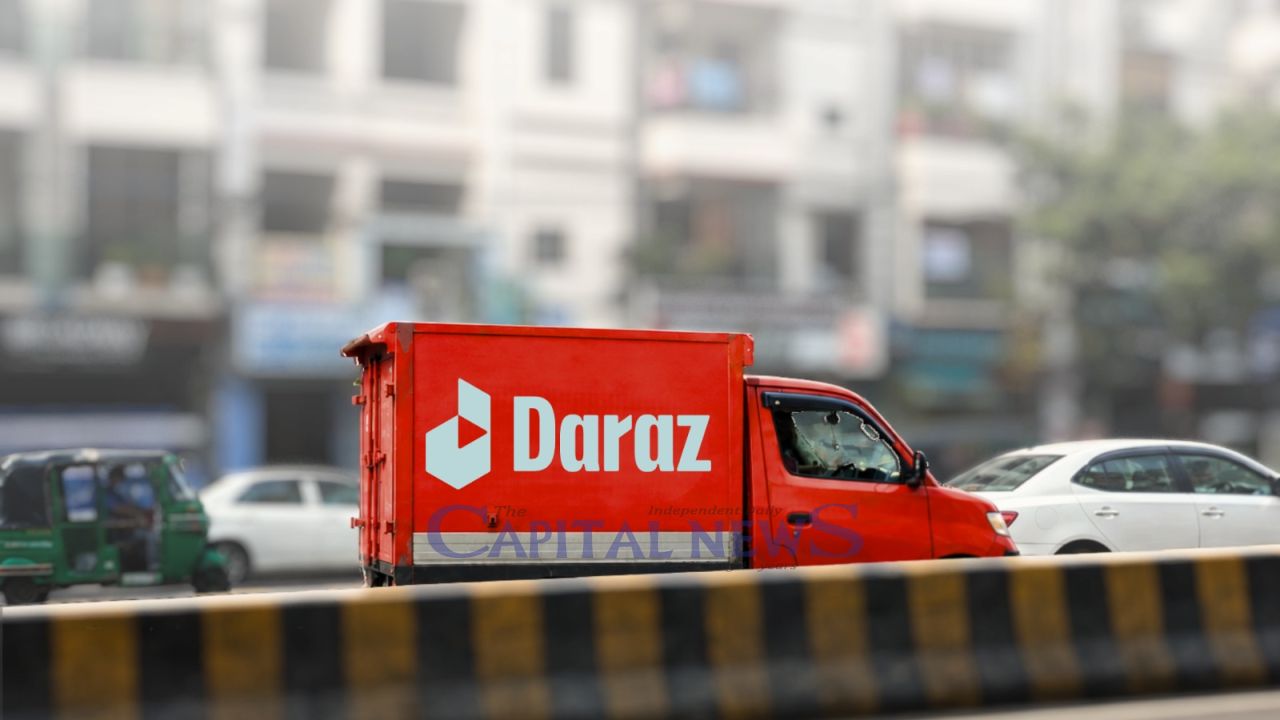
Daraz's decade-long journey reveals that marketplace success requires more than transactions, it demands infrastructure, trust, and ecosystem thinking
Ten years ago, e-commerce sat at the margins of Bangladesh’s retail economy. Today, it is becoming part of the country’s retail infrastructure. This transformation required sustained investment in logistics, customer protection, seller capability, payments and technology- systems that consumers may rarely notice when they work, but immediately feel when they fail.
As Bangladesh’s largest e-commerce platform, Daraz has played a central role in this transition. But the real story is not only about scale. It is about the quiet systems that make scale possible.
Over the past decade, that belief has taken root. E-commerce now accounts for roughly 3% of retail, a modest share by global standards, but representing fundamental behavioral change in a country of 170 million people. The market reached approximately $7.5 billion in 2024 and is projected to grow at over 12% annually, reaching $12.44 billion by 2029. More importantly, these numbers represent millions of first-time online shoppers, tens of thousands of new entrepreneurs, and an economy increasingly familiar with digital transactions.
Trust remains the foundation of online commerce. Daraz’s extension of its 14-day return window across eligible marketplace products is one step in that direction.In a market where many customers still carry concerns from past industry failures, a longer return window gives buyers greater confidence. It signals that customer protection is not an afterthought, but a core part of the shopping experience.
Authenticity is another critical part of that trust. DarazMall has become an important pillar in this regard, offering customers access to verified brands and reliable sellers. For categories such as beauty, electronics, fashion and lifestyle, where concerns around counterfeit or misrepresented products can influence purchasing decisions, verified channels can provide an additional layer of assurance.The DarazMall badge is gradually becoming more than a label; it is becoming a signal of assurance.
However, e-commerce cannot grow on trust alone. It also needs strong logistics. Bangladesh’s geographic reach, urban density and infrastructure constraints make fulfilment one of the most difficult parts of digital commerce.. Today, Daraz Express handles a major portion of the platform’s parcels and supports delivery across all 64 districts. With digital tracking, collection points, warehouse improvements and faster delivery models, logistics is becoming one of the strongest enablers of e-commerce adoption. Faster and more predictable delivery does not only improve convenience; it changes customer behaviour by making online shopping feel dependable.
The seller side of the ecosystem is equally important. Digital marketplaces can allow a small business to reach customers nationwide without investing in a network of physical stores.. Through Daraz University, sellers are receiving practical training on product listing, order management, customer service, campaigns and digital business operations. This matters because many sellers are not simply shifting from offline to online; they are learning a completely new way of doing business.
Daraz’s role in seller enablement also extends to tools such as campaign participation, digital marketing support, search visibility, virtual bundles and data-led insights. For SMEs, these tools can help reduce barriers to growth. This is one of the most powerful contributions of e-commerce to entrepreneurship in Bangladesh.
Customer behaviour is also evolving. Mega campaigns such as 11.11 have become major shopping moments, but they are not the full story. Bangladeshi shoppers are increasingly looking for both big-event deals and daily value. This is why channels such as Everyday Low Price (EDLP) via Daraz Choice Channel are becoming important. When customers can buy daily essentials at reliable prices with fast fulfilment, e-commerce becomes part of routine life, not just occasional discount hunting.
Daraz’s contribution also reaches beyond commerce. Initiatives such as the Daraz Future Leaders Programme (DFLP) are helping prepare young professionals for careers in digital business, while dWomen- Daraz’s dedicated programme to promoting gender equity, empowering female entrepreneurs, and fostering a supportive, inclusive workplace for its female staff is supporting a more inclusive workplace culture. As e-commerce grows, Bangladesh will need professionals in logistics, technology, marketing, data, payments, compliance and customer experience. Building that talent pipeline is essential for industry’s long-term maturity.
The next decade will not be defined only by who sells the most products online. It will be defined by who builds the strongest foundation of trust, service quality, seller capability and digital inclusion. Daraz’s ambition is to contribute to that foundation, not just as a marketplace, but as an ecosystem builder.
For Bangladesh, e-commerce can become much more than a shopping channel. It can become a national growth engine, connecting local businesses to wider markets, creating new jobs, improving digital literacy and making quality products more accessible across the country. The foundations have been laid. The next task is to build with patience, responsibility and a long-term vision.
শনিবার, ২৪ অক্টোবর ২০২৬
Publish Date : 22 July 2026








Write Your Opinion