The Daily Capital News

BNP government stumbles on leadership failures: Golam Parwar

BNP government stumbles on  leadership failures: Golam Parwar

Special Correspondent: Bangladesh Jamaat-e-Islami Secretary General and former MP Mia Golam Parwar has accused the BNP-led government of becoming embroiled in political confusion within seven months of taking office, blaming what he described as political immaturity, short-sighted leadership and a series of controversial decisions.

He alleged that the government had failed to demonstrate political competence and maturity, adding that several ministers and lawmakers had already left their positions during its brief tenure.

“Within seven months, the government has become completely entangled in its own mistakes because the BNP has failed to move away from political immaturity and short-sighted leadership,” Parwar said.

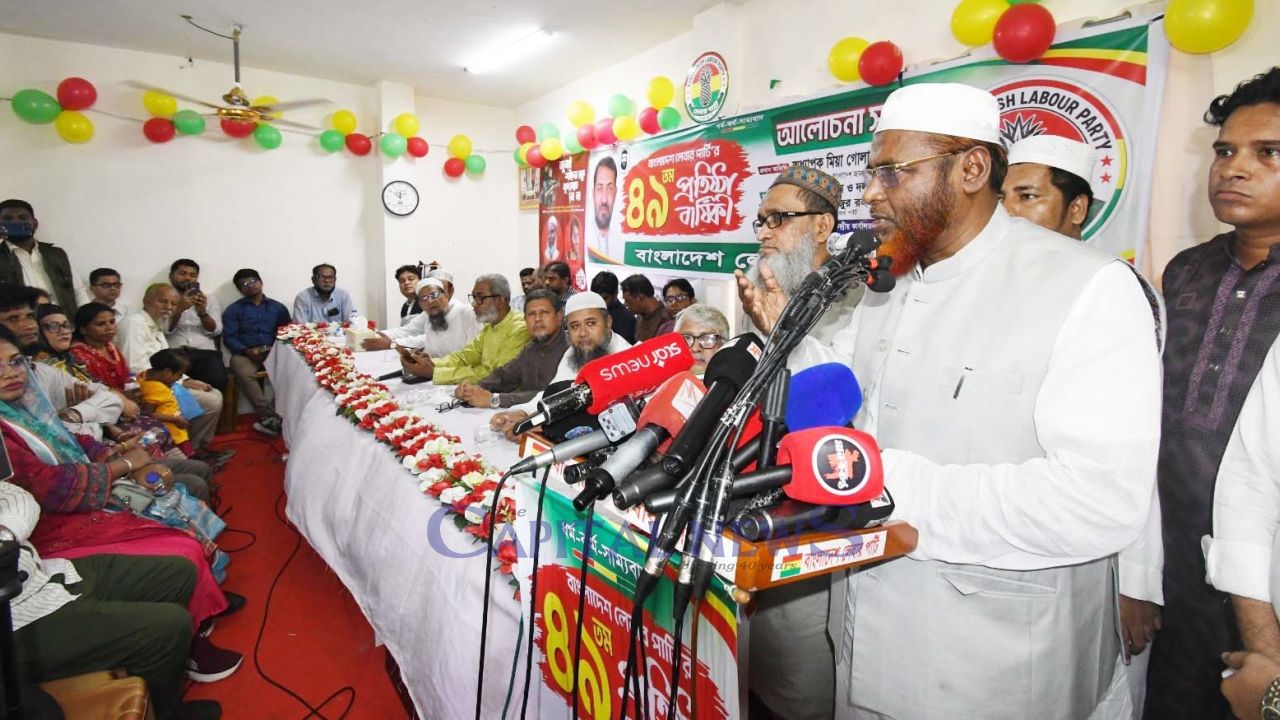
He made the remarks as the chief guest at a programme marking the 49th founding anniversary of Bangladesh Labour Party at the party's central office in Segunbagicha, Dhaka, on Wednesday. Labour Party Chairman Dr Mostafizar Rahman Iran presided over the event, attended by senior leaders of the 11-party political alliance.

Parwar praised the Labour Party for maintaining its political principles despite what he described as temptations involving ministerial positions, power and political patronage. He said many small political parties had compromised their principles in pursuit of personal benefits and positions.

He thanked the Labour Party on behalf of Jamaat-e-Islami and the 11-party alliance for maintaining its association with what he termed patriotic, anti-hegemony and Islamic political forces.

Highlighting the economic difficulties facing ordinary people, Parwar said workers and low-income families were struggling to cope with rising living costs, while labour unrest continued in the garment and industrial sectors.

He criticised the government's tendency to blame opposition parties for protests and road blockades, arguing that the unrest was rooted in economic hardship and workers' dissatisfaction.

According to Parwar, inflation had exceeded 9 per cent, while the prices of essential commodities were rising even faster in some categories. He said the pressure of higher food and non-food expenses had made it increasingly difficult for working-class families to maintain their livelihoods.

He urged the government to engage with factory owners and labour representatives to establish a minimum wage consistent with prevailing market prices.

The government, he said, had a responsibility to address workers' demands through negotiations rather than attributing labour unrest to political provocation.

The Jamaat leader strongly criticised the government for allegedly holding the opposition responsible for instability, crime and disorder.

He said Jamaat Ameer and Opposition Leader Dr Shafiqur Rahman had taken a firm stand against criminal activities and accused the government of attempting to shift responsibility for extortion, land grabbing, drug-related offences, terrorism and corruption onto the opposition.

Parwar alleged that such accusations were intended to divert public attention from the government's own shortcomings.

He also questioned the government's reliance on intelligence assessments, arguing that the intelligence and law enforcement structures inherited from the previous Awami League administration had not been adequately reformed.

Referring to allegations of enforced disappearances, politically motivated arrests and the abuse of law enforcement agencies under the previous government, he warned against repeating similar practices.

He said the government should not label criticism of its actions or party-based appointments as attempts to destabilise the country.

“The responsibility of the opposition is to expose the government's wrongdoing before the nation. Does that mean nothing can be said? This is the path towards fascism,” he said.

Parwar further alleged that the government was attempting to silence opposition voices while continuing practices associated with the previous administration. These allegations could not be independently verified from his remarks alone.

Parwar also accused the government of appointing party loyalists to various public and autonomous institutions, including city corporations and district councils.

He criticised Chief Whip Nurul Islam Moni over remarks he attributed to him during a visit to Barguna, alleging that the chief whip had threatened to withhold development allocations from union parishads that failed to elect BNP candidates.

Parwar questioned whether such a statement was appropriate for a senior parliamentary official, arguing that development funds should not be used as instruments of partisan political pressure.


He maintained that the opposition had protested against alleged politicisation and rising prices without resorting to hartals, blockades, arson or vandalism.

He cited increases in gas and electricity prices, fertiliser shortages, rising commodity prices and reports of serious crimes as issues that had contributed to public dissatisfaction.

A major part of Parwar's speech focused on the July Charter, constitutional reform and the implementation of the referendum results.

He claimed that approximately 70 per cent of voters had supported the referendum's proposals and argued that the government should respect the public mandate rather than reject the reform agenda.

According to him, the referendum had endorsed 84 consensus issues and effectively rejected the BNP's recorded notes of dissent on the disputed proposals.

Parwar called on the government to engage with opposition parties and implement the constitutional reform proposals developed through the consensus commission.

He said the prime minister had also urged people to vote 'Yes' in the referendum, adding that he wanted to believe the BNP had supported the same position.

The Jamaat leader urged the government to recognise the referendum outcome as a means of preserving political stability and avoiding further confrontation.

He argued that the opposition had so far refrained from launching violent protests despite its disagreements with the government because it wanted to prevent the country from descending into instability.

“We still believe the government has time to act. Let us sit together and implement the constitutional reform proposals agreed upon through the consensus commission,” he said.

The government, however, has not been represented in the account of the event, and its response to Parwar's allegations was not available at the time of writing.

Parwar warned that confrontational politics and the government's alleged failure to honour the referendum mandate could create an opportunity for the Awami League to regain political ground.

He said the BNP, Jamaat-e-Islami and other opposition parties had previously united in the movement against authoritarian rule, and argued that continued cooperation over constitutional reform could prevent the return of political forces associated with the previous administration.

According to him, rejecting the referendum's reported mandate while creating tensions on the streets would undermine the spirit of the July uprising.

He also questioned the government's contribution to supporting the families of those killed and injured during the July movement, claiming that Jamaat-e-Islami and opposition leaders had provided medical assistance and other support to affected families.

Parwar said the government should demonstrate its commitment to the July movement by respecting the people's demands for institutional and constitutional reforms.

He cautioned the authorities against pushing the country towards disorder and renewed political confrontation, arguing that such an approach could ultimately benefit the very political forces the movement had sought to dislodge.

Concluding his address, Parwar called on people across the country to participate in the third phase of the opposition alliance's long march scheduled for October 31.

The march is planned to cover Dhaka, Khulna, Jashore, Jhenaidah and Kushtia as part of the alliance's campaign over constitutional reform and the implementation of the referendum results.

He also conveyed greetings and best wishes from Jamaat Ameer Dr Shafiqur Rahman to the Labour Party on the occasion of its 49th founding anniversary.

Parwar's remarks underscored the widening political disagreement between the government and opposition parties over governance, workers' rights, public appointments and the future of constitutional reform. Whether the dispute will lead to renewed dialogue or further political mobilisation is likely to remain a key question in Bangladesh's evolving political landscape.

Subject : Jamaat-e-Islami

Write Your Opinion

The Daily Capital News

বৃহস্পতিবার, ২২ অক্টোবর ২০২৬


BNP government stumbles on leadership failures: Golam Parwar

Publish Date : 21 October 2026

featured Image
Special Correspondent: Bangladesh Jamaat-e-Islami Secretary General and former MP Mia Golam Parwar has accused the BNP-led government of becoming embroiled in political confusion within seven months of taking office, blaming what he described as political immaturity, short-sighted leadership and a series of controversial decisions.He alleged that the government had failed to demonstrate political competence and maturity, adding that several ministers and lawmakers had already left their positions during its brief tenure.“Within seven months, the government has become completely entangled in its own mistakes because the BNP has failed to move away from political immaturity and short-sighted leadership,” Parwar said.He made the remarks as the chief guest at a programme marking the 49th founding anniversary of Bangladesh Labour Party at the party's central office in Segunbagicha, Dhaka, on Wednesday. Labour Party Chairman Dr Mostafizar Rahman Iran presided over the event, attended by senior leaders of the 11-party political alliance.Parwar praised the Labour Party for maintaining its political principles despite what he described as temptations involving ministerial positions, power and political patronage. He said many small political parties had compromised their principles in pursuit of personal benefits and positions.He thanked the Labour Party on behalf of Jamaat-e-Islami and the 11-party alliance for maintaining its association with what he termed patriotic, anti-hegemony and Islamic political forces.Highlighting the economic difficulties facing ordinary people, Parwar said workers and low-income families were struggling to cope with rising living costs, while labour unrest continued in the garment and industrial sectors.He criticised the government's tendency to blame opposition parties for protests and road blockades, arguing that the unrest was rooted in economic hardship and workers' dissatisfaction.According to Parwar, inflation had exceeded 9 per cent, while the prices of essential commodities were rising even faster in some categories. He said the pressure of higher food and non-food expenses had made it increasingly difficult for working-class families to maintain their livelihoods.He urged the government to engage with factory owners and labour representatives to establish a minimum wage consistent with prevailing market prices.The government, he said, had a responsibility to address workers' demands through negotiations rather than attributing labour unrest to political provocation.The Jamaat leader strongly criticised the government for allegedly holding the opposition responsible for instability, crime and disorder.He said Jamaat Ameer and Opposition Leader Dr Shafiqur Rahman had taken a firm stand against criminal activities and accused the government of attempting to shift responsibility for extortion, land grabbing, drug-related offences, terrorism and corruption onto the opposition.Parwar alleged that such accusations were intended to divert public attention from the government's own shortcomings.He also questioned the government's reliance on intelligence assessments, arguing that the intelligence and law enforcement structures inherited from the previous Awami League administration had not been adequately reformed.Referring to allegations of enforced disappearances, politically motivated arrests and the abuse of law enforcement agencies under the previous government, he warned against repeating similar practices.He said the government should not label criticism of its actions or party-based appointments as attempts to destabilise the country.“The responsibility of the opposition is to expose the government's wrongdoing before the nation. Does that mean nothing can be said? This is the path towards fascism,” he said.Parwar further alleged that the government was attempting to silence opposition voices while continuing practices associated with the previous administration. These allegations could not be independently verified from his remarks alone.Parwar also accused the government of appointing party loyalists to various public and autonomous institutions, including city corporations and district councils.He criticised Chief Whip Nurul Islam Moni over remarks he attributed to him during a visit to Barguna, alleging that the chief whip had threatened to withhold development allocations from union parishads that failed to elect BNP candidates.Parwar questioned whether such a statement was appropriate for a senior parliamentary official, arguing that development funds should not be used as instruments of partisan political pressure. He maintained that the opposition had protested against alleged politicisation and rising prices without resorting to hartals, blockades, arson or vandalism.He cited increases in gas and electricity prices, fertiliser shortages, rising commodity prices and reports of serious crimes as issues that had contributed to public dissatisfaction.A major part of Parwar's speech focused on the July Charter, constitutional reform and the implementation of the referendum results.He claimed that approximately 70 per cent of voters had supported the referendum's proposals and argued that the government should respect the public mandate rather than reject the reform agenda.According to him, the referendum had endorsed 84 consensus issues and effectively rejected the BNP's recorded notes of dissent on the disputed proposals.Parwar called on the government to engage with opposition parties and implement the constitutional reform proposals developed through the consensus commission.He said the prime minister had also urged people to vote 'Yes' in the referendum, adding that he wanted to believe the BNP had supported the same position.The Jamaat leader urged the government to recognise the referendum outcome as a means of preserving political stability and avoiding further confrontation.He argued that the opposition had so far refrained from launching violent protests despite its disagreements with the government because it wanted to prevent the country from descending into instability.“We still believe the government has time to act. Let us sit together and implement the constitutional reform proposals agreed upon through the consensus commission,” he said.The government, however, has not been represented in the account of the event, and its response to Parwar's allegations was not available at the time of writing.Parwar warned that confrontational politics and the government's alleged failure to honour the referendum mandate could create an opportunity for the Awami League to regain political ground.He said the BNP, Jamaat-e-Islami and other opposition parties had previously united in the movement against authoritarian rule, and argued that continued cooperation over constitutional reform could prevent the return of political forces associated with the previous administration.According to him, rejecting the referendum's reported mandate while creating tensions on the streets would undermine the spirit of the July uprising.He also questioned the government's contribution to supporting the families of those killed and injured during the July movement, claiming that Jamaat-e-Islami and opposition leaders had provided medical assistance and other support to affected families.Parwar said the government should demonstrate its commitment to the July movement by respecting the people's demands for institutional and constitutional reforms.He cautioned the authorities against pushing the country towards disorder and renewed political confrontation, arguing that such an approach could ultimately benefit the very political forces the movement had sought to dislodge.Concluding his address, Parwar called on people across the country to participate in the third phase of the opposition alliance's long march scheduled for October 31.The march is planned to cover Dhaka, Khulna, Jashore, Jhenaidah and Kushtia as part of the alliance's campaign over constitutional reform and the implementation of the referendum results.He also conveyed greetings and best wishes from Jamaat Ameer Dr Shafiqur Rahman to the Labour Party on the occasion of its 49th founding anniversary. Parwar's remarks underscored the widening political disagreement between the government and opposition parties over governance, workers' rights, public appointments and the future of constitutional reform. Whether the dispute will lead to renewed dialogue or further political mobilisation is likely to remain a key question in Bangladesh's evolving political landscape.

The Daily Capital News

Advisory Editor: Gayeshwar Chandra Roy
Editor: Abul Kashem Majumder
Acting Editor: Mohammad Alamgir Hossain
Executive Editor: Farid Ahmed Ripon

© 2025 The Daily Capital News