

Deal opens door to LNG, LPG and petroleum imports under government-to-government mechanism; sides explore investment, infrastructure and technical cooperation
Energy Desk: Bangladesh and Algeria have signed a memorandum of understanding (MoU) on hydrocarbon cooperation, opening new opportunities for Bangladesh to diversify its energy supply sources, strengthen energy security and explore alternative sources of imported fuel.
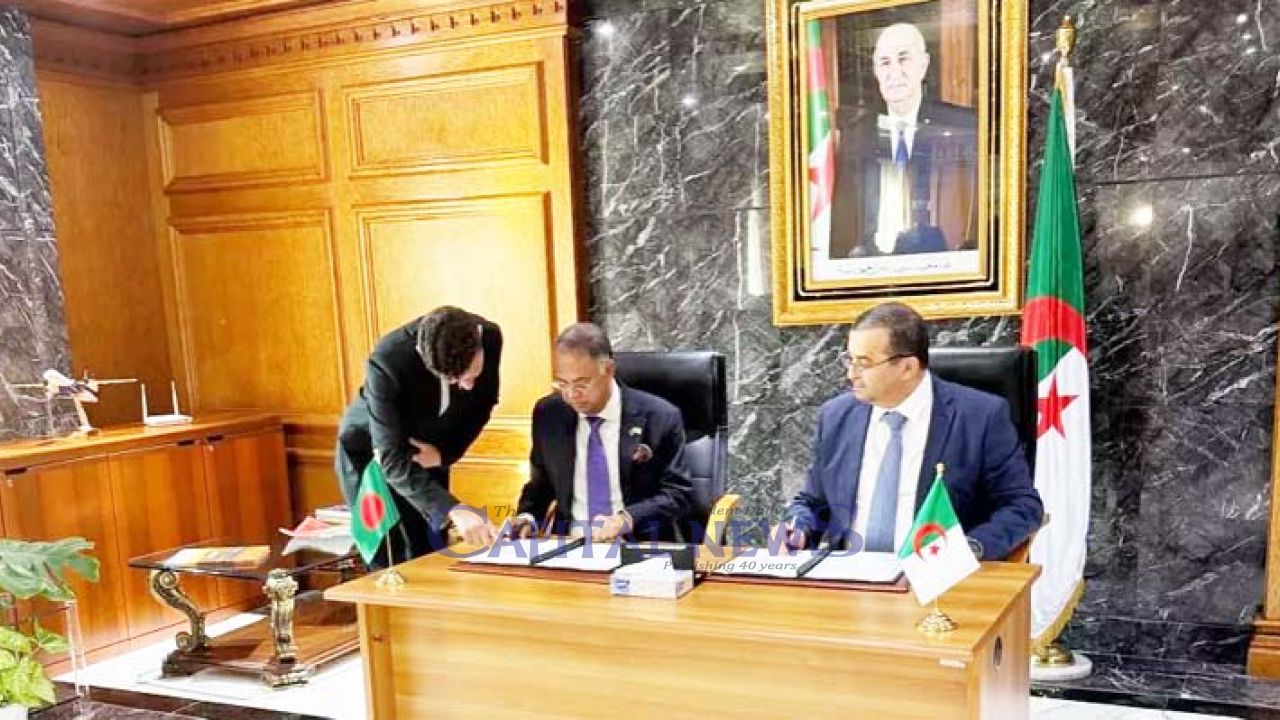
Power, Energy and Mineral Resources Minister Iqbal Hassan Mahmood signed the agreement on behalf of Bangladesh, while Algerian Minister for Hydrocarbons Mohamed Arkab signed it on behalf of Algeria in Algiers on Tuesday, according to a press release issued by the Ministry of Power, Energy and Mineral Resources.
Under the agreement, Bangladesh expects to explore the import of liquefied natural gas (LNG), liquefied petroleum gas (LPG) and other petroleum products from the North African country through a government-to-government (G2G) arrangement.
The agreement comes at a time when Bangladesh is seeking to diversify its energy supply network amid growing dependence on imported fuels to meet domestic demand. Expanding cooperation with Algeria could provide another avenue for securing energy supplies, although the volume, pricing and timing of potential imports will depend on subsequent negotiations and commercial arrangements.
During their discussions, the two ministers exchanged views on different aspects of energy cooperation, particularly the supply of LNG, LPG and other petroleum products to Bangladesh under the G2G mechanism.
They also discussed the development of LNG and LPG infrastructure and the exploration of oil, gas and coal resources in Bangladesh. Such cooperation could create opportunities for technical exchanges, investment and the sharing of experience in energy resource management.
Expressing satisfaction over the signing of the MoU, Iqbal Hassan Mahmood said the engagement had opened a new horizon for Bangladesh in strengthening its energy security and importing LNG, LPG and other petroleum products from alternative African sources through government-to-government arrangements.
For Bangladesh, which needs a reliable and affordable supply of energy to support households, industries, power generation and economic activities, diversification is an important part of managing supply risks. Access to additional suppliers could help widen the country's options in sourcing fuel and reduce its dependence on a limited number of markets.
However, the ultimate benefits of the agreement will depend on how quickly the two countries can translate the understanding into practical arrangements, including supply negotiations, transport logistics, infrastructure requirements and competitive pricing.
Alongside fuel imports and resource exploration, Bangladesh has also sought technical cooperation with Algeria to strengthen its domestic energy sector.
During the meeting, the Bangladeshi minister requested his Algerian counterpart to organise training programmes for Bangladeshi engineers and technicians. The proposed programmes would help them learn from Algeria's experience, acquire technical knowledge and become familiar with best practices in the energy sector.
Such training could be valuable in improving professional skills and technical capacity, particularly as Bangladesh works to manage its energy resources more efficiently and develop the infrastructure required for importing and handling different types of fuel.
Cooperation in technical education and knowledge-sharing could also support longer-term collaboration beyond immediate energy imports, enabling the two countries to exchange experience in resource exploration, infrastructure development and energy management.
The energy discussions formed part of a wider engagement aimed at strengthening bilateral relations between Bangladesh and Algeria.
On the same day, Algerian Minister for Mines and Mining Industries Mourad Hanafi and Minister for Energy and Renewable Energy Mourad Adjal separately called on Iqbal Hassan Mahmood to discuss bilateral issues of common interest.
Their discussions focused on opportunities to deepen cooperation in trade, investment, energy, fertiliser and knowledge-sharing for the mutual benefit of the two countries.
The participation of senior officials responsible for mining, energy and renewable energy highlights the potential for cooperation across several sectors. Beyond hydrocarbons, the two countries could explore areas where their respective experience, resources and economic interests complement one another.
Bangladesh Ambassador to Algeria Najmul Huda was also involved in the diplomatic engagement surrounding the visit.
Earlier, Mohamed Arkab received Iqbal Hassan Mahmood at the VIP Presidential Lounge of Houari Boumediene International Airport on Monday, marking the beginning of the Bangladeshi minister's official engagement in Algeria.
The signing of the MoU marks an important step in Bangladesh-Algeria energy relations, but its practical significance will depend on follow-up negotiations and implementation.
For Bangladesh, the immediate priority will be to determine whether Algerian LNG, LPG and petroleum products can be imported on commercially viable terms and delivered reliably to meet domestic demand. The development of storage, transportation and handling facilities, where required, will also be important in supporting any future supply arrangements.
The proposed cooperation in exploration and technical training could offer additional benefits over time, particularly if it leads to concrete projects, institutional partnerships and greater technical expertise.
The agreement also provides an opportunity to strengthen economic ties between Bangladesh and a North African country with which it can pursue cooperation in energy, mining, trade and investment.
As Bangladesh continues to navigate energy supply challenges, partnerships with a wider range of countries may help expand its choices and improve its ability to respond to changing market conditions.
The latest MoU therefore represents a framework for potential cooperation rather than a guarantee of immediate fuel supplies. Its success will ultimately be measured by whether the two sides can turn their commitments into reliable energy imports, practical investment opportunities and lasting economic benefits for both countries.
বৃহস্পতিবার, ২২ অক্টোবর ২০২৬
Publish Date : 21 October 2026



Write Your Opinion