

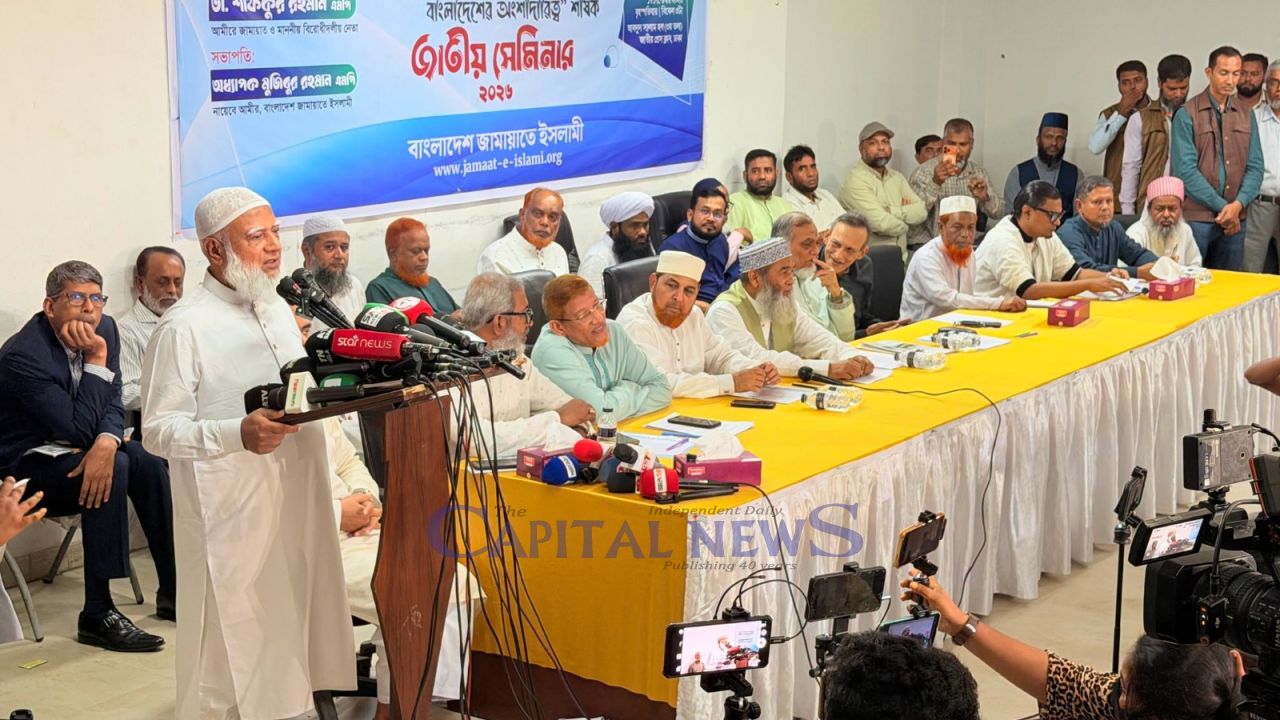
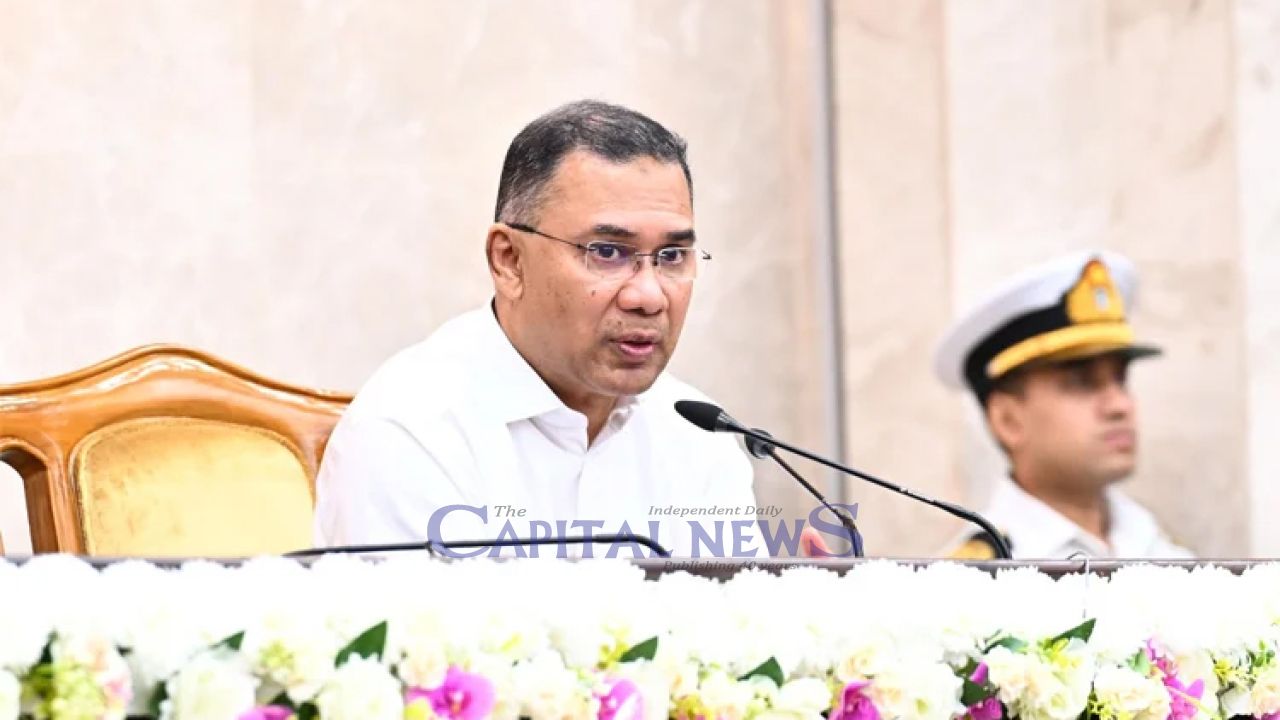
MM Rahmatullah: Bangladesh Jamaat-e-Islami Ameer and Leader of the Opposition Dr Shafiqur Rahman has called for a transparent and fair labour market for Bangladeshi migrant workers, saying the country does not want any syndicate to control overseas recruitment.
“We do not want any syndicate; we want an environment for a
fair labour market,” he said while addressing a national seminar titled
“Syndicate and Malaysian Labour Market: Bangladesh’s Partnership” at the
National Press Club in Dhaka on Thursday.
The seminar was organised by Bangladesh Jamaat-e-Islami at
the Abdus Salam Hall. Reports from the event confirmed that Dr Shafiqur made
the remarks while raising concerns over alleged irregularities in the
recruitment of Bangladeshi workers for Malaysia and other overseas
destinations.
Dr Shafiqur said the problem was not confined to Malaysia
but had become a wider concern in several Asian and Middle Eastern labour
markets. He also referred to cases in which Bangladeshi citizens holding valid
visas were reportedly returned from airports in the United Arab Emirates
without being given clear explanations, with authorities allegedly telling them
that their visas were invalid.
Such incidents, he said, not only affected the employment
rights of Bangladeshi citizens but also hurt the dignity of the country. He
questioned why the problems had remained unresolved for weeks and called upon
the government to identify and address the reasons behind such incidents.
The Jamaat chief said Bangladesh should not allow migrant
workers to become victims of exploitation by middlemen or recruitment
syndicates.
He particularly criticised the reported selection of 25
agencies to work in Malaysia's recruitment process, questioning the criteria
used to select them and whether all the selected agencies had adequate
experience. He demanded that the government make the selection process
transparent and clarify whether anyone connected with the government was
involved.
“We want the Malaysian labour market to reopen, but
dishonest businesses or institutions must not be allowed to benefit from it,”
he said.
Dr Shafiqur noted that Malaysia's labour market for
Bangladeshis had been closed three times in the past and said Bangladesh should
not allow it to be closed for a fourth time. He described repeated disruptions
in the market as damaging to the country's interests.
He alleged that a syndicate associated with the previous
political period remained active, although its outward appearance had changed.
He said no individual should be protected if found to be involved in
exploitation, adding that even if his own family member were part of such a
syndicate, that person should be removed.
His comments echoed reports published after the seminar that
he had threatened a broader movement against alleged syndicates in overseas
labour markets if the government failed to take action.
The opposition leader said migrant workers should not merely
be described as “remittance fighters” while their rights remained unprotected.
He also raised the issue of voting rights for expatriate
Bangladeshis, saying citizens should retain their voting rights whether they
live inside or outside the country. Recent reports from the seminar similarly
quoted him as saying that any move to exclude expatriate voters from local
government elections would be unfair.
Dr Shafiqur said his party had been campaigning for voting
rights for expatriate Bangladeshis and maintained that their political rights
should be protected.
He also announced that workers' rights would be incorporated
into his party's existing seven-point movement, making it an eight-point
programme. He said the demands were intended to establish people's rights
rather than serve the interests of any particular political group or
individual.
During his speech, Dr Shafiqur also criticised the
government's overall record, alleging that it had moved away from several
commitments made before taking office. He referred to issues including the
proposed referendum, implementation of the July Charter, judicial independence
and the independence of institutions including the Anti-Corruption Commission,
Human Rights Commission and Election Commission.
These were political criticisms made by the opposition leader
at the seminar; they represent his assessment of the government's actions.
Reports from the event also carried his criticism that the government was
moving away from earlier commitments.
He said his party wanted to cooperate with the government
wherever necessary, but would oppose policies that it believed exploited
ordinary people.
“We want politics for the people and for the country, not
for ourselves,” he said.
Dr Shafiqur also spoke against any attempt to restrict
legitimate public expression through digital-security legislation. He said his
party would oppose any law that was used to silence people's voices. The Daily
Star separately reported the same day that he opposed the proposed Cyber
Security Act 2026 amendment if it were used to restrict legitimate expression.
The Jamaat Ameer urged recruitment agencies and other
stakeholders in the manpower sector to come forward against exploitation while
maintaining peace and social stability.
He said Bangladesh should learn from countries such as Nepal
and Sri Lanka and develop a labour-recruitment system in which workers could
migrate for employment without being subjected to excessive costs, exploitation
or opaque intermediaries.
He further alleged that syndicates existed in other sectors
of the domestic economy and called for measures to dismantle such networks.
“We want peace in society; we do not want disorder,” he
said, while stressing that the rights and welfare of ordinary people should
remain at the centre of national policy.
Jamaat Nayeb-e-Ameer Professor Mujibur Rahman MP chaired the
seminar, while Central Executive Council Member and Dhaka South Jamaat
Secretary Dr Shafiqul Islam Masud MP moderated it.
The keynote paper was presented by Supreme Court senior lawyer
Barrister Shahriar Kabir.
Among those who addressed the seminar were former diplomat
and political thinker Sakib Ali; Jamaat Assistant Secretary General Maulana
Rafiqul Islam Khan MP; former MP Dr AHM Hamidur Rahman Azad; Jamaat Central
Executive Council Member Saiful Alam Khan Milon MP; Assistant Secretary General
Advocate Ehsanul Mahbub Zubayer; Bangladesh Nizam-e-Islam Party Senior
Nayeb-e-Ameer Maulana Abdul Majed Atahari; Jatiya Ganatantrik Party (Jagpa) spokesperson
Engineer Rashed Pradhan; Bangladesh Labour Party Chairman Dr Mostafizur Rahman
Iran; Bangladesh Khilafat Andolan Nayeb-e-Ameer Maulana Abul Kashem Kashemi;
Bangladesh Development Party President Advocate Anwarul Islam Chan; Jamaat
Central Executive Council Member and Dhaka South Ameer Md Nurul Islam Bulbul
MP; AB Party Shadow Affairs Secretary Barrister Abbas Islam Khan; Jamaat
Central Executive Council Member and Dhaka North Secretary Dr Rezaul Karim;
former Baira Joint Secretary General Md Fakhrul Islam; and Bangladesh Labour
Welfare Federation Central President Advocate Atiqur Rahman.
Leaders of the 11-party alliance and other national
political figures also attended the seminar.
The discussion comes at a time when the future of
Bangladesh's overseas employment sector remains closely linked to the country's
ability to ensure transparent recruitment, protect migrant workers and maintain
stable labour-market arrangements with destination countries.
Subject : Diplomacy Labour market
সোমবার, ১৯ অক্টোবর ২০২৬
Publish Date : 17 September 2026



Write Your Opinion