

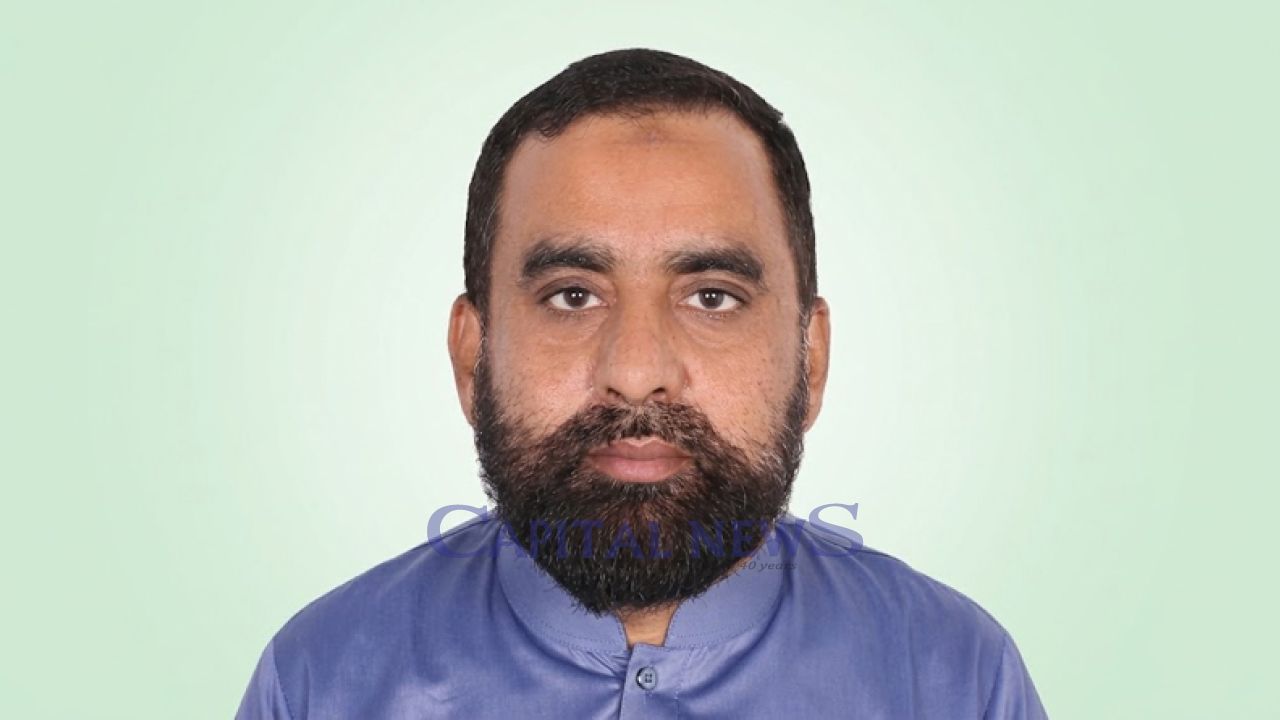
Md. Mukhlesur Rahman: In analyzing the ongoing conflicts and political instability in the Middle East, it is essential to give serious consideration to facts, evidence, and actual conduct rather than emotions, political bias, or statements circulated on social media. Without examining the extent to which a state’s public declarations, diplomatic positions, and actual policies are consistent with one another, it becomes not only difficult but, in some cases, almost impossible to understand the true nature of regional politics.
The same principle should be applied when assessing the roles of Saudi Arabia, Iran, the United States, Israel, and other relevant actors, including Yemen’s Houthi movement. Each has its own security concerns and political interests. However, the humanitarian consequences of actions taken in pursuit of those interests, their compatibility with international law, and their impact on regional peace must also be carefully considered.
Viewing the Middle East crisis merely as a confrontation between two rival camps obscures many complex and important aspects of reality. The region’s problems are intertwined with domestic political divisions, security concerns, competition for regional influence, energy and commercial interests, and the strategic calculations of global powers. An integrated analysis of these factors is the first prerequisite for arriving at realistic solutions.
Relations between Saudi Arabia and Iran constitute one of the most important dimensions of Middle Eastern politics. Rivalry, security concerns, and efforts to expand regional influence have, at various times, affected the situation in Yemen and the wider region. However, it is insufficient to explain this relationship solely in terms of religious or ideological differences. National security, political power, regional alliances, and economic interests are equally important considerations.
Given Saudi Arabia’s longstanding security and strategic relationship with the United States, it would be inappropriate to characterize every Saudi decision as being directed in the interests of Washington or Israel. Similarly, although Iran’s regional policies may be subject to criticism, it would not be prudent to interpret every Iranian action exclusively as an attempt to establish regional dominance.
In assessing each state, the central question should be how far its declared policies are reflected in practice. Military cooperation, arms sales and purchases, diplomatic agreements, commercial relations, engagement with regional armed groups, and initiatives to resolve conflicts can all provide a more reliable basis for understanding the actual roles of the states concerned.
The role of Saudi Arabia and other Arab states in advancing the rights of the Palestinian people, in particular, requires close scrutiny. Declarations supporting Palestinian independence, security, and legitimate rights are important, but their effectiveness depends on concrete diplomatic initiatives, humanitarian assistance, efforts to generate international pressure, and the genuine, sustained commitment of the countries concerned to a long-term political settlement.
It is necessary to examine what initiatives Arab states are undertaking to address the humanitarian crisis in Gaza and protect civilians, as well as the tangible results of those initiatives. These questions must be answered on the basis of facts and evidence. The same standards should apply to the United States, Israel, Iran, and other influential states.
Analysts from different countries offer differing interpretations of the conflicts in the Middle East. Some emphasize US regional policy, others regard Israel’s security strategy as the principal consideration, while still others focus on Iran’s efforts to expand its regional influence and the military activities of the Houthi movement.
Such analyses can offer valuable information and arguments. However, a person’s statements should not automatically be accepted as true or dismissed as false on the basis of their nationality, religious identity, political position, or institutional affiliations. The proper criteria for evaluation should be the evidence supporting the claims, the reliability of the sources, the consistency of the arguments, and whether the context of the events has been adequately considered.
Particular caution is necessary when evaluating statements circulated on social media. Before publishing a quotation attributed to an analyst, it is essential to verify it against the original interview, video, article, or a reliable news source. Quoting an isolated portion of a statement can also alter its intended meaning. Credible information must therefore take precedence over attention-grabbing rhetoric.
Explaining Yemen’s conflict solely as a consequence of the rivalry between Saudi Arabia and Iran overlooks the country’s own political and social realities. Yemen’s internal power struggles, weak political institutions, the rise of various armed groups, and regional and international intervention have combined to make the crisis increasingly complex.
The military activities of the Houthi movement and the fighting involving various parties have had profound consequences for Yemen’s security and stability. At the same time, the impact of the Saudi-led military campaign, restrictions, and obstacles affecting the operation of ports and airports have raised significant humanitarian and political concerns. Each of these issues must be independently and objectively investigated and assessed.
Assigning complete innocence to one party and treating another as the sole cause of all the problems in Yemen can narrow the path toward resolving the crisis. Instead, it is essential to examine objectively the roles played by different parties at various stages of the conflict, the actions that have aggravated the situation, and the initiatives that have created opportunities for a political settlement.
Most importantly, the lives and security of ordinary Yemenis must take precedence over political rivalries. Ensuring access to food, clean water, medicine, fuel, and medical services should never be made contingent on the victory of any particular party. Such an approach cannot be considered humanitarian, whatever justification may be offered for it.
Key Steps Toward Resolving the Crisis in Yemen and the Wider Middle East
Several measures are particularly important for resolving the crisis in Yemen and promoting stability throughout the wider Middle East.
First, inclusive political dialogue must be ensured. A lasting resolution to the conflict in Yemen requires bringing the relevant parties to the negotiating table. The concerns and interests of Yemen’s internationally recognized government, the Houthi movement, various political forces in the south, and other relevant stakeholders must be taken into account. Lasting peace cannot be established solely through a military balance of power.
Second, the unimpeded and safe delivery of humanitarian assistance must be ensured. Unreasonable obstacles to the delivery of food, medicine, fuel, and other essential supplies must be removed. Humanitarian assistance must not be delayed or obstructed under the pretext of security checks.
The operation of seaports, land crossings, and airports should be managed in a way that balances legitimate security concerns with the urgent needs of ordinary people.
Third, effective diplomatic communication between Saudi Arabia and Iran must be maintained. Reducing tensions between the two countries, discussing their respective security concerns, and coordinating efforts to de-escalate regional conflicts are essential. Dialogue and confidence-building measures are needed on issues such as missile and drone attacks, the security of maritime trade routes, and the roles of various armed groups.
Fourth, the role of international powers must be balanced and accountable. The United States, European Union member states, China, the Russian Federation, other influential countries, and the United Nations should pursue coordinated initiatives in support of ceasefires, humanitarian assistance, and political settlements. Rather than relying on the military dominance of any single power, efforts should focus on resolving regional states’ security concerns and addressing the underlying causes of conflict through dialogue.
Fifth, compliance with international humanitarian law and accountability must be ensured. Allegations of attacks against civilians and civilian infrastructure, indiscriminate strikes, or obstruction of humanitarian assistance must be investigated impartially. Hospitals, water supply systems, power plants, and food distribution infrastructure must be protected. Determining the truth of such allegations requires credible investigations and appropriate legal procedures.
Sixth, the people of Yemen must participate in determining their country’s future. Yemenis must not be trapped indefinitely in war, poverty, and political uncertainty because of rivalries among external powers. Political representation, inclusive governance, economic reconstruction, and stronger institutional capacity must be treated as essential components of the peace process.
Although the political contexts of the Palestinian crisis and the war in Yemen are not identical, the protection of civilians, humanitarian assistance, compliance with international law, and accountability are critically important in both cases.
The Palestinian people’s demands for independence and legitimate rights must be taken seriously, just as the lives, security, and political rights of the people of Yemen must not be overlooked. Allowing national identity, military strength, strategic alliances, or international influence to determine how human rights standards are applied can make resolving these crises even more difficult.
Arab states must play a more effective diplomatic role. At the same time, the United States, European countries, China, Russia, and other influential powers must apply consistent principles to both their allies and their adversaries. If human rights and international law are invoked only against political opponents, the credibility of the international system will be undermined.
A lasting solution to the Middle East crisis does not lie in the use of military force or in the desire to defeat an adversary. Military capabilities may contribute to a state’s security, but they cannot, by themselves, ensure political legitimacy, social stability, or lasting peace. Prolonged conflicts, on the contrary, risk deepening humanitarian disasters, economic losses, and regional mistrust.
Saudi Arabia’s security is important, but so are the lives and dignity of the people of Yemen. Iran’s security and diplomatic interests also deserve consideration, but if the military activities of any party threaten civilians in another country, that party must be held accountable. Likewise, an effective international response to protecting Palestinian rights and addressing the humanitarian crisis in Gaza remains indispensable.
What is needed is not a competition in mutual accusations, but evidence-based analysis, humanitarian responsibility, and practical diplomacy. Efforts to end the war and humanitarian crisis in Yemen, ease tensions between Saudi Arabia and Iran, advance the legitimate rights of Palestinians, and ensure the security of international maritime, land, and air routes should be regarded as complementary components of a broader regional stability agenda.
The future of the people of the Middle East cannot be left as a strategic instrument in the hands of any single monarchy, military alliance, or global power. That future must be built on the foundations of public safety, political rights, economic development, mutual respect, and just regional cooperation.
Calling for dialogue alone is not enough to establish peace. What is required is the political will to come to the negotiating table, concrete action, and accountability that applies equally to all parties. The path out of the Middle East crisis does not lie in a competition for military supremacy, but in just political settlements and effective diplomacy.
Md. Mukhlesur Rahman
Economist, Geopolitical Analyst, Social and Political Thinker, and Human Rights Activist
Subject : Op-Editorial
সোমবার, ১৯ অক্টোবর ২০২৬
Publish Date : 14 October 2026



Write Your Opinion