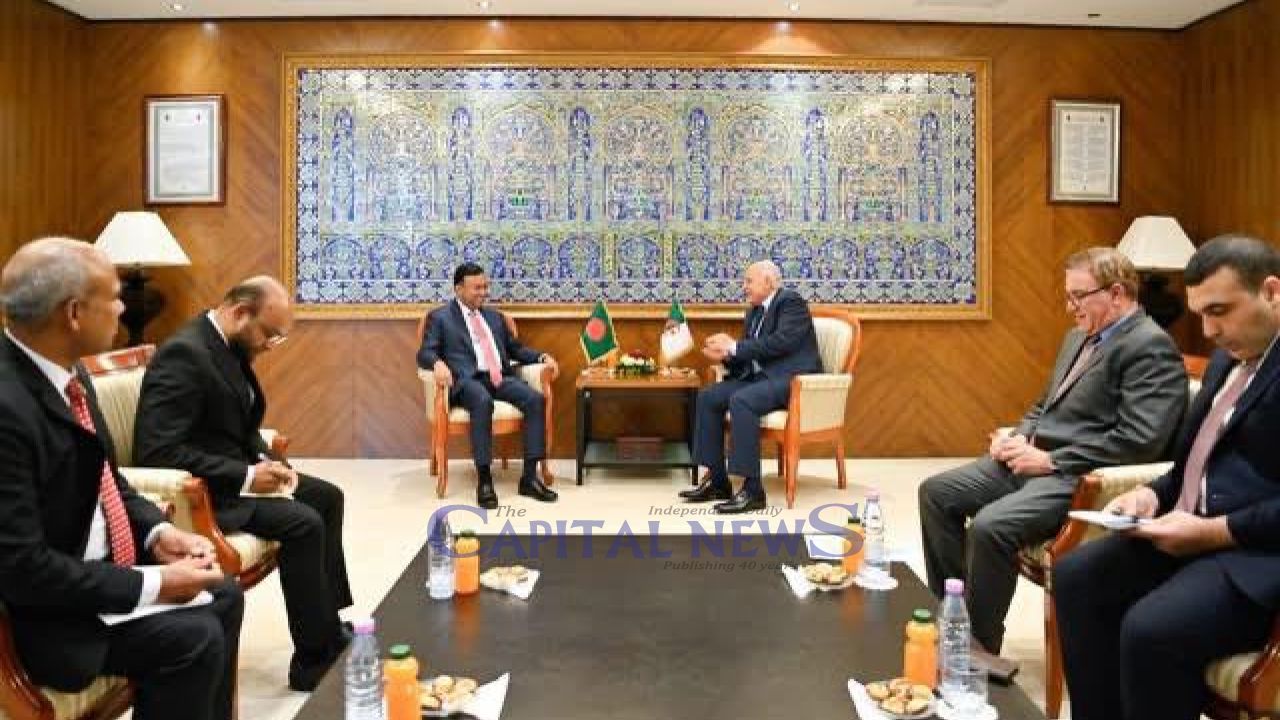
Bangladesh, Algeria explore energy, fertilizer and textile cooperation
Dhaka seeks Algerian
LNG, LPG and petroleum supplies as two countries move to deepen trade and
investment tiesDesk Report: Bangladesh and Algeria have agreed to explore
broader economic cooperation, with energy security, fertiliser supplies,
textile development and bilateral trade emerging as key priorities during a
high-level meeting in Algiers.State Minister for Foreign Affairs Humaiun Kobir
held a bilateral meeting with Algerian Foreign Minister Ahmed Attaf in the
Algerian capital, where the two sides discussed ways to strengthen cooperation
across several sectors, including energy, agriculture, textiles,
pharmaceuticals, leather, education and people-to-people exchanges.The discussions came against the backdrop of
Bangladesh's efforts to diversify its energy supply sources and ensure a stable
supply of fuel and other essential commodities to support its economy.A major outcome highlighted by the Bangladeshi
side was the signing of a memorandum of understanding (MoU) on hydrocarbon
cooperation between the two countries. The agreement is expected to open new
avenues for Bangladesh to import liquefied natural gas (LNG), liquefied
petroleum gas (LPG) and other petroleum products from Algeria through a
government-to-government (G2G) mechanism.The two sides also discussed potential joint
initiatives to develop refinery facilities and LNG infrastructure, as well as
explore coal and gas fields in Bangladesh.Humaiun Kobir expressed satisfaction over the
signing of the MoU, describing the agreement as an important step towards
expanding energy cooperation between the two countries.The Algerian foreign minister said the country's
president had issued immediate directives to prioritise the signing of the
agreement in response to Bangladesh's energy needs, reflecting Algiers' interest
in strengthening economic engagement with Dhaka.For Bangladesh, which relies significantly on
imported fuel to meet domestic energy demand, closer cooperation with Algeria
could help diversify supply channels and create opportunities for long-term
energy partnerships.Beyond the import of petroleum products, the
proposed cooperation could extend to infrastructure development, technical
training and knowledge sharing, according to the discussions.The Algerian Petroleum Institute expressed
interest in providing training and knowledge-sharing programmes for Bangladeshi
engineers and technicians in the energy sector. Such initiatives could help
strengthen the country's technical capabilities and develop a skilled workforce
to support its energy industry.The potential partnership in refinery
development, LNG infrastructure and exploration activities could also create
opportunities for technical collaboration and investment, although the scale,
financing and implementation of any specific projects would depend on further
negotiations between the two governments.Fertiliser cooperation was another important
issue discussed at the meeting.Humaiun Kobir highlighted Bangladesh's need to
import fertilisers to support its agricultural sector, which remains vital to
food security, rural livelihoods and the wider economy.In response, Ahmed Attaf expressed Algeria's
willingness to collaborate with Bangladesh in this field.A stronger partnership could help Bangladesh
explore additional sources of fertiliser imports and strengthen cooperation in
agricultural inputs. Any concrete supply arrangements, however, would require
further discussions on quantities, prices, delivery schedules and other
commercial terms.For Bangladesh, diversifying fertiliser supply
sources is particularly important because the availability and affordability of
agricultural inputs have a direct bearing on production costs, farmers' incomes
and food prices.The two countries also identified opportunities
to expand cooperation in textiles, pharmaceuticals and leather.The Algerian foreign minister sought Bangladesh's
experience in reviving Algeria's textile industry, recognising the potential
value of Dhaka's experience in developing its garment and textile sectors.Bangladesh has built a major export-oriented
apparel industry over several decades, supported by manufacturing capacity, a
large workforce and established links with international buyers. Sharing
relevant expertise could create opportunities for industrial cooperation,
skills development and technology transfer.For Algeria, collaboration with Bangladesh could
provide access to practical experience in textile manufacturing and industry
development. For Bangladesh, the engagement could open avenues for new
investment, business partnerships and market expansion.The discussions on pharmaceuticals and leather
could similarly help businesses in both countries explore areas of mutual
interest. However, translating these opportunities into commercial gains would
require engagement between companies, relevant industry bodies and government
agencies.The meeting also focused on ways to increase
bilateral trade and investment, particularly in the energy sector, while
broadening commercial engagement in other industries.The two countries discussed cooperation in
education and people-to-people contacts alongside their economic priorities,
indicating an interest in developing relations beyond traditional diplomatic
engagement.Regular exchanges between officials and
businesses could help identify potential products for trade, investment
opportunities and areas where the two economies complement each other.For Bangladesh, Algeria represents a potential
partner in energy and fertiliser supplies, while its own experience in
textiles, garments and other manufacturing sectors could offer areas of
interest for Algerian businesses.Realising these opportunities will depend on
follow-up negotiations, practical agreements and sustained engagement between
public and private sector stakeholders.The two ministers underscored the importance of
holding Foreign Office Consultations regularly to review bilateral relations
and advance cooperation on issues of mutual interest.The next round of consultations is expected to
take place in Dhaka soon.They also emphasised the importance of exchanging
high-level visits to consolidate existing relations and maintain momentum in
bilateral engagement.The meeting covered bilateral, regional and
multilateral issues of mutual concern and was held in a cordial and friendly
atmosphere.The latest engagement signals a shared interest
in taking Bangladesh-Algeria relations towards a more practical economic
partnership, with energy security, fertiliser supplies and industrial
cooperation at the forefront.
For Bangladesh, the immediate challenge will be
to turn the understandings reached in Algiers into concrete supply
arrangements, investment commitments and technical cooperation programmes. If
followed by effective implementation, the partnership could contribute to
diversifying essential imports, strengthening industrial capabilities and
expanding economic ties between the two countries.