
The Daily Capital News

Beyond Borrowing: Why Bangladesh Must Build Its Economy on Domestic Revenue

Beyond Borrowing: Why Bangladesh Must Build Its Economy on Domestic Revenue

Md. Sahidul Islam (Sumon): Bangladesh stands at a critical economic crossroads. Persistent global uncertainty, geopolitical tensions, elevated inflation, sluggish private investment, and mounting pressure on foreign exchange reserves have collectively exposed the structural vulnerabilities of the country's economy. In this increasingly complex environment, strengthening domestic resource mobilization is no longer merely a fiscal priority—it is a strategic imperative. For any sovereign nation, sustainable development, infrastructure expansion, quality public services, and social protection ultimately depend on the state's capacity to generate its own revenue. Yet Bangladesh continues to struggle with one of its most persistent fiscal weaknesses: the inability to meet its revenue collection targets.

The recently concluded fiscal year 2025–26 illustrates the magnitude of this challenge. The National Board of Revenue (NBR) was initially assigned a revenue target of Tk 564,000 crore, which was later revised downward to Tk 518,000 crore in light of prevailing economic realities. Nevertheless, total revenue collection reached only Tk 476,000 crore, leaving a shortfall of approximately Tk 88,000 crore against the original target. Historical evidence paints an equally concerning picture. Since Bangladesh's independence, no elected government has successfully achieved its original revenue target. The only notable exception occurred during the 2007–08 caretaker administration. This recurring pattern is not merely an administrative shortcoming; it reflects a deeper structural weakness that undermines the country's long-term fiscal resilience and economic sovereignty.

When domestic revenue falls short, governments inevitably resort to borrowing. Budget deficits are financed either through domestic banks or external loans. While these options may provide short-term fiscal relief, they also generate long-term economic risks.

Heavy government borrowing from the domestic banking sector often crowds out private investment. As banks allocate more resources to financing government deficits, credit available for businesses contracts. Entrepreneurs face greater difficulties in accessing affordable financing for new investments, industrial expansion, and business development. The result is slower industrialization, weaker employment generation, and reduced economic dynamism.

External borrowing presents another set of challenges. The era of highly concessional financing is gradually coming to an end. Development partners increasingly provide loans at market-based interest rates, accompanied by stringent economic and governance conditions. Consequently, the financial cost of external debt continues to rise, while policy autonomy becomes increasingly constrained. Excessive dependence on foreign creditors can gradually limit a country's ability to formulate independent economic policies and respond flexibly to domestic priorities.

The fiscal framework for FY2026–27 underscores these concerns. The government projects a budget deficit of approximately Tk 243,000 crore, financed through Tk 155,000 crore in external borrowing and Tk 112,000 crore from domestic sources. At the same time, nearly Tk 46,000 crore has been allocated solely for servicing existing debt through interest and principal repayments. This emerging pattern—borrowing to repay previous borrowing—is hardly sustainable. Sri Lanka's recent debt crisis serves as a stark reminder of the dangers associated with prolonged fiscal dependence on debt financing.

One of the principal reasons behind Bangladesh's persistent revenue weakness is its exceptionally low tax-to-GDP ratio. At present, the ratio stands at only 6.8 percent, meaning that the government collects merely Tk 6.80 in taxes for every Tk 100 generated within the economy. Compared with regional peers, Bangladesh remains a significant outlier. Nepal's tax-to-GDP ratio exceeds 23 percent, China's stands at around 13.5 percent, India's at approximately 12 percent, while Uganda also outperforms Bangladesh. Most fiscal experts argue that Bangladesh must raise its tax-to-GDP ratio to at least 14–15 percent if it intends to sustain long-term development and reduce fiscal vulnerability.

The experiences of advanced economies further reinforce this argument. Countries such as Denmark, Sweden, Finland, and Japan maintain relatively high tax burdens, but they also provide citizens with universal healthcare, quality education, comprehensive social security, and efficient public services. In contrast, several hydrocarbon-rich Gulf states rely less on taxation because their governments are financed largely through natural resource revenues. Bangladesh enjoys no such luxury. As a densely populated, resource-constrained developing economy, strengthening domestic taxation remains the only realistic pathway toward sustainable public finance.

Equally concerning is the structure of Bangladesh's tax system. Government revenue remains disproportionately dependent on indirect taxes rather than direct taxation. From the perspective of modern public finance, direct taxation is widely regarded as the fairest form of taxation because tax liabilities increase with income. Indirect taxes, such as value-added tax (VAT), apply uniformly regardless of income levels, imposing a proportionately heavier burden on lower-income households.

In most advanced economies, direct taxes constitute the dominant source of government revenue. Direct taxes account for nearly 60 percent of total tax revenue in Denmark, around 56 percent in Japan, and approximately 56–58 percent in India. In Bangladesh, however, direct taxes contribute only about 30 percent of total tax revenue. This imbalance not only weakens revenue productivity but also exacerbates economic inequality by placing a disproportionate burden on ordinary consumers.

The country's tax base also remains remarkably narrow. Although more than 10 million individuals possess Taxpayer Identification Numbers (TINs), only around 35 to 40 percent submit annual income tax returns. More strikingly, nearly two-thirds of those submitted returns are classified as "zero returns," generating virtually no revenue for the government. Consequently, a substantial segment of potential taxpayers remains outside the effective tax net, while a relatively small group of compliant taxpayers bears an increasing share of the fiscal burden. Such a system is neither equitable nor sustainable.

Addressing these structural weaknesses requires comprehensive institutional reform rather than simply increasing tax rates. Expanding the tax base, improving governance, and modernizing tax administration should constitute the foundation of future fiscal policy.

First, the National Board of Revenue must be transformed into a professional, transparent, and accountable institution. Corruption, administrative inefficiency, taxpayer harassment, and collusion in tax evasion must be addressed decisively if revenue performance is to improve.

Second, Bangladesh should prioritize expanding the tax net instead of placing additional burdens on existing taxpayers. Bringing informal businesses and economic activities gradually into the formal economy, while strengthening tax administration down to the upazila level, would significantly broaden the revenue base without discouraging investment.

Third, the tax administration requires comprehensive digital transformation. Electronic filing, online payment systems, data-driven compliance monitoring, and artificial intelligence-based risk assessment can substantially reduce tax evasion while making compliance simpler, faster, and more transparent for taxpayers. A modern digital tax ecosystem would simultaneously improve efficiency, reduce administrative costs, and strengthen public confidence in the system.

Fourth, the country's extensive system of tax exemptions and preferential treatment deserves careful review. Many tax incentives introduced years ago have outlived their original policy objectives. Industries that have already achieved commercial maturity should gradually transition into the regular tax framework, thereby strengthening the government's long-term revenue base.

The government's objective of increasing the tax-to-GDP ratio to 10 percent within the next five years and 15 percent by 2035 is both ambitious and necessary. However, these targets cannot remain confined to budget speeches or policy documents. Achieving them will require sustained political commitment, institutional reforms, technological modernization, and a taxpayer-friendly administrative culture. Equally important is rebuilding public trust in the tax system by ensuring fairness, transparency, and accountability.

Ultimately, debt-financed development can offer only temporary relief. Sustainable economic independence cannot be built on an ever-expanding stock of domestic and external liabilities. It must instead rest upon a strong and diversified domestic revenue base. A fiscally self-reliant Bangladesh would be less vulnerable to external shocks, better positioned to finance its own development priorities, and more capable of preserving policy autonomy. Building a transparent, equitable, technology-driven, and citizen-friendly revenue system is therefore not simply a fiscal necessity—it is one of the defining national priorities for securing Bangladesh's long-term economic sovereignty and sustainable development.

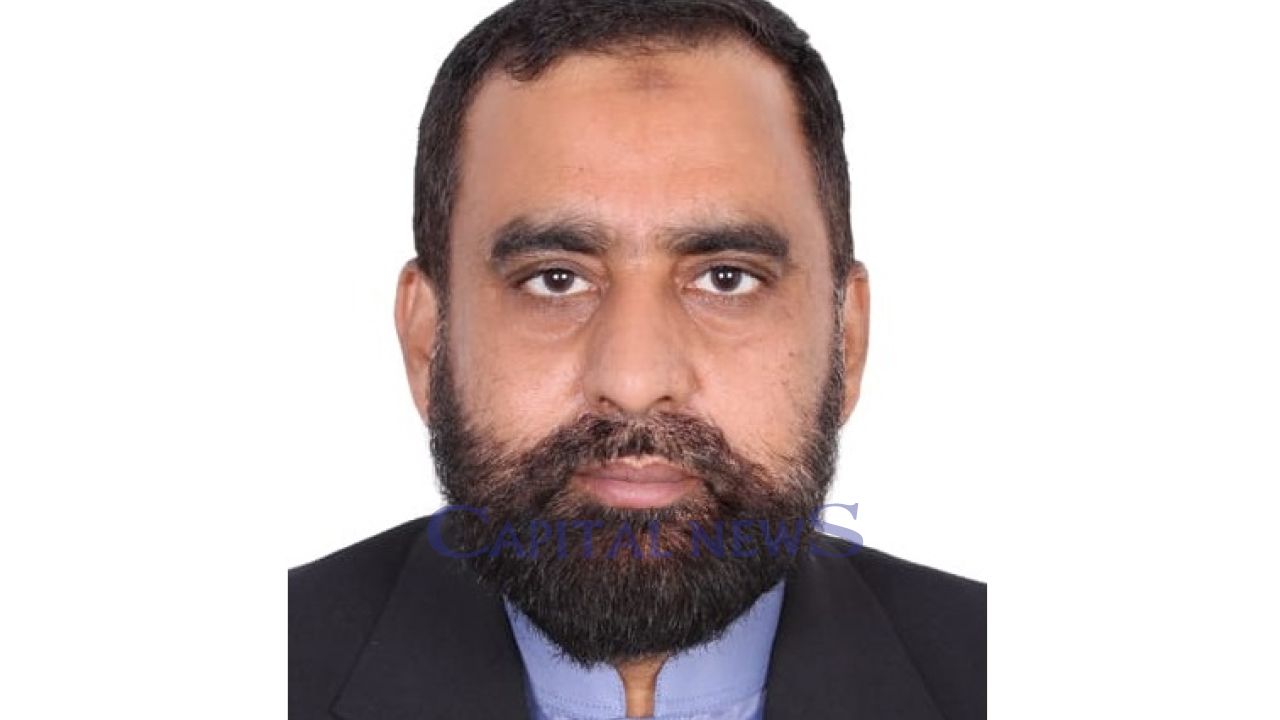
Md. Sahidul Islam (Sumon) is an economic analyst, columnist, and CHT Affairs Researcher. Email: [msislam.sumon@gmail.com]

Subject : Op-Editorial

Write Your Opinion

The Daily Capital News

শুক্রবার, ০৭ আগস্ট ২০২৬


Beyond Borrowing: Why Bangladesh Must Build Its Economy on Domestic Revenue

Publish Date : 06 August 2026

featured Image
Md. Sahidul Islam (Sumon): Bangladesh stands at a critical economic crossroads. Persistent global uncertainty, geopolitical tensions, elevated inflation, sluggish private investment, and mounting pressure on foreign exchange reserves have collectively exposed the structural vulnerabilities of the country's economy. In this increasingly complex environment, strengthening domestic resource mobilization is no longer merely a fiscal priority—it is a strategic imperative. For any sovereign nation, sustainable development, infrastructure expansion, quality public services, and social protection ultimately depend on the state's capacity to generate its own revenue. Yet Bangladesh continues to struggle with one of its most persistent fiscal weaknesses: the inability to meet its revenue collection targets.The recently concluded fiscal year 2025–26 illustrates the magnitude of this challenge. The National Board of Revenue (NBR) was initially assigned a revenue target of Tk 564,000 crore, which was later revised downward to Tk 518,000 crore in light of prevailing economic realities. Nevertheless, total revenue collection reached only Tk 476,000 crore, leaving a shortfall of approximately Tk 88,000 crore against the original target. Historical evidence paints an equally concerning picture. Since Bangladesh's independence, no elected government has successfully achieved its original revenue target. The only notable exception occurred during the 2007–08 caretaker administration. This recurring pattern is not merely an administrative shortcoming; it reflects a deeper structural weakness that undermines the country's long-term fiscal resilience and economic sovereignty.When domestic revenue falls short, governments inevitably resort to borrowing. Budget deficits are financed either through domestic banks or external loans. While these options may provide short-term fiscal relief, they also generate long-term economic risks.Heavy government borrowing from the domestic banking sector often crowds out private investment. As banks allocate more resources to financing government deficits, credit available for businesses contracts. Entrepreneurs face greater difficulties in accessing affordable financing for new investments, industrial expansion, and business development. The result is slower industrialization, weaker employment generation, and reduced economic dynamism.External borrowing presents another set of challenges. The era of highly concessional financing is gradually coming to an end. Development partners increasingly provide loans at market-based interest rates, accompanied by stringent economic and governance conditions. Consequently, the financial cost of external debt continues to rise, while policy autonomy becomes increasingly constrained. Excessive dependence on foreign creditors can gradually limit a country's ability to formulate independent economic policies and respond flexibly to domestic priorities.The fiscal framework for FY2026–27 underscores these concerns. The government projects a budget deficit of approximately Tk 243,000 crore, financed through Tk 155,000 crore in external borrowing and Tk 112,000 crore from domestic sources. At the same time, nearly Tk 46,000 crore has been allocated solely for servicing existing debt through interest and principal repayments. This emerging pattern—borrowing to repay previous borrowing—is hardly sustainable. Sri Lanka's recent debt crisis serves as a stark reminder of the dangers associated with prolonged fiscal dependence on debt financing.One of the principal reasons behind Bangladesh's persistent revenue weakness is its exceptionally low tax-to-GDP ratio. At present, the ratio stands at only 6.8 percent, meaning that the government collects merely Tk 6.80 in taxes for every Tk 100 generated within the economy. Compared with regional peers, Bangladesh remains a significant outlier. Nepal's tax-to-GDP ratio exceeds 23 percent, China's stands at around 13.5 percent, India's at approximately 12 percent, while Uganda also outperforms Bangladesh. Most fiscal experts argue that Bangladesh must raise its tax-to-GDP ratio to at least 14–15 percent if it intends to sustain long-term development and reduce fiscal vulnerability.The experiences of advanced economies further reinforce this argument. Countries such as Denmark, Sweden, Finland, and Japan maintain relatively high tax burdens, but they also provide citizens with universal healthcare, quality education, comprehensive social security, and efficient public services. In contrast, several hydrocarbon-rich Gulf states rely less on taxation because their governments are financed largely through natural resource revenues. Bangladesh enjoys no such luxury. As a densely populated, resource-constrained developing economy, strengthening domestic taxation remains the only realistic pathway toward sustainable public finance.Equally concerning is the structure of Bangladesh's tax system. Government revenue remains disproportionately dependent on indirect taxes rather than direct taxation. From the perspective of modern public finance, direct taxation is widely regarded as the fairest form of taxation because tax liabilities increase with income. Indirect taxes, such as value-added tax (VAT), apply uniformly regardless of income levels, imposing a proportionately heavier burden on lower-income households.In most advanced economies, direct taxes constitute the dominant source of government revenue. Direct taxes account for nearly 60 percent of total tax revenue in Denmark, around 56 percent in Japan, and approximately 56–58 percent in India. In Bangladesh, however, direct taxes contribute only about 30 percent of total tax revenue. This imbalance not only weakens revenue productivity but also exacerbates economic inequality by placing a disproportionate burden on ordinary consumers.The country's tax base also remains remarkably narrow. Although more than 10 million individuals possess Taxpayer Identification Numbers (TINs), only around 35 to 40 percent submit annual income tax returns. More strikingly, nearly two-thirds of those submitted returns are classified as "zero returns," generating virtually no revenue for the government. Consequently, a substantial segment of potential taxpayers remains outside the effective tax net, while a relatively small group of compliant taxpayers bears an increasing share of the fiscal burden. Such a system is neither equitable nor sustainable.Addressing these structural weaknesses requires comprehensive institutional reform rather than simply increasing tax rates. Expanding the tax base, improving governance, and modernizing tax administration should constitute the foundation of future fiscal policy.First, the National Board of Revenue must be transformed into a professional, transparent, and accountable institution. Corruption, administrative inefficiency, taxpayer harassment, and collusion in tax evasion must be addressed decisively if revenue performance is to improve.Second, Bangladesh should prioritize expanding the tax net instead of placing additional burdens on existing taxpayers. Bringing informal businesses and economic activities gradually into the formal economy, while strengthening tax administration down to the upazila level, would significantly broaden the revenue base without discouraging investment.Third, the tax administration requires comprehensive digital transformation. Electronic filing, online payment systems, data-driven compliance monitoring, and artificial intelligence-based risk assessment can substantially reduce tax evasion while making compliance simpler, faster, and more transparent for taxpayers. A modern digital tax ecosystem would simultaneously improve efficiency, reduce administrative costs, and strengthen public confidence in the system.Fourth, the country's extensive system of tax exemptions and preferential treatment deserves careful review. Many tax incentives introduced years ago have outlived their original policy objectives. Industries that have already achieved commercial maturity should gradually transition into the regular tax framework, thereby strengthening the government's long-term revenue base.The government's objective of increasing the tax-to-GDP ratio to 10 percent within the next five years and 15 percent by 2035 is both ambitious and necessary. However, these targets cannot remain confined to budget speeches or policy documents. Achieving them will require sustained political commitment, institutional reforms, technological modernization, and a taxpayer-friendly administrative culture. Equally important is rebuilding public trust in the tax system by ensuring fairness, transparency, and accountability.Ultimately, debt-financed development can offer only temporary relief. Sustainable economic independence cannot be built on an ever-expanding stock of domestic and external liabilities. It must instead rest upon a strong and diversified domestic revenue base. A fiscally self-reliant Bangladesh would be less vulnerable to external shocks, better positioned to finance its own development priorities, and more capable of preserving policy autonomy. Building a transparent, equitable, technology-driven, and citizen-friendly revenue system is therefore not simply a fiscal necessity—it is one of the defining national priorities for securing Bangladesh's long-term economic sovereignty and sustainable development.Md. Sahidul Islam (Sumon) is an economic analyst, columnist, and CHT Affairs Researcher. Email: [msislam.sumon@gmail.com]

The Daily Capital News

Advisory Editor: Gayeshwar Chandra Roy
Editor: Abul Kashem Majumder
Acting Editor: Mohammad Alamgir Hossain
Executive Editor: Farid Ahmed Ripon

© 2025 The Daily Capital News