The Daily Capital News

Urdu-speaking camp residents demand permanent rehabilitation at hunger strike

Urdu-speaking camp residents demand  permanent rehabilitation at hunger strike

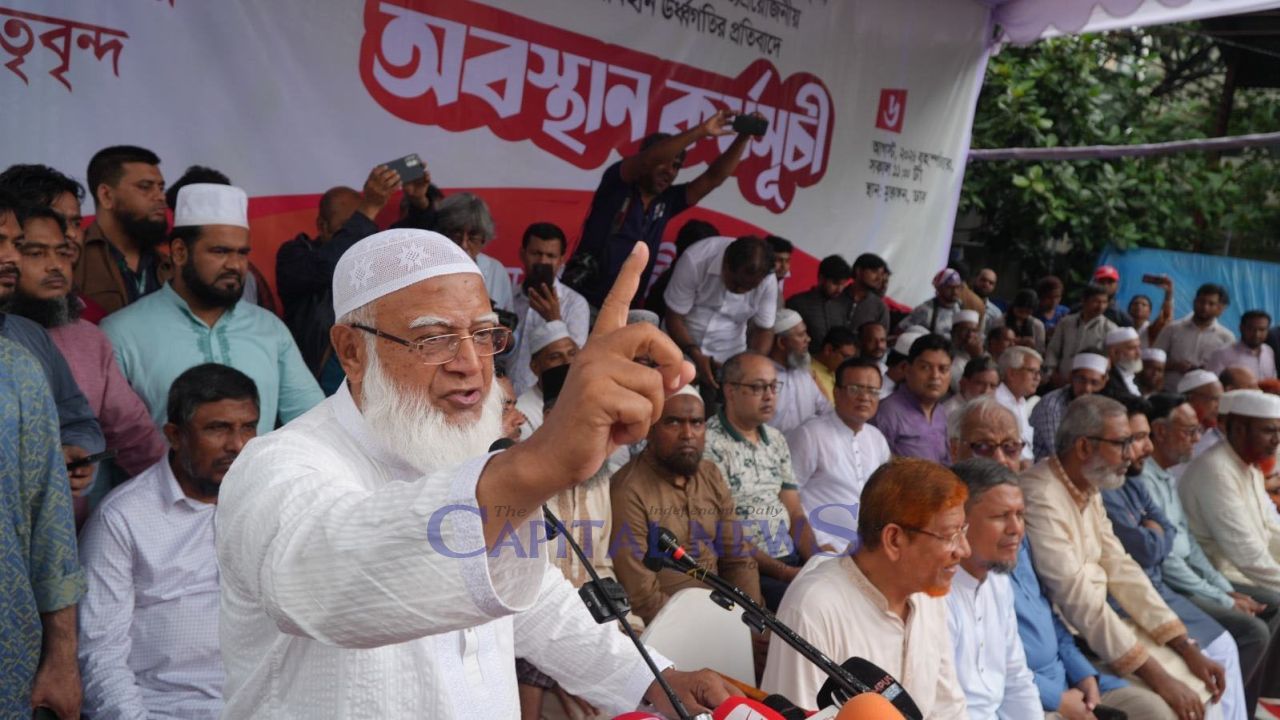
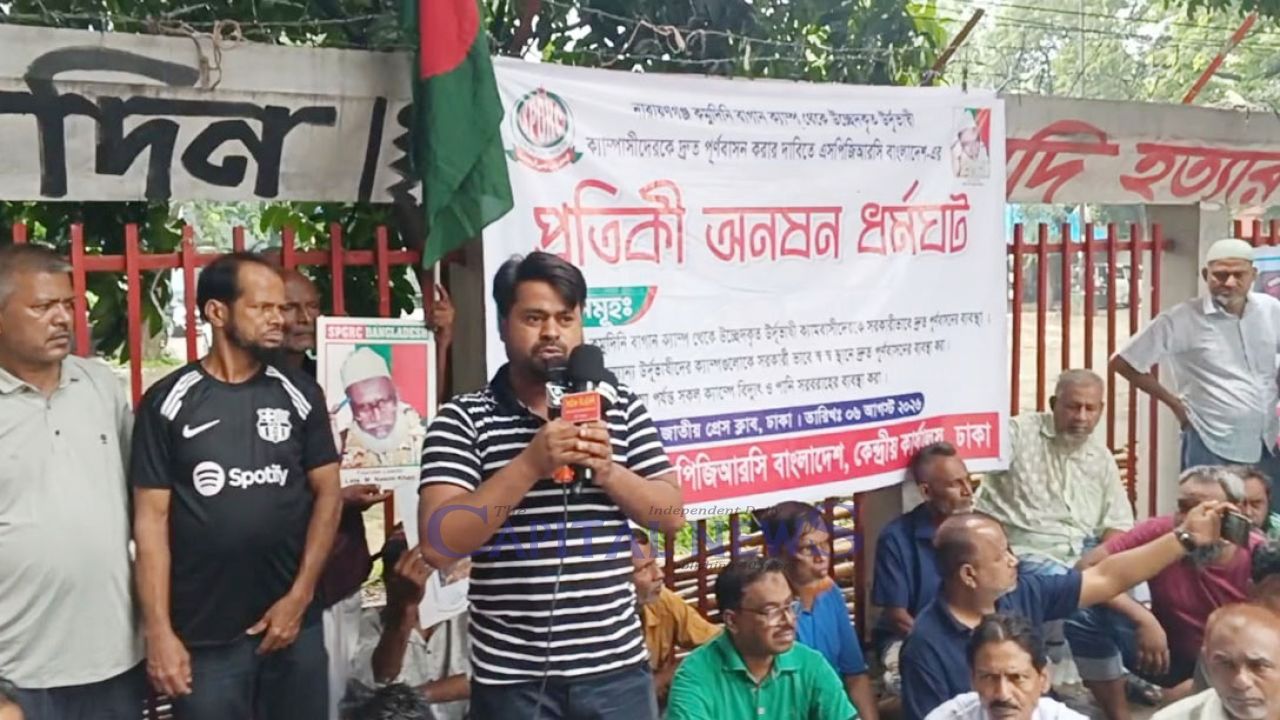
Calling for an end to decades of displacement and uncertainty, hundreds of members of the Stranded People's General Rehabilitation Committee (SPGRC) on Thursday staged a day-long symbolic hunger strike in front of the National Press Club, demanding the immediate rehabilitation of families evicted from Komudini Bagan Camp in Narayanganj and a comprehensive government initiative to resolve the long-standing problems of Urdu-speaking camp residents across Bangladesh.

The demonstration, held from 9:00 am to 3:00 pm, drew SPGRC leaders, activists and supporters from different parts of the country. Participants carried placards and banners while urging the government to ensure housing, security and basic civic services for camp residents.

Addressing the gathering, SPGRC Central President M. Shawkat Ali recalled the contributions of the organisation's late leader, Alhaj Nasim Khan, who dedicated his life to campaigning for the rights of stranded Urdu-speaking people until his death in 2005.

"Our struggle has continued for decades," Shawkat Ali said, urging the governments of Bangladesh and Pakistan, alongside the international community, to work towards what he described as a permanent and humanitarian solution to the issue.

He alleged that around 250 families were forcibly evicted from Komudini Bagan Camp in Narayanganj about three years ago and have since been living in railway stations, ferry terminals and on footpaths without permanent shelter.

Appealing to Prime Minister Sheikh Hasina, he urged the government to intervene and ensure the speedy rehabilitation of the displaced families.

SPGRC General Secretary Harun Or Rashid said recent remarks by BNP Acting Chairman Tarique Rahman, in which he reportedly stated that Bengalis and non-Bengalis should enjoy equal rights, had created fresh hope among members of the Urdu-speaking community.

He said thousands of Urdu-speaking residents have continued to live in camps across Bangladesh since the aftermath of the country's Liberation War in 1971.

Referring to the 1974 Tripartite Agreement involving Bangladesh, India and Pakistan, Rashid said that despite several understandings reached over the years, a durable solution has yet to be implemented.

"More than five decades have passed, yet generations have grown up and grown old in camps while waiting for a permanent settlement," he said.

Six-Point Charter of Demands

At the conclusion of the programme, the organisation submitted a six-point demand aimed at improving the living conditions of camp residents and securing long-term rehabilitation.

The demands include:

Immediate government rehabilitation of the approximately 250 families displaced from Komudini Bagan Camp in Narayanganj.

Permanent rehabilitation of residents in camps located across 13 districts.

Continued supply of electricity and safe drinking water to all camps until permanent rehabilitation is completed.

Protection of camp residents in Mirpur (Sections 10, 11 and 12), Narayanganj, Rangpur, Saidpur and Chattogram from alleged unlawful eviction, and withdrawal of what the organisation described as false and politically motivated cases filed against SPGRC leaders and activists.

Improved access to safe drinking water, sanitation, healthcare, education, employment and other essential public services.

Restoration of administrative oversight of all camps under the Ministry of Disaster Management and Relief, along with relevant government agencies, as was previously the case.

Among those present were SPGRC Vice-President Md. Khurshid Alam, Assistant Organising Secretary Md. Ayub Ali, Mirpur-11 General Secretary Md. Sabbir Alam, Mirpur-12 Chairman Md. Jalal Uddin Bhantu, Narayanganj Branch President Ali Reza, Mirpur-12 General Secretary Md. Mostak Ahmed Mallu, Mirpur-11 Vice-President Md. Imtiaz, Mirpur-10 President Md. Selim, and other leaders.

The demonstration concluded peacefully with participants urging the government to initiate dialogue with representatives of the Urdu-speaking community and formulate a comprehensive rehabilitation policy.


Write Your Opinion

The Daily Capital News

শনিবার, ০৮ আগস্ট ২০২৬


Urdu-speaking camp residents demand permanent rehabilitation at hunger strike

Publish Date : 08 August 2026

featured Image
Calling for an end to decades of displacement and uncertainty, hundreds of members of the Stranded People's General Rehabilitation Committee (SPGRC) on Thursday staged a day-long symbolic hunger strike in front of the National Press Club, demanding the immediate rehabilitation of families evicted from Komudini Bagan Camp in Narayanganj and a comprehensive government initiative to resolve the long-standing problems of Urdu-speaking camp residents across Bangladesh.The demonstration, held from 9:00 am to 3:00 pm, drew SPGRC leaders, activists and supporters from different parts of the country. Participants carried placards and banners while urging the government to ensure housing, security and basic civic services for camp residents.Addressing the gathering, SPGRC Central President M. Shawkat Ali recalled the contributions of the organisation's late leader, Alhaj Nasim Khan, who dedicated his life to campaigning for the rights of stranded Urdu-speaking people until his death in 2005."Our struggle has continued for decades," Shawkat Ali said, urging the governments of Bangladesh and Pakistan, alongside the international community, to work towards what he described as a permanent and humanitarian solution to the issue.He alleged that around 250 families were forcibly evicted from Komudini Bagan Camp in Narayanganj about three years ago and have since been living in railway stations, ferry terminals and on footpaths without permanent shelter.Appealing to Prime Minister Sheikh Hasina, he urged the government to intervene and ensure the speedy rehabilitation of the displaced families.SPGRC General Secretary Harun Or Rashid said recent remarks by BNP Acting Chairman Tarique Rahman, in which he reportedly stated that Bengalis and non-Bengalis should enjoy equal rights, had created fresh hope among members of the Urdu-speaking community.He said thousands of Urdu-speaking residents have continued to live in camps across Bangladesh since the aftermath of the country's Liberation War in 1971.Referring to the 1974 Tripartite Agreement involving Bangladesh, India and Pakistan, Rashid said that despite several understandings reached over the years, a durable solution has yet to be implemented."More than five decades have passed, yet generations have grown up and grown old in camps while waiting for a permanent settlement," he said.Six-Point Charter of DemandsAt the conclusion of the programme, the organisation submitted a six-point demand aimed at improving the living conditions of camp residents and securing long-term rehabilitation.The demands include:Immediate government rehabilitation of the approximately 250 families displaced from Komudini Bagan Camp in Narayanganj.Permanent rehabilitation of residents in camps located across 13 districts.Continued supply of electricity and safe drinking water to all camps until permanent rehabilitation is completed.Protection of camp residents in Mirpur (Sections 10, 11 and 12), Narayanganj, Rangpur, Saidpur and Chattogram from alleged unlawful eviction, and withdrawal of what the organisation described as false and politically motivated cases filed against SPGRC leaders and activists.Improved access to safe drinking water, sanitation, healthcare, education, employment and other essential public services.Restoration of administrative oversight of all camps under the Ministry of Disaster Management and Relief, along with relevant government agencies, as was previously the case.Among those present were SPGRC Vice-President Md. Khurshid Alam, Assistant Organising Secretary Md. Ayub Ali, Mirpur-11 General Secretary Md. Sabbir Alam, Mirpur-12 Chairman Md. Jalal Uddin Bhantu, Narayanganj Branch President Ali Reza, Mirpur-12 General Secretary Md. Mostak Ahmed Mallu, Mirpur-11 Vice-President Md. Imtiaz, Mirpur-10 President Md. Selim, and other leaders.The demonstration concluded peacefully with participants urging the government to initiate dialogue with representatives of the Urdu-speaking community and formulate a comprehensive rehabilitation policy.  

The Daily Capital News

Advisory Editor: Gayeshwar Chandra Roy
Editor: Abul Kashem Majumder
Acting Editor: Mohammad Alamgir Hossain
Executive Editor: Farid Ahmed Ripon

© 2025 The Daily Capital News