


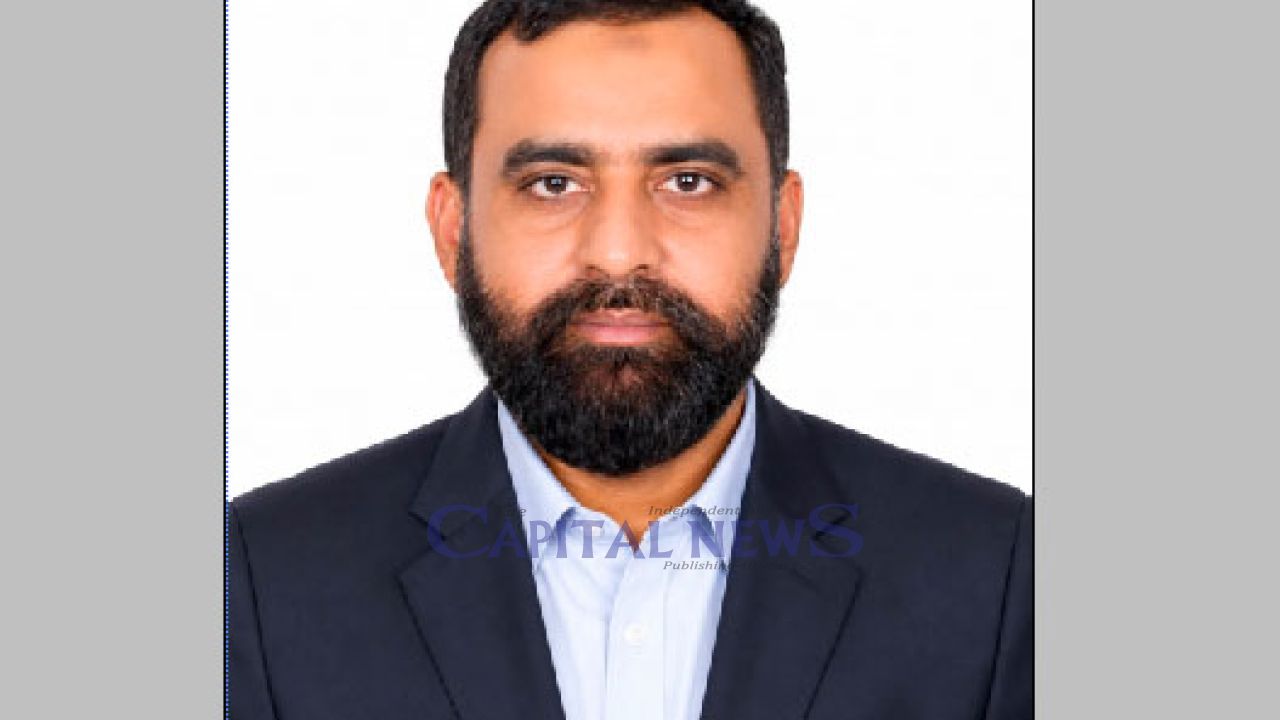
Md. Mukhlesur Rahman: The development and progress of a country depend to a great extent on the quality of its education system. Education is not merely a means of acquiring knowledge; it is also one of the principal instruments for developing skilled human resources, nurturing morality and values, fostering creativity, and strengthening the economic and social foundations of the state. Therefore, while expanding access to education is essential, ensuring the quality of education is even more important. It is not possible to build an effective and desirable education system simply by establishing new educational institutions, constructing classrooms, or increasing student enrollment. Greater attention must be given to the quality of education in existing institutions, the competence of teachers, curricula, the learning environment, and the development of students’ practical skills. This is an imperative of our time.
Over the past several decades, Bangladesh has witnessed a significant expansion of education. The number of educational institutions from primary to higher education has increased, student participation has grown, and access to education has become much wider than before. This is undoubtedly a positive achievement. However, if educational quality is not maintained alongside this expansion, and if students fail to acquire the desired knowledge, skills, ethical values, and critical thinking abilities, the benefits of such expansion are unlikely to meet expectations.
One of the major challenges facing our education system is the transition from quantitative expansion to qualitative excellence. In some places, there are not enough teachers; in others, there is a shortage of competent teachers. There is also a widespread lack of modern training for teachers. Many institutions lack adequate laboratories, libraries, technological facilities, and opportunities for practical learning. In many cases, good examination results are regarded as the principal measure of educational success. As a result, students are becoming increasingly accustomed to a rote-learning-based examination system, while important skills such as problem-solving, analytical thinking, communication, leadership, technological proficiency, and creativity are not developing adequately.
The first prerequisite for improving the quality of education is competent and well-trained teachers. Good buildings, modern furniture, or technology-equipped classrooms can never substitute for a capable teacher. A teacher’s responsibility is not merely to deliver lessons from textbooks. A teacher must be able to stimulate students’ curiosity, encourage them to ask questions, teach them to think logically, and establish meaningful connections between education and real life. Therefore, transparent recruitment, regular training, professional evaluation, and opportunities for career development must be ensured.
At the same time, ensuring the social dignity and professional security of teachers is equally important. If we want talented young people to enter the teaching profession, teaching must be established as a respected and dignified career.
Curriculum reform is another critically important issue. In a rapidly changing world, it is not possible to prepare students for the future job market through outdated curricula. If education fails to meet the demands of the times, there is no doubt that our students will fall behind. The content and methods of education must therefore evolve in line with artificial intelligence, digital technology, automation, climate change, cybersecurity, entrepreneurship, and emerging economic realities. At the same time, alongside technological knowledge, equal importance must be given to human values, ethics, history, culture, and social responsibility.
Education cannot bring complete benefit to society if it succeeds only in producing people capable of competing in the job market but fails to develop ethical and responsible citizens. An educated person must not only be equipped to compete professionally but also be capable of distinguishing truth from falsehood, justice from injustice, and fulfilling responsibilities toward society and the state.
We must also move away from a conventional examination-result-oriented education system. Achieving high marks in examinations should not be regarded as the ultimate objective of education. Yet today, examination results have become the principal indicator of educational success for students, parents, and many educational institutions. As a consequence, the dependence on coaching centers, guidebooks, and rote learning has increased alarmingly. Students’ curiosity and independent thinking are being increasingly constrained.
Under these circumstances, it has become essential to reform the system of educational assessment. Evaluation should not be limited to determining what a student has memorized. It should also assess what the student has understood, how well they can analyze a situation, how effectively they can solve problems, and how successfully they can apply acquired knowledge in real-life circumstances.
The same reality exists in higher education. Increasing the number of universities certainly contributes to expanding access to higher education. However, if a conducive research environment, competent faculty, quality laboratories, well-equipped libraries, and internationally competitive academic activities are not ensured, the expansion of higher education will fail to produce the desired results. Rather, developing a limited number of strong institutions into centers of research and innovation may prove far more effective.
In the context of Bangladesh, reducing regional disparities in education is also essential. There remains a significant gap between prestigious educational institutions in urban areas and many institutions in remote regions in terms of facilities and opportunities. Alongside establishing new institutions, it is imperative to strengthen disadvantaged existing institutions, recruit competent teachers, provide digital and scientific equipment, and create an appropriate learning environment for students.
The government has an important role to play in this regard, but the private sector and society also have significant responsibilities. However, the expansion of private educational institutions must not turn into merely a commercial enterprise. Strict oversight is necessary to ensure that education does not become driven solely by business interests. If education is treated merely as a commercial commodity, there is a serious risk that its fundamental purpose will be undermined.
Accountability and transparency are essential for ensuring educational quality. There should be regular and impartial assessments of what students are actually learning, whether teachers are attending classes and maintaining teaching standards, the condition of institutional infrastructure, and the extent to which graduates possess practical skills. Simply approving an educational institution without maintaining effective oversight of its activities cannot ensure the desired standard of education.
We must remember that the true success of investment in education cannot be measured by the number of buildings constructed; it must be measured by the capabilities of the people educated within them. A school may provide certificates to hundreds of students, but the real measure of educational success should be how many of them can think independently, how many can work competently, and how many have developed into honest and responsible citizens.
It is therefore time to establish a clear priority in our education policy. Where there is a genuine shortage of educational institutions, new institutions must certainly be established. But instead of creating institutions merely to increase their numbers, we must first determine how existing institutions can be made more effective, modern, and quality-oriented.
The future of education will depend not on numbers but on quality. Our goal should be to build an education system in which students do not merely pass examinations but acquire knowledge and skills, develop ethically, think creatively, and become capable of meeting the challenges of a rapidly changing world.
Therefore, alongside establishing new educational institutions, we must now devote greater attention to improving the quality of teaching, modernizing curricula, strengthening research, promoting technology-based education, developing practical skills, providing moral education, and establishing effective quality-control mechanisms. The expansion of educational institutions must be based on genuine need; but improving the quality of education must be the principal priority of our national education policy. After all, it is not the number of buildings that advances a country—it is the people shaped by quality education who drive a nation toward progress.
Md. Mukhlesur Rahman
Economist, Educator, Social and State Thinker
Former Principal, Jameya Deenia; Founder Principal, Tamirul Millat Madrasa, Tongi Branch
Subject : Op-Editorial
শনিবার, ০৮ আগস্ট ২০২৬
Publish Date : 08 August 2026




Write Your Opinion