

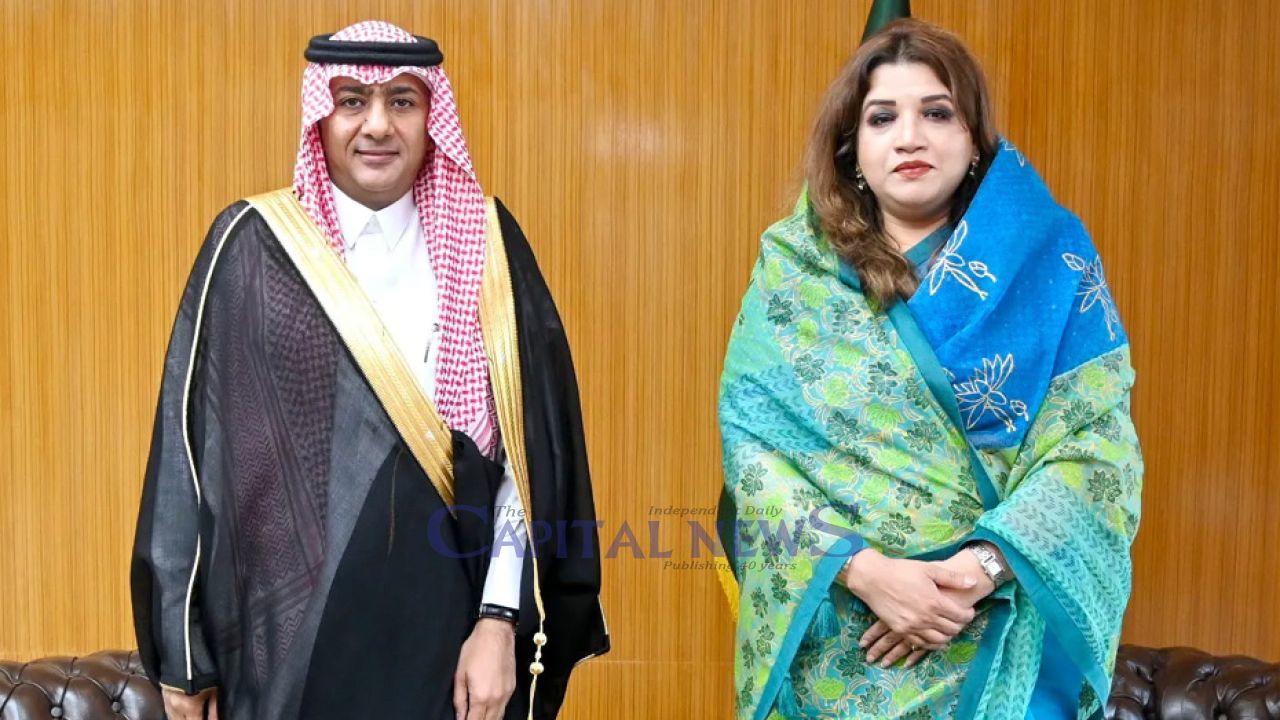
Dhaka seeks safe travel, consular support and protection of migrant workers amid regional tensions
MM Rahmatullah: The Saudi Arabian Ambassador to Bangladesh could play a crucial role in protecting the interests of Bangladeshi migrant workers as flight disruptions linked to continuing Houthi attacks in the region leave thousands of Saudi-bound passengers stranded, raising concerns over employment, visa validity and mounting debts.
Saudi Arabia is
Bangladesh’s largest overseas labour market, employing millions of Bangladeshi
men and women whose hard work supports their families and contributes
significantly to the country’s foreign exchange earnings. However, the
suspension and disruption of flights to major Saudi destinations, particularly
Riyadh, have created uncertainty for workers preparing to join new jobs and
expatriates seeking to return to their workplaces after leave.
Against this backdrop,
close coordination between the Saudi Embassy in Dhaka, the Bangladesh
government and Saudi aviation authorities has become increasingly important to
ensure the safe movement of passengers and prevent temporary travel disruptions
from turning into a wider crisis for migrant workers.
The Saudi Ambassador’s
engagement with the relevant authorities could help expedite alternative travel
arrangements, address visa-related complications and ensure that workers do not
face unnecessary employment or financial losses because of circumstances beyond
their control.
The flight disruptions
have affected both direct and transit services between Bangladesh and Saudi
Arabia. Thousands of passengers have reportedly faced delays or cancellations,
while many have been left uncertain about when they can reach their
destinations.
For workers travelling
to take up new jobs, every day of delay can carry serious consequences. Many
have sold land, jewellery or other family assets, while others have borrowed
money at high interest rates to cover recruitment, visa and travel expenses.
Failure to reach Saudi Arabia within the stipulated period could expose them to the risk of losing employment opportunities, missing joining deadlines or encountering complications involving their visas and employers.
The financial pressure
is particularly severe for families that depend on borrowed money to finance
overseas employment. In some cases, relatives who helped arrange loans are
reportedly struggling to repay instalments and avoiding creditors.
The situation therefore
extends beyond aviation disruptions. It has become a question of protecting
workers' livelihoods, preserving employment opportunities and preventing
vulnerable families from falling deeper into debt.
As the situation
develops, the Saudi Ambassador to Bangladesh can serve as an important channel
of communication between Dhaka and Riyadh.
Bangladesh needs close
diplomatic engagement to obtain timely information about airport operations,
flight schedules and alternative routes, as well as to seek practical solutions
for workers whose visas are approaching expiry.
The two sides could
consider coordinated arrangements for affected passengers, including priority
travel for workers facing imminent joining deadlines, assistance with visa
validity and communication with Saudi employers over delayed arrivals.
Clear guidance from the
Saudi authorities would also help reduce confusion among passengers and
recruitment agencies. Regular updates through the Saudi Embassy and relevant
Bangladeshi agencies could prevent unnecessary airport visits, additional
expenses and reliance on unverified information.
For workers already
employed in Saudi Arabia but temporarily stranded in Bangladesh, communication
with employers and relevant Saudi institutions would be important to ensure
that travel delays do not automatically result in the loss of jobs.
Diplomatic coordination
would be particularly beneficial for low-income workers, who often have limited
financial resources to absorb unexpected travel costs.
Saudi Arabian Airlines,
commonly known as Saudia, has taken steps to ease the difficulties of affected
passengers by arranging alternative travel to Saudi Arabia through airports where
operations remain possible.
According to
information provided by the airline's officials, special flights have been
arranged from Dhaka to Dammam and Jeddah to help stranded passengers, including
Umrah pilgrims and expatriate workers, reach their destinations. The airline
has said that passengers travelling on these special flights will not have to
pay additional charges.
Saudia has also been assisting some transit passengers by arranging alternative tickets on other airlines, subject to seat availability and applicable arrangements.
Mohammad Rafiqul Islam,
general manager for business support at Saudia, said the airline had operated two
special flights to help passengers stranded by the disruption at Riyadh
airport. Further special services would be considered according to passenger
demand, he added.
He said regular flights
to Jeddah and Madinah were continuing, while the airline was taking steps to
minimise passenger hardship during the disruption.
Saudia is among the
principal carriers operating between Bangladesh and Saudi Arabia, with services
connecting Dhaka to major Saudi destinations. Its alternative arrangements have
offered some relief to passengers who were facing uncertainty over their travel
plans.
However, the scale of
the disruption means that sustained coordination among airlines, airport
authorities, recruitment agencies and diplomatic missions remains essential.
Bangladesh's Civil
Aviation Authority has been monitoring the situation at Saudi airports and
providing updates on flight suspensions and operational changes. Airlines have
also been instructed to assist affected passengers and provide necessary refreshments
and food where required.
Civil Aviation and
Tourism Minister M Rashiduzzaman Millat has said the government is pursuing
alternative arrangements through Saudi airports where flights can operate. He
also indicated that the difficulties faced by passengers whose visas are
nearing expiry and workers unable to return to their workplaces are receiving
attention.
These efforts could be
strengthened through regular consultations with the Saudi Embassy to identify
the most urgent cases and establish clear procedures for resolving travel and
immigration-related difficulties.
Bangladesh also needs
to maintain communication with its mission in Riyadh and other relevant Saudi
authorities to provide assistance to injured nationals and facilitate the
return of the remains of citizens killed in the reported attacks.
Any confirmed security
risks affecting civilian facilities should be addressed through reliable
information and appropriate consular guidance, allowing expatriates to follow
local safety instructions without unnecessary panic.
The economic
implications of prolonged disruption are significant because Saudi Arabia
remains one of the most important sources of remittances for Bangladesh.
According to figures
cited in the supplied information from Bangladesh Bank, remittances from Saudi
Arabia amounted to $5.85 billion in the 2025–26 fiscal year.
The country received a
further $1.63 billion from Saudi-based Bangladeshis during the first three
months of the 2026–27 fiscal year, including $580 million in July, $550 million
in August and $500 million in September.
These figures
demonstrate the importance of maintaining stable employment opportunities for
Bangladeshi workers in the Kingdom.
Although temporary
flight suspensions do not necessarily mean that the Saudi labour market will
contract, prolonged regional instability could create difficulties if employers
delay recruitment, reduce working hours or reconsider hiring plans.
Recruiters and
migration experts have therefore called for precautionary measures to protect
workers and sustain recruitment channels.
Saudi Arabia's major
infrastructure and development programmes continue to require foreign labour
across multiple sectors. This provides grounds for cautious optimism that
temporary aviation disruptions need not translate into lasting damage to
Bangladesh's employment prospects, provided the security situation does not
deteriorate significantly.
Nevertheless, the
duration and scale of the disruption will be important factors in determining
its eventual impact.
For Bangladesh, the
immediate challenge is to ensure that workers already committed to overseas
employment can reach their workplaces safely and without avoidable financial
losses.
For Saudi Arabia,
maintaining reliable travel arrangements and effective communication with a
major labour-supplying country would help protect the interests of employers
and migrant workers alike.
The Saudi Ambassador's
active engagement with Bangladesh's Foreign Ministry, civil aviation authorities
and relevant labour agencies could help bridge information gaps and facilitate
solutions for the most vulnerable passengers.
Both countries have a
shared interest in ensuring that temporary flight disruptions do not undermine
workers' confidence in the migration process or impose disproportionate costs
on families that have invested heavily in overseas employment.
As thousands of
passengers wait for normal services to resume, timely diplomatic coordination,
practical consular assistance and flexible arrangements for affected workers
will be essential.
Ultimately, protecting
Bangladeshi migrant workers means safeguarding not only their jobs and
financial security but also the vital economic partnership between Bangladesh
and Saudi Arabia.
শুক্রবার, ২৩ অক্টোবর ২০২৬
Publish Date : 13 October 2026

Write Your Opinion