The Daily Capital News

Muslim education, identity under attack in Modi’s-led India as campus protests face crackdown

Muslim education, identity under attack in Modi’s-led India as campus protests face crackdown

CN Desk: The BJP-led Indian government is facing criticism over what critics describe as a systematic assault on Muslim educational institutions, student representation and identity, as protests and security restrictions at prominent universities in New Delhi and Aligarh raise fresh concerns about academic freedom and the treatment of dissenting voices. 

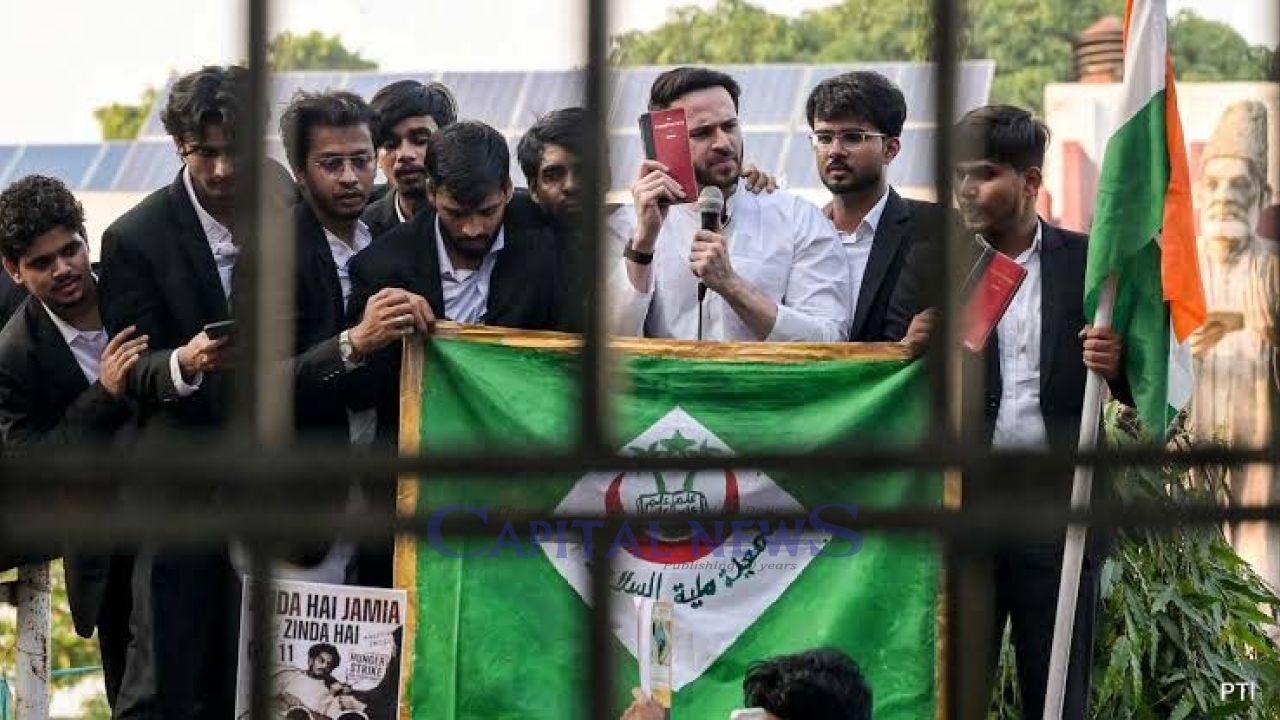
Jamia Millia Islamia, a historic institution founded in Aligarh on October 29, 1920, under the leadership of Maulana Mohammad Ali Jauhar, Hakim Ajmal Khan and other prominent figures, has become the latest focus of tensions. The institution moved to Delhi in 1925 and became a central university in 1988. Its founding vision included expanding educational opportunities, particularly for Muslims, and promoting social and educational advancement.

Critics say the university’s roughly 24,000 students, including undergraduates, postgraduates and doctoral researchers, are now facing intimidation tactics similar to those witnessed in Indian illegally occupied Jammu and Kashmir (IIOJK).

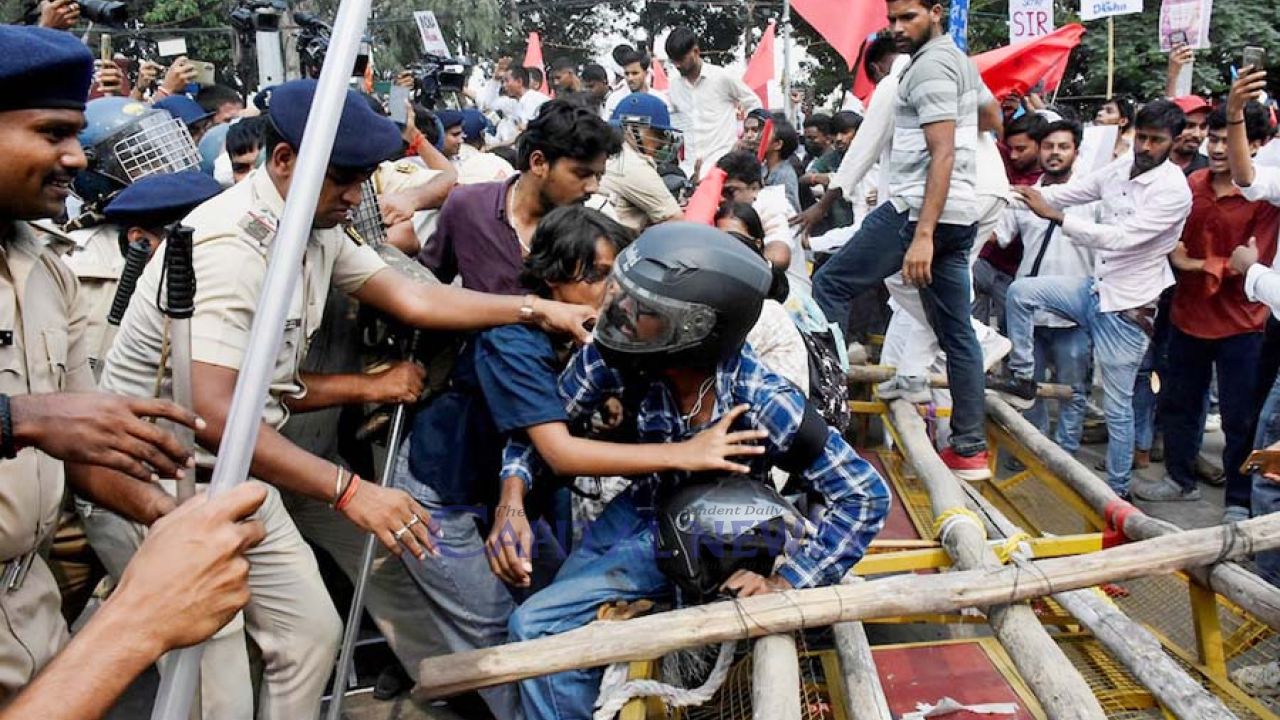
On October 12, 2026, students began an indefinite hunger strike demanding the restoration of the Jamia Millia Islamia Students’ Union, which was dissolved in 2006. Students have called for the revival of union elections, which have not been held since 2005, and a clear timetable for the electoral process.

By October 26–27, the agitation had continued amid heightened security, restrictions on campus access and a shift to online teaching. The university extended online classes until November 8 and announced that second mid-term examinations would also be conducted online.

Although the administration indicated that elections would be held within 15 days of approval of a new union constitution, protesters questioned the absence of a firm deadline for that approval. They demanded a clear commitment, including approval of the constitution by December 20, 2026.

The controversy intensified amid reports of graffiti reading “Free Kashmir” and “Free Sharjeel Imam” on campus. Critics say such slogans have contributed to suspicion surrounding the wider student community, raising concerns about whether allegations against individuals are being used to justify broader restrictions.

Similar tensions have repeatedly surfaced at Jawaharlal Nehru University (JNU), also in New Delhi. On February 9, 2016, an event held in connection with the execution of Kashmiri freedom leader Afzal Guru triggered a major political controversy and a sedition case. JNU student leader Kanhaiya Kumar was arrested following allegations concerning the event, which became a flashpoint in the national debate over freedom of expression, nationalism and dissent. A complaint against Kumar was filed by Akhil Bharatiya Vidyarthi Parishad (ABVP), a student wing of the RSS, and BJP MP Maheish Girri.

In October 2026, reports of fresh graffiti reading “Free Umar Khalid” and “Long Live Naxalbari” reportedly prompted renewed demands from the ABVP for action against Left-affiliated groups. Critics argue that these recurring controversies illustrate the increasingly polarised atmosphere surrounding political expression on Indian university campuses. Observers and critics argue that the use of Kashmir-style intimidation on Delhi campuses risks eroding Muslim educational autonomy and portraying Muslim identity as synonymous with disloyalty. They contend that India’s institutions cannot claim to uphold democracy if educational spaces associated with dissent and minority communities face systematic restrictions.

India’s democratic institutions, critics say, must protect academic freedom, uphold due process and allow peaceful dissent, regardless of students’ religious backgrounds or political affiliations. They maintain that universities should remain spaces for education, debate and independent thought rather than arenas for intimidation or collective punishment.


Write Your Opinion

The Daily Capital News

বৃহস্পতিবার, ২৯ অক্টোবর ২০২৬


Muslim education, identity under attack in Modi’s-led India as campus protests face crackdown

Publish Date : 28 October 2026

featured Image
CN Desk: The BJP-led Indian government is facing criticism over what critics describe as a systematic assault on Muslim educational institutions, student representation and identity, as protests and security restrictions at prominent universities in New Delhi and Aligarh raise fresh concerns about academic freedom and the treatment of dissenting voices. Jamia Millia Islamia, a historic institution founded in Aligarh on October 29, 1920, under the leadership of Maulana Mohammad Ali Jauhar, Hakim Ajmal Khan and other prominent figures, has become the latest focus of tensions. The institution moved to Delhi in 1925 and became a central university in 1988. Its founding vision included expanding educational opportunities, particularly for Muslims, and promoting social and educational advancement.Critics say the university’s roughly 24,000 students, including undergraduates, postgraduates and doctoral researchers, are now facing intimidation tactics similar to those witnessed in Indian illegally occupied Jammu and Kashmir (IIOJK).On October 12, 2026, students began an indefinite hunger strike demanding the restoration of the Jamia Millia Islamia Students’ Union, which was dissolved in 2006. Students have called for the revival of union elections, which have not been held since 2005, and a clear timetable for the electoral process.By October 26–27, the agitation had continued amid heightened security, restrictions on campus access and a shift to online teaching. The university extended online classes until November 8 and announced that second mid-term examinations would also be conducted online.Although the administration indicated that elections would be held within 15 days of approval of a new union constitution, protesters questioned the absence of a firm deadline for that approval. They demanded a clear commitment, including approval of the constitution by December 20, 2026.The controversy intensified amid reports of graffiti reading “Free Kashmir” and “Free Sharjeel Imam” on campus. Critics say such slogans have contributed to suspicion surrounding the wider student community, raising concerns about whether allegations against individuals are being used to justify broader restrictions.Similar tensions have repeatedly surfaced at Jawaharlal Nehru University (JNU), also in New Delhi. On February 9, 2016, an event held in connection with the execution of Kashmiri freedom leader Afzal Guru triggered a major political controversy and a sedition case. JNU student leader Kanhaiya Kumar was arrested following allegations concerning the event, which became a flashpoint in the national debate over freedom of expression, nationalism and dissent. A complaint against Kumar was filed by Akhil Bharatiya Vidyarthi Parishad (ABVP), a student wing of the RSS, and BJP MP Maheish Girri.In October 2026, reports of fresh graffiti reading “Free Umar Khalid” and “Long Live Naxalbari” reportedly prompted renewed demands from the ABVP for action against Left-affiliated groups. Critics argue that these recurring controversies illustrate the increasingly polarised atmosphere surrounding political expression on Indian university campuses. Observers and critics argue that the use of Kashmir-style intimidation on Delhi campuses risks eroding Muslim educational autonomy and portraying Muslim identity as synonymous with disloyalty. They contend that India’s institutions cannot claim to uphold democracy if educational spaces associated with dissent and minority communities face systematic restrictions.India’s democratic institutions, critics say, must protect academic freedom, uphold due process and allow peaceful dissent, regardless of students’ religious backgrounds or political affiliations. They maintain that universities should remain spaces for education, debate and independent thought rather than arenas for intimidation or collective punishment.

The Daily Capital News

Advisory Editor: Gayeshwar Chandra Roy
Editor: Abul Kashem Majumder
Acting Editor: Mohammad Alamgir Hossain
Executive Editor: Farid Ahmed Ripon

© 2025 The Daily Capital News