The Daily Capital News

Economic engine of the world lies in Asia, not in Europe

Economic engine of the world lies in Asia, not in Europe

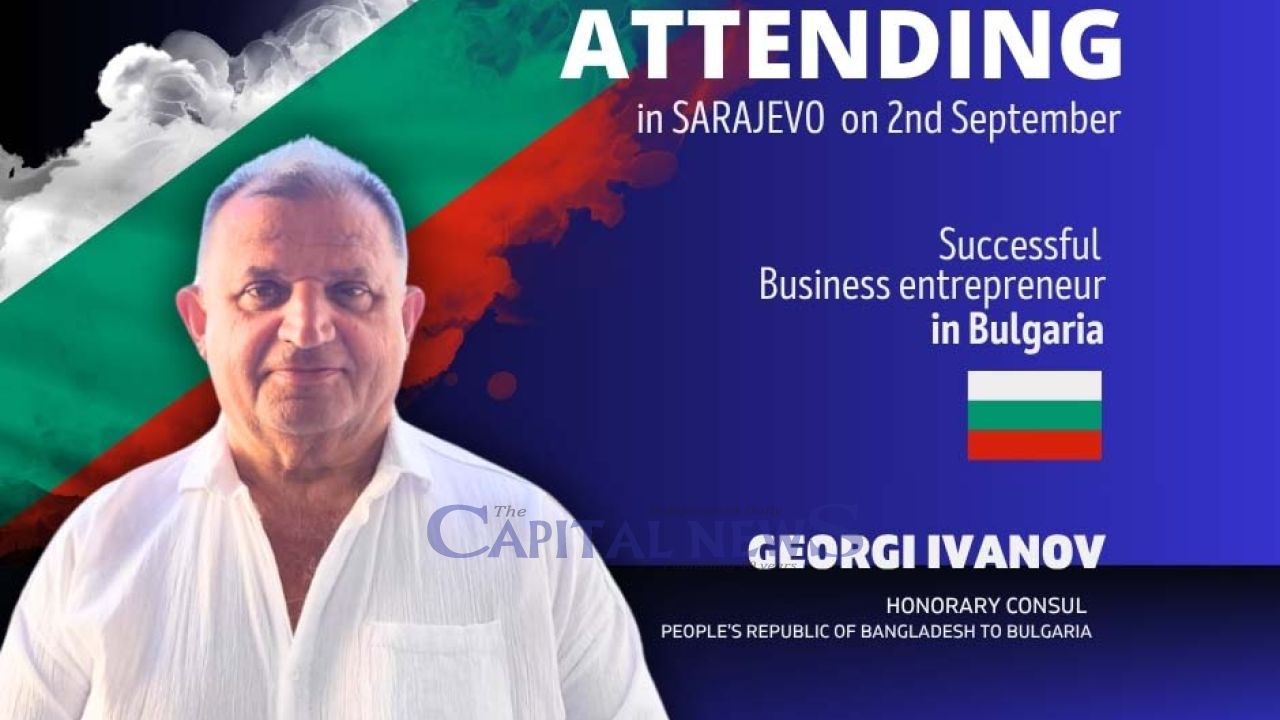
Economic engine of the world lies in Asia, not in Europe, Says Georgi Ivanov, Honorary Consul of Bangladesh in Sofia, Bulgaria,

Bulgaria looks at economic expansion with Bangladesh

Georgi Ivanov, Honorary Consul of Bangladesh in Sofia, Bulgaria, in an interview with Imtiaz Ahmed and Samia Tabassum, said that nowadays the economic engine of the world lies in Asia and not in Europe as the global economic balance of power has transformed in the past two decades……

Despite significant challenges, Asia's economy remains resilient with a positive outlook, and continues to make important contributions to the global economy, international trade and sustainable development

Global economic development is expected to demonstrate growth momentum in 2026 despite uncertainties


The economic growth in Europe has decelerated against the backdrop of high inflation and external shocks, maintaining less growth rates compared to Asian ones.


Once dominated by the West, the world economy is now being reshaped by Asia, especially by China.


Asia has  nearly 50% of the world's total GDP today, compared to just under 30% in the year 2000.Asia is now the primary engine of the global economy, generating roughly two-thirds of worldwide economic growth and sharing nearly 40% of global trade.

According to data of the International Monetary Fund (IMF), China and India alone drive a massive share of global expansion—with China contributing about 26.6% and India adding another 17% to global GDP growth, reports Xinhua

Emerging economies across South and Southeast Asia—such as Bangladesh, Vietnam, Indonesia, and Saudi Arabia—are experiencing fast development, urban growth, and digital expansion. Despite significant challenges, Asia's economy remains resilient with a positive outlook, and continues to make important contributions to the global economy, international trade and sustainable development….


The Asian economy is expected to expand by 4.5 percent in 2026, with its share of global GDP rising to 49.7 percent from 49.2 percent in 2025 on a purchasing power parity basis, noted the report titled "Asian Economic Outlook and Integration Progress Annual Report 2026."


Georgi Ivanov, Honorary Consul of Bangladesh in Sofia, Bulgaria, said that Bulgaria was the fourth country to recognize Bangladesh in the early 70s after Bhutan, India and USSR. All the years the relations between the two countries have been friendly and of mutual benefit. “We can only hope that now the connections will strengthen and improve, ” Georgi Ivanov said.


Bulgaria to increase economic engagement with Bangladesh. Bangladesh export to Bulgaria stood at 203 million US dollars and Bulgaria’s export to Bangladesh stood at only 17 million, said Georgi Ivanov, Honorary Consul of Bangladesh in Sofia, Bulgaria.


The rest part of the interview is given below :


02.   You have lived in Bangladesh several years in the early 90s. You have also visited Bangladesh in 2025. How do you see the comparison between the early 90s and mid 2025


I started working with Bangladesh in 1985 after my graduation from the University. My first visit to Bangladesh was in 1989, after that in 1990 and I was posted there in 1991 for more than 5 years. My children went to BIT school of Mrs. Lubna Chaudhary. Some of my best friends are Bangladeshis - intellectuals, diplomats, businessmen. My connection with Bangladesh has never stopped. All the years I have seen Banflad sh developing and appearing as a Phoenix from the  ashes of colonial times and poverty. Today I see Bangladesh as a modern country with a very big middle class and developed economy.


03.The war in the middle-east and Russia—Ukraine war have created uncertainty in the global energy market. Bangladesh has been at risk of an energy crisis. How Bangladesh and Bulgaria  work together to ease the energy crisis?


We can only hope that the wars in the Middle East and Ukraine will stop and the energy situation will improve. Peace is the  only acceptable alternative. Nuclear energy is one of the basic directions for at least partial improvement of the energy situation.


4. What is the present trade volume between Bangladesh and Bulgaria?   What is our target to reach bilateral trade within the next five years?


According to the UN sources the import from Bangladesh to Bulgaria in 2024 has been USD 203 Millions mainly garments and leather products and the exports from Bulgaria to Bangladesh - 17 Millions. Very big trade deficit.


One of the new directions for developing the bilateral relations, which appeared after the COVID crisis is the import of skilled manpower. More and more Bangladesh citizens are coming to Bulgaria to work  in different sectors .There is a very big scope and potential here.


5. The present government is working on improving the business environment in Bangladesh. What are your observations about the business environment?


 I think that the business environment in Bangladesh was  entirely normal for a contemporary democratic country. More and more Bulgarian companies are getting in direct contact with companies from Bangladesh and vice versa.


6. How do you see the prospect of a Blue Economy in Bangladesh?


The Blue economy has a huge impact and importance for countries like Bangladesh with the immense coastal area. There is a lot to be done in this  direction and I see Bangladesh doing it.


07.  What is the number of Bangladeshis living in Bulgaria and how do you evaluate their contribution to your country?


The number of Bangladesh citizens in Bulgaria is not very big. There are about 100 who have already settled down and are normal members of Bulgarian society. The number of workers who have come to Bulgaria and have remained here is increasing constantly but still it's insufficient - it is a bit more than 1000.


9. Bangladesh and Bulgaria celebrate 54 years of diplomatic relations this year. How do you see the social achievements of Bangladesh after 50 years?.


A contemporary country with a very big middle class playing bigger and bigger role in the international relations


10. Bulgaria offers scholarships to students of developing countries. Can your government give scholarships to Bangladeshi students in its educational institutions?


There are a lot of Bangladesh students in the Bulgarian Universities. The interest is mutual.


11. Some 1.1 million Rohingyas are living in Cox’s Bazar after the Myanmar government pushed them out of its country.  How do you see the Rohingya issue in Bangladesh?


 The Rohingyas issue  - frankly speaking I don't know much here. I have a friend - a Bulgarian lady who recently went to Cox's Bazaar in the frames of one of the  international organizations working there. In fact it's a wound which the world has to help Bangladesh to heal


12. Bangladesh has become a middle-income group country …. How do you see the economic development of Bangladesh in the last 54 years?


Especially having in mind that nowadays the economic engine of the world lies in Asia and not in Europe

Write Your Opinion

The Daily Capital News

শুক্রবার, ০৬ নভেম্বর ২০২৬


Economic engine of the world lies in Asia, not in Europe

Publish Date : 06 November 2026

featured Image
Economic engine of the world lies in Asia, not in Europe, Says Georgi Ivanov, Honorary Consul of Bangladesh in Sofia, Bulgaria,Bulgaria looks at economic expansion with BangladeshGeorgi Ivanov, Honorary Consul of Bangladesh in Sofia, Bulgaria, in an interview with Imtiaz Ahmed and Samia Tabassum, said that nowadays the economic engine of the world lies in Asia and not in Europe as the global economic balance of power has transformed in the past two decades……Despite significant challenges, Asia's economy remains resilient with a positive outlook, and continues to make important contributions to the global economy, international trade and sustainable developmentGlobal economic development is expected to demonstrate growth momentum in 2026 despite uncertaintiesThe economic growth in Europe has decelerated against the backdrop of high inflation and external shocks, maintaining less growth rates compared to Asian ones.Once dominated by the West, the world economy is now being reshaped by Asia, especially by China.Asia has  nearly 50% of the world's total GDP today, compared to just under 30% in the year 2000.Asia is now the primary engine of the global economy, generating roughly two-thirds of worldwide economic growth and sharing nearly 40% of global trade.According to data of the International Monetary Fund (IMF), China and India alone drive a massive share of global expansion—with China contributing about 26.6% and India adding another 17% to global GDP growth, reports XinhuaEmerging economies across South and Southeast Asia—such as Bangladesh, Vietnam, Indonesia, and Saudi Arabia—are experiencing fast development, urban growth, and digital expansion. Despite significant challenges, Asia's economy remains resilient with a positive outlook, and continues to make important contributions to the global economy, international trade and sustainable development….The Asian economy is expected to expand by 4.5 percent in 2026, with its share of global GDP rising to 49.7 percent from 49.2 percent in 2025 on a purchasing power parity basis, noted the report titled "Asian Economic Outlook and Integration Progress Annual Report 2026."Georgi Ivanov, Honorary Consul of Bangladesh in Sofia, Bulgaria, said that Bulgaria was the fourth country to recognize Bangladesh in the early 70s after Bhutan, India and USSR. All the years the relations between the two countries have been friendly and of mutual benefit. “We can only hope that now the connections will strengthen and improve, ” Georgi Ivanov said.Bulgaria to increase economic engagement with Bangladesh. Bangladesh export to Bulgaria stood at 203 million US dollars and Bulgaria’s export to Bangladesh stood at only 17 million, said Georgi Ivanov, Honorary Consul of Bangladesh in Sofia, Bulgaria. The rest part of the interview is given below :02.   You have lived in Bangladesh several years in the early 90s. You have also visited Bangladesh in 2025. How do you see the comparison between the early 90s and mid 2025I started working with Bangladesh in 1985 after my graduation from the University. My first visit to Bangladesh was in 1989, after that in 1990 and I was posted there in 1991 for more than 5 years. My children went to BIT school of Mrs. Lubna Chaudhary. Some of my best friends are Bangladeshis - intellectuals, diplomats, businessmen. My connection with Bangladesh has never stopped. All the years I have seen Banflad sh developing and appearing as a Phoenix from the  ashes of colonial times and poverty. Today I see Bangladesh as a modern country with a very big middle class and developed economy.03.The war in the middle-east and Russia—Ukraine war have created uncertainty in the global energy market. Bangladesh has been at risk of an energy crisis. How Bangladesh and Bulgaria  work together to ease the energy crisis?We can only hope that the wars in the Middle East and Ukraine will stop and the energy situation will improve. Peace is the  only acceptable alternative. Nuclear energy is one of the basic directions for at least partial improvement of the energy situation.4. What is the present trade volume between Bangladesh and Bulgaria?   What is our target to reach bilateral trade within the next five years?According to the UN sources the import from Bangladesh to Bulgaria in 2024 has been USD 203 Millions mainly garments and leather products and the exports from Bulgaria to Bangladesh - 17 Millions. Very big trade deficit.One of the new directions for developing the bilateral relations, which appeared after the COVID crisis is the import of skilled manpower. More and more Bangladesh citizens are coming to Bulgaria to work  in different sectors .There is a very big scope and potential here.5. The present government is working on improving the business environment in Bangladesh. What are your observations about the business environment? I think that the business environment in Bangladesh was  entirely normal for a contemporary democratic country. More and more Bulgarian companies are getting in direct contact with companies from Bangladesh and vice versa.6. How do you see the prospect of a Blue Economy in Bangladesh?The Blue economy has a huge impact and importance for countries like Bangladesh with the immense coastal area. There is a lot to be done in this  direction and I see Bangladesh doing it. 07.  What is the number of Bangladeshis living in Bulgaria and how do you evaluate their contribution to your country?The number of Bangladesh citizens in Bulgaria is not very big. There are about 100 who have already settled down and are normal members of Bulgarian society. The number of workers who have come to Bulgaria and have remained here is increasing constantly but still it's insufficient - it is a bit more than 1000.9. Bangladesh and Bulgaria celebrate 54 years of diplomatic relations this year. How do you see the social achievements of Bangladesh after 50 years?.A contemporary country with a very big middle class playing bigger and bigger role in the international relations 10. Bulgaria offers scholarships to students of developing countries. Can your government give scholarships to Bangladeshi students in its educational institutions?There are a lot of Bangladesh students in the Bulgarian Universities. The interest is mutual.11. Some 1.1 million Rohingyas are living in Cox’s Bazar after the Myanmar government pushed them out of its country.  How do you see the Rohingya issue in Bangladesh? The Rohingyas issue  - frankly speaking I don't know much here. I have a friend - a Bulgarian lady who recently went to Cox's Bazaar in the frames of one of the  international organizations working there. In fact it's a wound which the world has to help Bangladesh to heal12. Bangladesh has become a middle-income group country …. How do you see the economic development of Bangladesh in the last 54 years?Especially having in mind that nowadays the economic engine of the world lies in Asia and not in Europe

The Daily Capital News

Advisory Editor: Gayeshwar Chandra Roy
Editor: Abul Kashem Majumder
Acting Editor: Mohammad Alamgir Hossain
Executive Editor: Farid Ahmed Ripon

© 2025 The Daily Capital News