The Daily Capital News

Zubaida, Edinburgh Duchess discuss women's empowerment, Rohingya crisis

Zubaida, Edinburgh Duchess discuss women's empowerment, Rohingya crisis


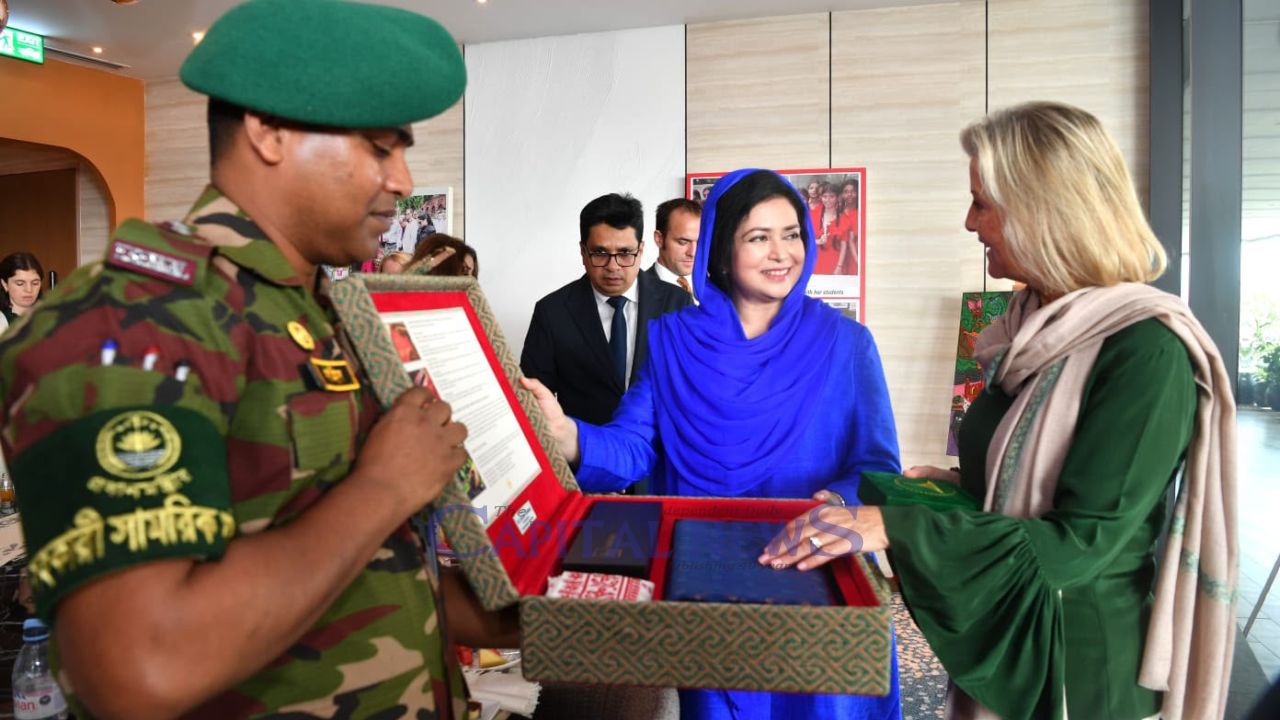
Desk Report: Women's economic empowerment, healthcare, girls' education and the humanitarian crisis involving Rohingya refugees dominated discussions when Dr Zubaida Rahman, spouse of Bangladesh Prime Minister Tarique Rahman, met Her Royal Highness The Duchess of Edinburgh in Dhaka on Monday morning.

The meeting highlighted Bangladesh's efforts to improve women's lives, strengthen healthcare services and protect vulnerable communities, while also providing an opportunity to explore greater cooperation with the United Kingdom on shared social and humanitarian priorities.

Dr Zubaida warmly welcomed the Duchess to Bangladesh and praised her longstanding commitment to women's empowerment, girls' education, children's welfare and the prevention of avoidable blindness.

The meeting was attended by State Minister for Foreign Affairs Shama Obaed Islam, MP, Prime Minister's Adviser and Spokesperson Mahdi Amin, and British High Commissioner to Bangladesh Sarah Cooke, among others.

During the discussion, the two sides exchanged views on women's economic independence, maternal and child healthcare, preventing gender-based violence and creating better opportunities for young people.

Dr Zubaida outlined the government's commitment to building a healthier Bangladesh, highlighting initiatives to reduce maternal mortality and plans to recruit 100,000 health workers to strengthen the country's healthcare system.

She also highlighted the government's social protection programmes, including Family Cards and Farmers' Cards, designed to extend economic and social assistance to families and farming communities.

Emphasising the importance of women's education and independence, she referred to free education for girls and the need to expand opportunities for women to participate more actively in economic and social development.

The Prime Minister's spouse also highlighted the contributions of the Ziaur Rahman Foundation and SUROVI to social welfare, particularly their work among disadvantaged and marginalised communities.

She explained how the Ziaur Rahman Foundation promotes women's economic independence, self-reliance and skills development, while SUROVI works in education, child protection, healthcare, nutrition, water, sanitation and hygiene (WASH), and vocational skills development.

According to Dr Zubaida, the experiences and best practices of these organisations have helped inspire government policy priorities and have been reflected in its election manifesto.

She also drew attention to initiatives supporting underprivileged children and young people, including the Shishu Swarga Model in urban slum communities, the Blue Sky Programme and Proyash, which works to promote the development and wellbeing of children with special needs.

Environmental protection also featured in the discussion. Dr Zubaida highlighted the government's tree-planting initiatives, particularly the 'One Student, One Tree' programme, aimed at encouraging environmental awareness and responsibility among young people.

The Duchess appreciated Bangladesh's initiatives in healthcare, education, women's empowerment and child welfare. She particularly commended the work of SUROVI and the Ziaur Rahman Foundation and welcomed the government's efforts to incorporate their experiences into its broader policy agenda.

She also praised Prime Minister Tarique Rahman's commitment to women's empowerment and his strong advocacy against violence against women.

The Rohingya humanitarian crisis was another important issue discussed at the meeting.

Dr Zubaida expressed appreciation for the Duchess's continued interest in the situation and called for sustained international support for Rohingya refugees and their host communities in Bangladesh.

She reiterated the importance of ensuring the safe, voluntary, dignified and sustainable return of Rohingyas to their homeland in Myanmar.

The Duchess acknowledged Bangladesh's generosity in hosting a large Rohingya population for years, recognising the enormous humanitarian responsibility shouldered by the country.

She also assured Dr Zubaida of her continued advocacy to keep the Rohingya crisis high on the international agenda.

The meeting underscored the importance of international cooperation in addressing challenges that directly affect women, children and disadvantaged communities.

It also offered an opportunity for Bangladesh and its international partners to explore practical areas of cooperation in healthcare, education, social protection, women's economic participation and humanitarian assistance.

With the Rohingya crisis remaining unresolved and millions of women and children worldwide facing barriers to education, healthcare and economic opportunities, the discussions highlighted the continuing importance of global solidarity and coordinated action.

Subject : Diplomacy

Write Your Opinion

The Daily Capital News

মঙ্গলবার, ১০ নভেম্বর ২০২৬


Zubaida, Edinburgh Duchess discuss women's empowerment, Rohingya crisis

Publish Date : 09 November 2026

featured Image
Desk Report: Women's economic empowerment, healthcare, girls' education and the humanitarian crisis involving Rohingya refugees dominated discussions when Dr Zubaida Rahman, spouse of Bangladesh Prime Minister Tarique Rahman, met Her Royal Highness The Duchess of Edinburgh in Dhaka on Monday morning.The meeting highlighted Bangladesh's efforts to improve women's lives, strengthen healthcare services and protect vulnerable communities, while also providing an opportunity to explore greater cooperation with the United Kingdom on shared social and humanitarian priorities.Dr Zubaida warmly welcomed the Duchess to Bangladesh and praised her longstanding commitment to women's empowerment, girls' education, children's welfare and the prevention of avoidable blindness.The meeting was attended by State Minister for Foreign Affairs Shama Obaed Islam, MP, Prime Minister's Adviser and Spokesperson Mahdi Amin, and British High Commissioner to Bangladesh Sarah Cooke, among others.During the discussion, the two sides exchanged views on women's economic independence, maternal and child healthcare, preventing gender-based violence and creating better opportunities for young people.Dr Zubaida outlined the government's commitment to building a healthier Bangladesh, highlighting initiatives to reduce maternal mortality and plans to recruit 100,000 health workers to strengthen the country's healthcare system.She also highlighted the government's social protection programmes, including Family Cards and Farmers' Cards, designed to extend economic and social assistance to families and farming communities.Emphasising the importance of women's education and independence, she referred to free education for girls and the need to expand opportunities for women to participate more actively in economic and social development.The Prime Minister's spouse also highlighted the contributions of the Ziaur Rahman Foundation and SUROVI to social welfare, particularly their work among disadvantaged and marginalised communities.She explained how the Ziaur Rahman Foundation promotes women's economic independence, self-reliance and skills development, while SUROVI works in education, child protection, healthcare, nutrition, water, sanitation and hygiene (WASH), and vocational skills development.According to Dr Zubaida, the experiences and best practices of these organisations have helped inspire government policy priorities and have been reflected in its election manifesto.She also drew attention to initiatives supporting underprivileged children and young people, including the Shishu Swarga Model in urban slum communities, the Blue Sky Programme and Proyash, which works to promote the development and wellbeing of children with special needs.Environmental protection also featured in the discussion. Dr Zubaida highlighted the government's tree-planting initiatives, particularly the 'One Student, One Tree' programme, aimed at encouraging environmental awareness and responsibility among young people.The Duchess appreciated Bangladesh's initiatives in healthcare, education, women's empowerment and child welfare. She particularly commended the work of SUROVI and the Ziaur Rahman Foundation and welcomed the government's efforts to incorporate their experiences into its broader policy agenda.She also praised Prime Minister Tarique Rahman's commitment to women's empowerment and his strong advocacy against violence against women.The Rohingya humanitarian crisis was another important issue discussed at the meeting.Dr Zubaida expressed appreciation for the Duchess's continued interest in the situation and called for sustained international support for Rohingya refugees and their host communities in Bangladesh.She reiterated the importance of ensuring the safe, voluntary, dignified and sustainable return of Rohingyas to their homeland in Myanmar.The Duchess acknowledged Bangladesh's generosity in hosting a large Rohingya population for years, recognising the enormous humanitarian responsibility shouldered by the country.She also assured Dr Zubaida of her continued advocacy to keep the Rohingya crisis high on the international agenda.The meeting underscored the importance of international cooperation in addressing challenges that directly affect women, children and disadvantaged communities.It also offered an opportunity for Bangladesh and its international partners to explore practical areas of cooperation in healthcare, education, social protection, women's economic participation and humanitarian assistance. With the Rohingya crisis remaining unresolved and millions of women and children worldwide facing barriers to education, healthcare and economic opportunities, the discussions highlighted the continuing importance of global solidarity and coordinated action.

The Daily Capital News

Advisory Editor: Gayeshwar Chandra Roy
Editor: Abul Kashem Majumder
Acting Editor: Mohammad Alamgir Hossain
Executive Editor: Farid Ahmed Ripon

© 2025 The Daily Capital News