The Daily Capital News

Pakistan steps up institutional ties with Bangladesh as 34 senior civil servants leave for leadership training

Pakistan steps up institutional ties with Bangladesh as 34 senior civil servants leave for leadership training

Second batch of Bangladesh's senior officials joins two-week programme in Lahore, signalling growing cooperation in public administration, education and professional exchanges


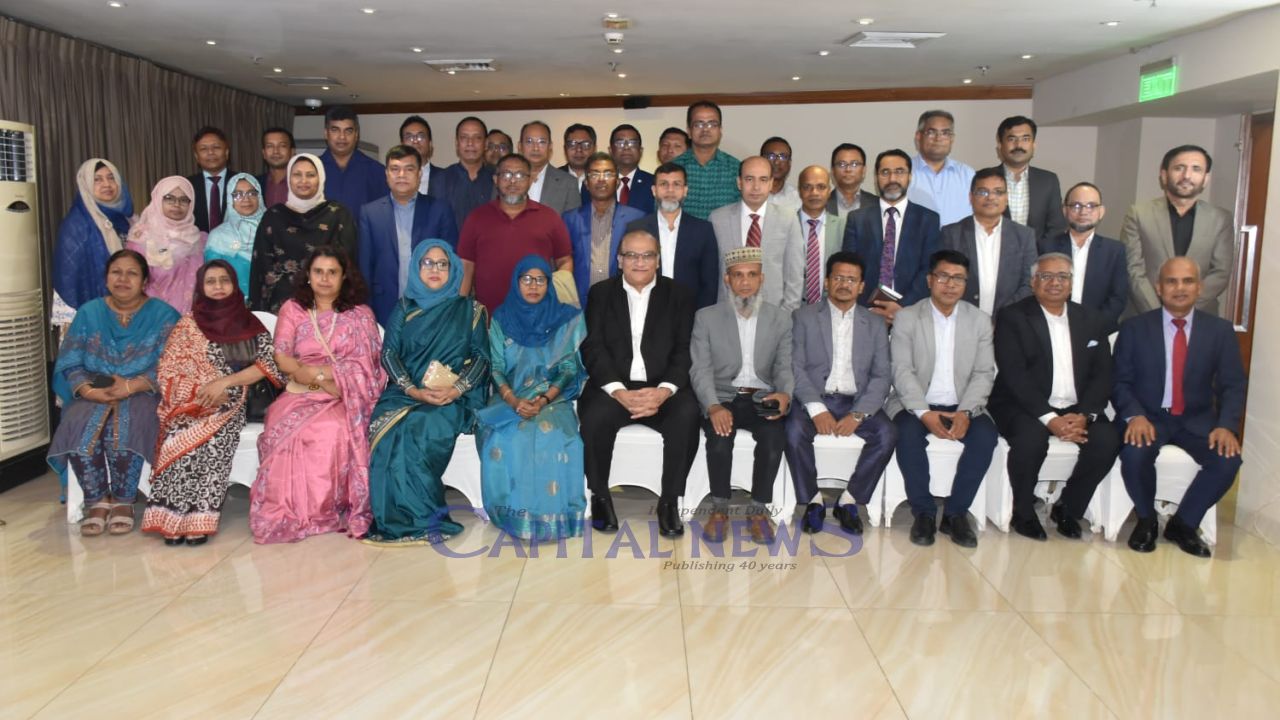
Online Desk: Pakistan is stepping up institutional engagement with Bangladesh through professional training and educational exchanges, as 34 senior Bangladesh Civil Service (BCS) officials departed for Pakistan on Sunday to participate in a two-week Executive Leadership Training Programme.


The delegation, comprising high-ranking government officials, including Additional Secretaries and Joint Secretaries, will attend the programme at the National School of Public Policy (NSPP) in Lahore.


Pakistan High Commissioner to Bangladesh Imran Haider was present at Hazrat Shahjalal International Airport in Dhaka on November 8 to see off the delegation, highlighting the importance Islamabad attaches to strengthening bilateral relations through institutional cooperation.


The initiative reflects growing engagement between the two countries, particularly in public administration, human resource development and professional capacity building.


Earlier, the Pakistan High Commission in Dhaka hosted a dinner in honour of the participating officials. Addressing the gathering, High Commissioner Imran Haider described the training programme as an important initiative to deepen bilateral cooperation through institutional engagement, professional collaboration and people-to-people exchanges.


He highlighted the commitment of the leadership of both countries to developing closer relations and expanding cooperation in public administration.


The High Commissioner also drew attention to the longstanding historical, cultural and familial bonds between Bangladesh and Pakistan, saying there remained considerable scope to broaden cooperation in several important sectors.


These include education, science and technology, trade, culture, media, climate change and digital governance.


A significant aspect of the growing relationship is the Pakistan-Bangladesh Knowledge Corridor, announced by Pakistan's Deputy Prime Minister and Foreign Minister Senator Muhammad Ishaq Dar during his visit to Dhaka in August 2025.


Under the initiative, educational exchanges between the two countries have gained momentum.


According to the High Commissioner, 170 Bangladeshi students joined leading Pakistani universities in 2026, while another 20 are expected to enrol shortly.


The development indicates increasing academic engagement and opportunities for Bangladeshi students to pursue higher education in Pakistan.


The leadership training programme is another important component of this broader institutional cooperation.


The first batch of 12 senior Bangladeshi civil servants successfully completed the programme earlier this year. The 34 officials travelling to Lahore represent the second batch under the initiative, demonstrating an expansion in the scale of professional exchanges.


For Bangladesh, such programmes offer opportunities for senior government officials to gain exposure to different approaches to public administration, leadership, policymaking and institutional management.


For Pakistan, the initiative provides an avenue to strengthen professional connections with Bangladesh's public administration and expand cooperation beyond conventional diplomatic engagements.


The latest development also reflects the growing importance of people-to-people and institution-to-institution contacts in building sustainable bilateral relations.


With both countries exploring wider cooperation in education, trade, technology and public administration, initiatives such as the Executive Leadership Training Programme and the Knowledge Corridor could contribute to a broader and more dynamic partnership.


The Pakistan High Commission in Dhaka has been playing an active role in facilitating these exchanges, with the latest departure of senior Bangladeshi officials marking another step towards strengthening institutional and professional ties between the two countries.

Subject : Diplomacy

Write Your Opinion

The Daily Capital News

সোমবার, ০৯ নভেম্বর ২০২৬


Pakistan steps up institutional ties with Bangladesh as 34 senior civil servants leave for leadership training

Publish Date : 08 November 2026

featured Image
Second batch of Bangladesh's senior officials joins two-week programme in Lahore, signalling growing cooperation in public administration, education and professional exchangesOnline Desk: Pakistan is stepping up institutional engagement with Bangladesh through professional training and educational exchanges, as 34 senior Bangladesh Civil Service (BCS) officials departed for Pakistan on Sunday to participate in a two-week Executive Leadership Training Programme.The delegation, comprising high-ranking government officials, including Additional Secretaries and Joint Secretaries, will attend the programme at the National School of Public Policy (NSPP) in Lahore.Pakistan High Commissioner to Bangladesh Imran Haider was present at Hazrat Shahjalal International Airport in Dhaka on November 8 to see off the delegation, highlighting the importance Islamabad attaches to strengthening bilateral relations through institutional cooperation.The initiative reflects growing engagement between the two countries, particularly in public administration, human resource development and professional capacity building.Earlier, the Pakistan High Commission in Dhaka hosted a dinner in honour of the participating officials. Addressing the gathering, High Commissioner Imran Haider described the training programme as an important initiative to deepen bilateral cooperation through institutional engagement, professional collaboration and people-to-people exchanges.He highlighted the commitment of the leadership of both countries to developing closer relations and expanding cooperation in public administration.The High Commissioner also drew attention to the longstanding historical, cultural and familial bonds between Bangladesh and Pakistan, saying there remained considerable scope to broaden cooperation in several important sectors.These include education, science and technology, trade, culture, media, climate change and digital governance.A significant aspect of the growing relationship is the Pakistan-Bangladesh Knowledge Corridor, announced by Pakistan's Deputy Prime Minister and Foreign Minister Senator Muhammad Ishaq Dar during his visit to Dhaka in August 2025.Under the initiative, educational exchanges between the two countries have gained momentum.According to the High Commissioner, 170 Bangladeshi students joined leading Pakistani universities in 2026, while another 20 are expected to enrol shortly.The development indicates increasing academic engagement and opportunities for Bangladeshi students to pursue higher education in Pakistan.The leadership training programme is another important component of this broader institutional cooperation.The first batch of 12 senior Bangladeshi civil servants successfully completed the programme earlier this year. The 34 officials travelling to Lahore represent the second batch under the initiative, demonstrating an expansion in the scale of professional exchanges.For Bangladesh, such programmes offer opportunities for senior government officials to gain exposure to different approaches to public administration, leadership, policymaking and institutional management.For Pakistan, the initiative provides an avenue to strengthen professional connections with Bangladesh's public administration and expand cooperation beyond conventional diplomatic engagements.The latest development also reflects the growing importance of people-to-people and institution-to-institution contacts in building sustainable bilateral relations.With both countries exploring wider cooperation in education, trade, technology and public administration, initiatives such as the Executive Leadership Training Programme and the Knowledge Corridor could contribute to a broader and more dynamic partnership.The Pakistan High Commission in Dhaka has been playing an active role in facilitating these exchanges, with the latest departure of senior Bangladeshi officials marking another step towards strengthening institutional and professional ties between the two countries.

The Daily Capital News

Advisory Editor: Gayeshwar Chandra Roy
Editor: Abul Kashem Majumder
Acting Editor: Mohammad Alamgir Hossain
Executive Editor: Farid Ahmed Ripon

© 2025 The Daily Capital News