

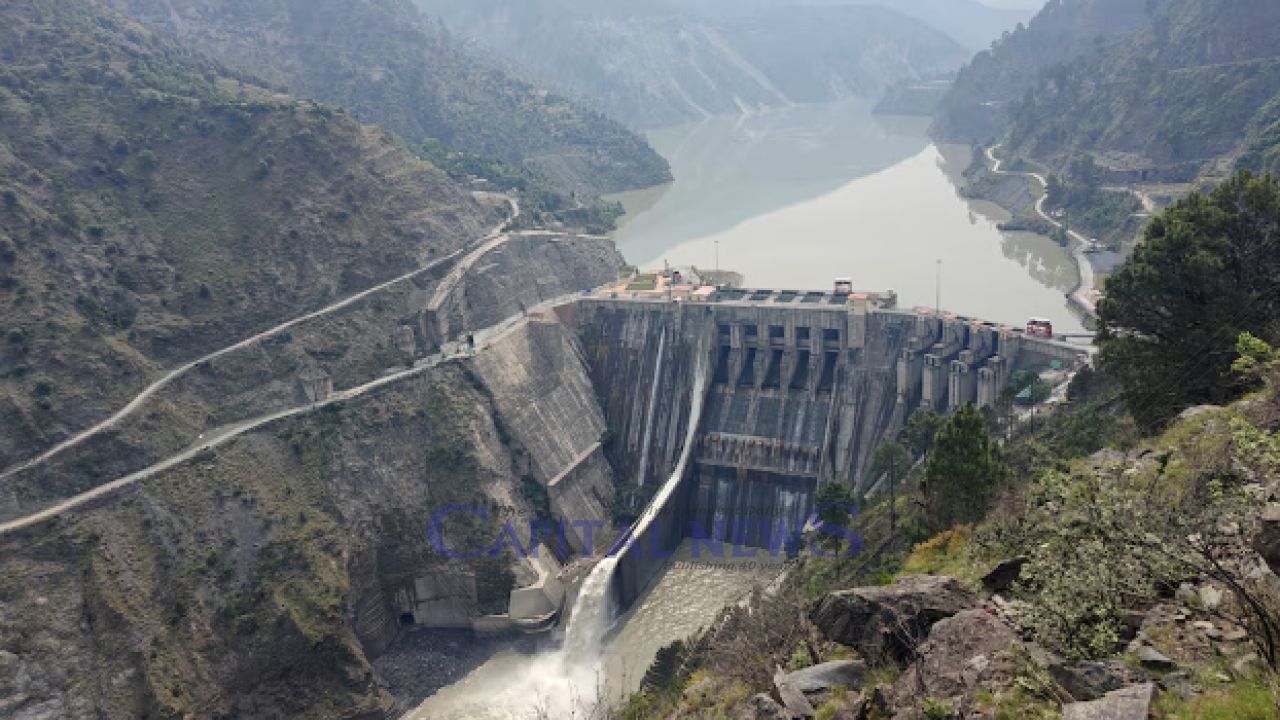
Special Correspondent: Pakistan has once again pleaded before the UN for its due rights as a lower riparian state, as India's transgression is pushing it to the verge of an acute water crisis. New Delhi's unilateral suspension of the 1960's Indus Waters Treaty, a year ago, is a brazen violation of international law that exposes its hegemonic designs in the region. Thus, Deputy Prime Minister Ishaq Dar's letter to the President of the UNSC, Ambassador Leonor Zalabata Torres, is a laudable outreach and testifies Islamabad's belief in international systems and a decorum of civility for ironing out bilateral disputes through arbitration and adjudication.
It is a foregone conclusion that water constitutes a matter of life and death, and any attempt on the part of Delhi to use hydro mechanisms as instruments of coercion would be tantamount to water terrorism. Pakistan has stated unequivocally that it could go for an all-out war with India, if such desperate attempts of blocking the downstream water and building illegal hydro-electrical projects is not suspended forthwith. The construction of the 260 megawatt Dulhasti Stage-II run-of-the-river project in Occupied Kashmir is a savage attempt to alter the IWT-governed flow and use of the western rivers. Moreover, Dar's letter states that there are, at least, 17 such projects planned by India on Indus waterways, and the same could prove disastrous for regional peace and security.
The UNSC as well as the World Bank, the architect of the IWT, must hold India accountable to its international commitments and ensure compliance with established water-sharing protocols. The weaponising of water will surely have dangerous implications not only for Pakistan's water, food and economic security, but also for regional stability. The UNSC must remind Delhi of the Permanent Court of Arbitration ruling in favour of Islamabad's position on western rivers and maximum pondage limits. Consequently, India should advance past the Ratle and Kishanganga project disputes, fully honour its IWT obligations and engage in a constructive regional dialogue on climate change.
রোববার, ২১ জুন ২০২৬
Publish Date : 21 June 2026






Write Your Opinion