

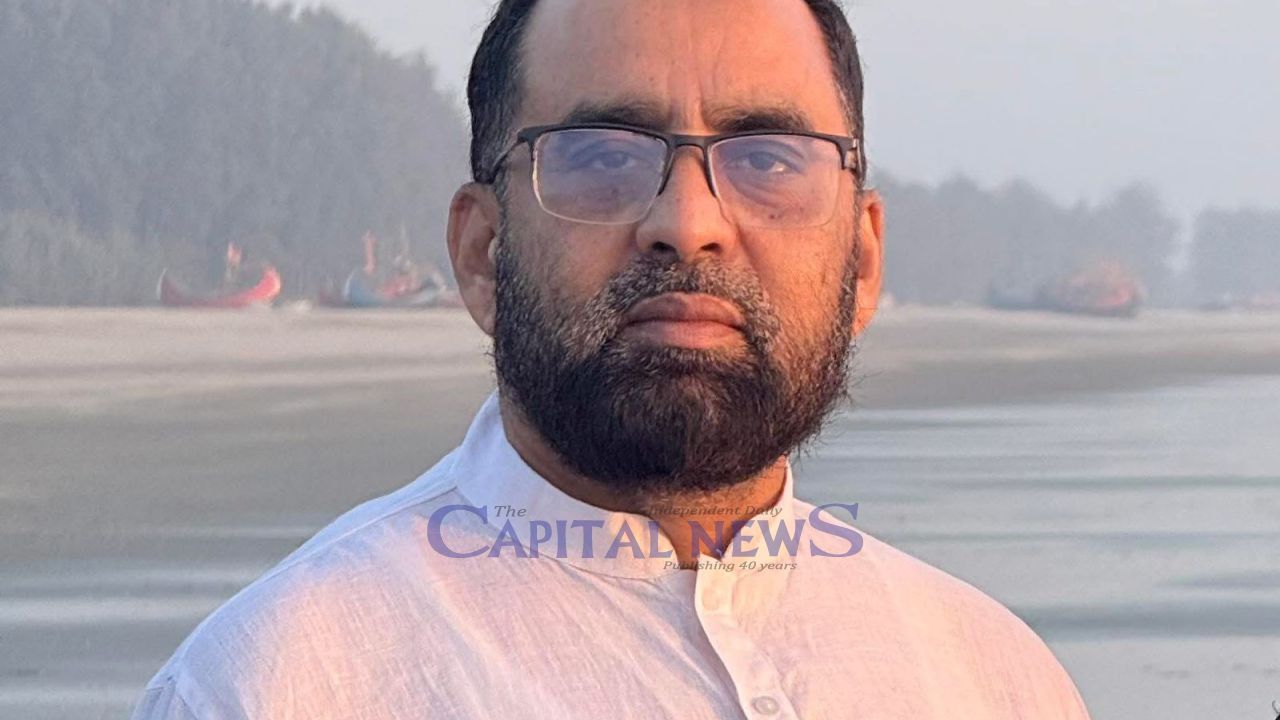
Md. Mukhlesur Rahman: Lebanon has long been a unique state on the political map of the Middle East. Despite its small geographical size, the country has remained at the center of regional and international rivalries for decades. Religious and political diversity, fragile state institutions, prolonged conflicts with neighboring states, and the influence of external powers have combined to create a highly complex reality. Recent developments have once again brought these complexities into focus, raising an important question: Is Lebanon heading toward another period of political instability or even internal conflict?
Recent statements by Lebanese President Joseph Aoun, along with the position taken by Hezbollah, have sparked renewed debate within the country’s political arena. Differences between the two sides have become increasingly apparent on issues such as state sovereignty, the role of armed groups, and national security policy.
The reality is that Lebanon’s political system has long been built upon a delicate balance of power. Its constitutional framework was designed to ensure power-sharing among various religious and social communities. Alongside this arrangement, however, Hezbollah has emerged as a powerful political and military force, playing a significant role not only in Lebanon’s domestic affairs but also in the broader geopolitics of the Middle East.
Supporters of Hezbollah view the organization as a symbol of Lebanese resistance against Israeli aggression. The history of conflict in southern Lebanon, particularly the experience of the 2006 war, has reinforced this perception among its followers. Critics, on the other hand, argue that the existence of an armed force operating outside the direct control of the state poses long-term challenges to political stability, democratic governance, and national sovereignty.
This debate is not new. Yet the current regional environment has made it far more sensitive. The Gaza conflict, escalating tensions between Israel and Iran, and the broader security challenges facing the Middle East have drawn international attention to Lebanon’s internal divisions. Statements and actions from various actors suggest that the country’s future political trajectory is increasingly being shaped by competing domestic and external pressures.
Lebanon’s history is particularly relevant in this context. Between 1975 and 1990, the country was devastated by a prolonged civil war. That conflict was not merely the result of internal divisions; regional and international rivalries also played a significant role. Although the war formally ended decades ago, its scars remain visible in Lebanon’s political institutions, economy, and social fabric.
For this reason, concerns about the current tensions should not be dismissed. Whenever trust erodes among key components of the state, external actors often seek to advance their strategic interests through local dynamics. The modern history of the Middle East offers numerous examples of such interventions. If Lebanon’s political divisions continue to deepen, the consequences could extend beyond the country’s borders and contribute to wider regional instability.
At the same time, ongoing tensions between Iran and the United States add another layer of complexity. Strong rhetoric, military preparations, and mutual threats have heightened concerns about the possibility of a broader regional confrontation. Such escalation would affect not only the countries directly involved but also the economic, security, and humanitarian conditions of the wider Middle East.
In this situation, restraint is of paramount importance. Transforming political disagreements into military confrontation serves no party’s long-term interests. Lebanon’s political leaders, religious communities, and influential social forces should prioritize national interests by pursuing dialogue, compromise, and consensus-building. Likewise, regional and international powers should refrain from treating Lebanon as an arena for geopolitical competition.
In today’s interconnected world, the stability of a single country often has implications far beyond its borders. Lebanon is no exception. Should the country slide once again into internal conflict, the repercussions could spread across the region and further undermine Middle Eastern stability.
The need of the hour is therefore not escalation, but dialogue; not division, but national unity; not military solutions, but political wisdom. History has repeatedly shown that wars may produce temporary victories, but lasting peace can only be achieved through political accommodation, mutual respect, and the collective aspirations of the people.
Md. Mukhlesur Rahman
Researcher in International Relations, Economist, Social Thinker, and Human Rights Activist.
Subject : Op-Editorial
মঙ্গলবার, ২১ জুলাই ২০২৬
Publish Date : 06 June 2026


Write Your Opinion