

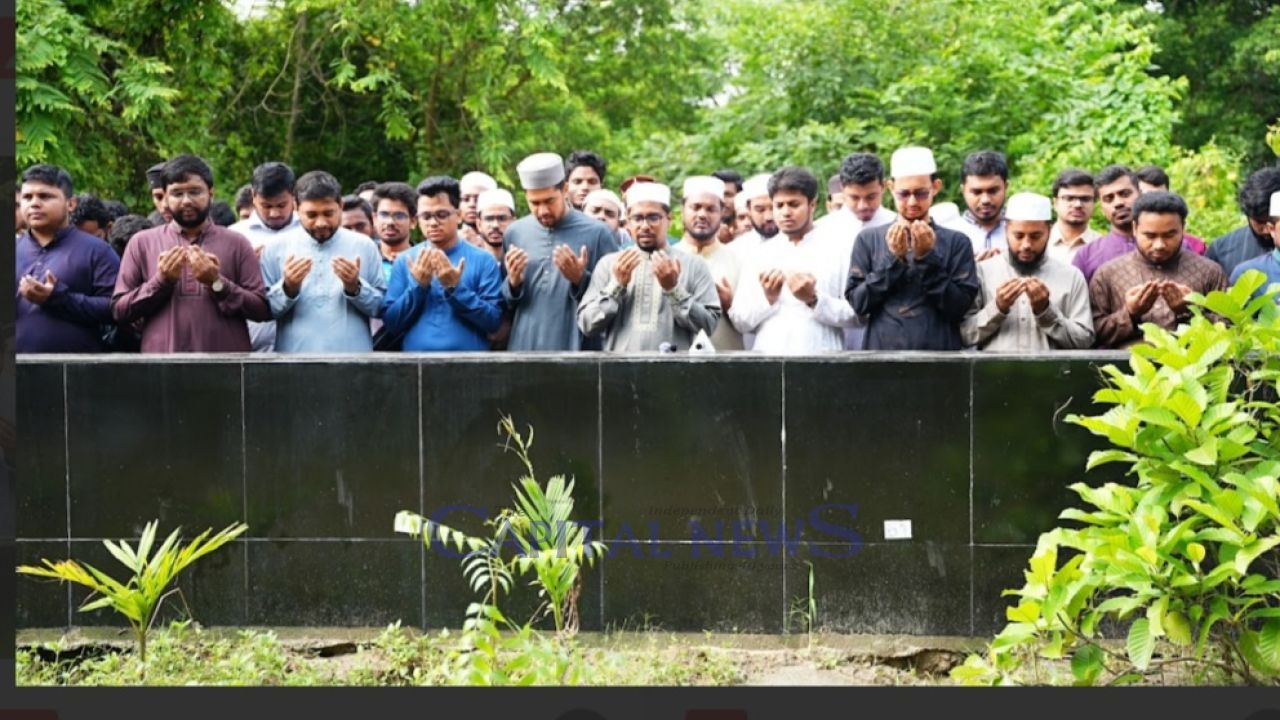
MM Rahmatullah: At 8:00 AM on Thursday, as the city of Dhaka was just stirring to life, a group of young men in white caps and wearing Panjabi walked silently through the gates of Rayerbazar Martyred Intellectuals’ Graveyard in Mohammadpur.
They were not there for headlines. They were there for names that no one knows.
Leaders of Bangladesh Islami Chhatra Shibir gathered at the mass grave of the unclaimed and unidentified martyrs of the July Uprising, offering flowers, reciting Fateha, and raising hands in munajat for souls that fell in 2024 but were buried without identity.
Thursday, 16 July, marked day one of Shibir’s month-long program commemorating the 2nd anniversary of the July Uprising. Central President Nurul Islam, Secretary General Sibgatullah, and other senior leaders led the delegation.
Standing before the rows of unmarked graves, Nurul Islam said, “History will remember the faces we saw on television. But who will remember those whose bodies were found on the streets, with no one to claim them? Today we came to say: the nation sees you. The nation remembers you.”
Sibgatullah, in his brief remarks, called the July Uprising “a collective awakening of the youth for justice, dignity and a corruption-free state.” He added that honoring both named and unnamed martyrs is key to keeping the spirit of the movement alive among the next generation.
The ceremony was simple. No banners, no slogans. Just wreaths placed on fresh earth, quiet recitations from the Quran, and a collective prayer for maghfirat.
Several student activists who joined the visit said they had relatives and classmates who were injured during the uprising. For them, the mass grave was not just a symbol — it was a reminder of how close the movement came to tragedy.
“We shout slogans in rallies. But this place makes you silent,” said one Shibir activist who asked not to be named. “These brothers had dreams like us. They just didn’t get to go home.”
Meanwhile, Shibir officials said the Rayerbazar visit was the opening event of a broader campaign that will run through July. Planned activities include campus discussions on the goals of the uprising, blood donation drives, aid for families of injured protesters, and doa mahfils in different districts.
Party leaders emphasized that the focus of this year’s observance is on “healing and responsibility” — ensuring that the sacrifices of July translate into institutional reform, accountability, and unity.
As the munajat ended, the leaders stood for a minute of silence. Traffic on the nearby road grew louder. Inside the graveyard, it remained still.
For the martyrs without names, Thursday morning was perhaps the loudest remembrance they have had.
Subject : Chhatra Shibir
বৃহস্পতিবার, ১৬ জুলাই ২০২৬
Publish Date : 16 July 2026
Write Your Opinion