

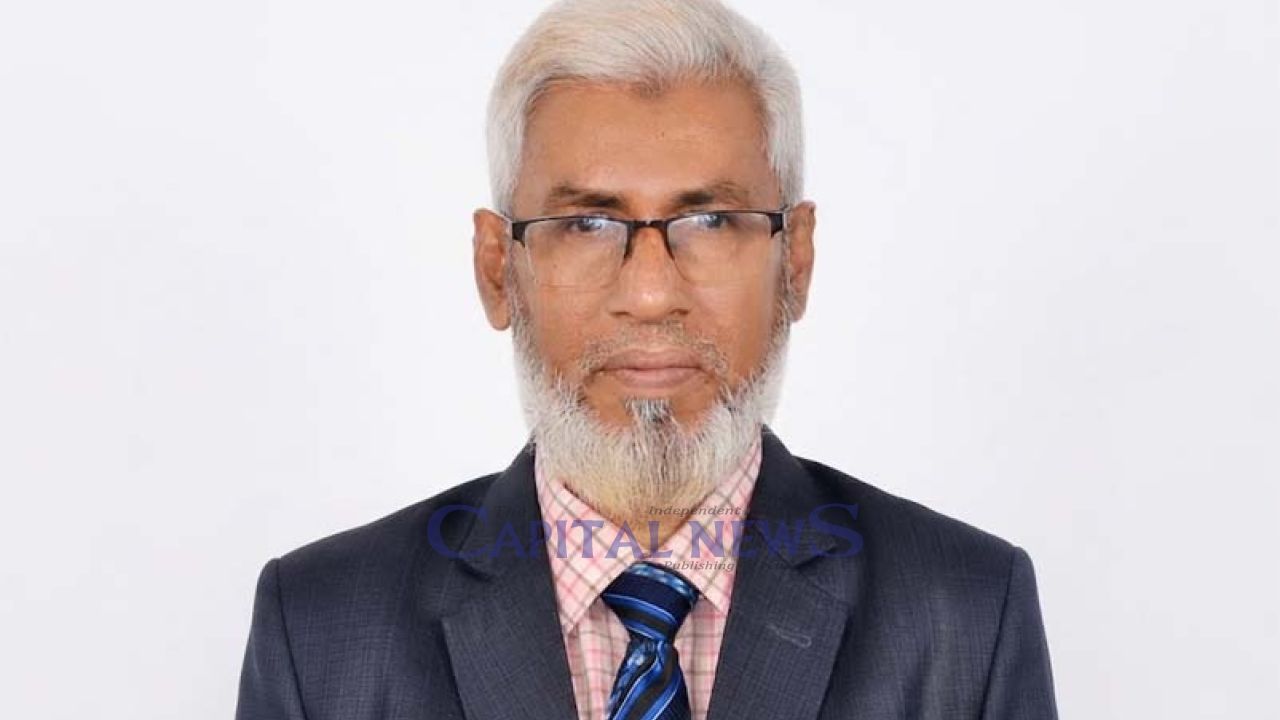
Ali Ahmad Mabrur
Every year, 27
October and 6 November return as two tragic dates in the history of Kashmir.
The former is observed as Kashmir Black Day, while the latter is commemorated
as Jammu Martyrs’ Day, or Yawm-e-Shuhada-e-Jammu. Behind these two
commemorative days lie two interconnected historical events of 1947. The arrival
of Indian troops in Srinagar on 27 October marked the beginning of a new
chapter of India’s military presence and political control over Kashmir. In the
bloody aftermath of those developments, the Jammu region witnessed a horrific
massacre of Muslims and large-scale displacement during October and November in
1947. Nearly eight decades later, Kashmir’s political future remains
unresolved. Over the years, the questions of the political rights of its
people, their aspirations for self-determination and their desire for freedom
have become increasingly complex.
In Bangladesh, there
is considerable public sympathy for Kashmir, but historical study, research and
meaningful initiatives have remained limited in comparison with that sentiment.
Yet understanding this history is essential. The Kashmir crisis is not merely a
territorial dispute between India and Pakistan; it concerns the political
rights, identity, freedom and self-determination of a community. Historically,
when British rule came to an end in 1947, the future of the princely states of
the Indian subcontinent became a pressing question. Jammu and Kashmir was one
such state, distinguished by its sensitive geographical position, demographic
composition and political significance. The ruler of the state was Maharaja
Hari Singh. Although he was Hindu, the majority of the state's population was
Muslim.
It is worth noting
that Lord Mountbatten, the then Governor-General of India, referred to the need
to determine the state's future on the basis of the people's wishes when
accepting the Maharaja's accession. Documents relating to the decision of
India's Defence Committee on 26 October 1947 also clearly stated that the
accession was being accepted provisionally and that the matter would ultimately
be settled in accordance with the wishes of the people. The intention was to
ascertain their views once law and order had been restored. Although a decision
was taken concerning the future of Kashmir, the process of establishing the
consent of its people was never completed. Instead, internal political
discontent, the uprising in the Poonch region, tensions along the borders and
the entry of tribal armed fighters from the North-West Frontier region on 22
October 1947 rapidly pushed the situation towards armed conflict. Against this
backdrop, Maharaja Hari Singh sought military assistance from India. According
to the Indian government's account, he signed the Instrument of Accession to
India on 26 October. The following day, on 27 October, Indian troops were
airlifted into Srinagar. This is the day Kashmiris commemorate as Black Day.
The dispute between
India and Pakistan over Kashmir subsequently reached the United Nations. On 21
April 1948, the UN Security Council adopted Resolution 47. It established a
framework for a ceasefire, the withdrawal of tribal fighters and Pakistani
nationals who had entered from Pakistan, a reduction in Indian forces and, once
conditions were conducive, the holding of a plebiscite under United Nations
supervision. The plebiscite was intended to determine whether Kashmir would
remain with India or accede to Pakistan. Although a ceasefire was eventually
implemented, India and Pakistan disagreed over the fulfilment of the
resolution's other conditions. Consequently, the plebiscite was never held. The
ceasefire line established in 1949 divided Kashmir. It subsequently became
known as the Line of Control. This is central to the significance of observing
Kashmir Black Day.
In Kashmir's history,
6 November is as significant as 27 October. The day is observed as Jammu
Martyrs’ Day in memory of the Muslims killed in the horrific massacres carried
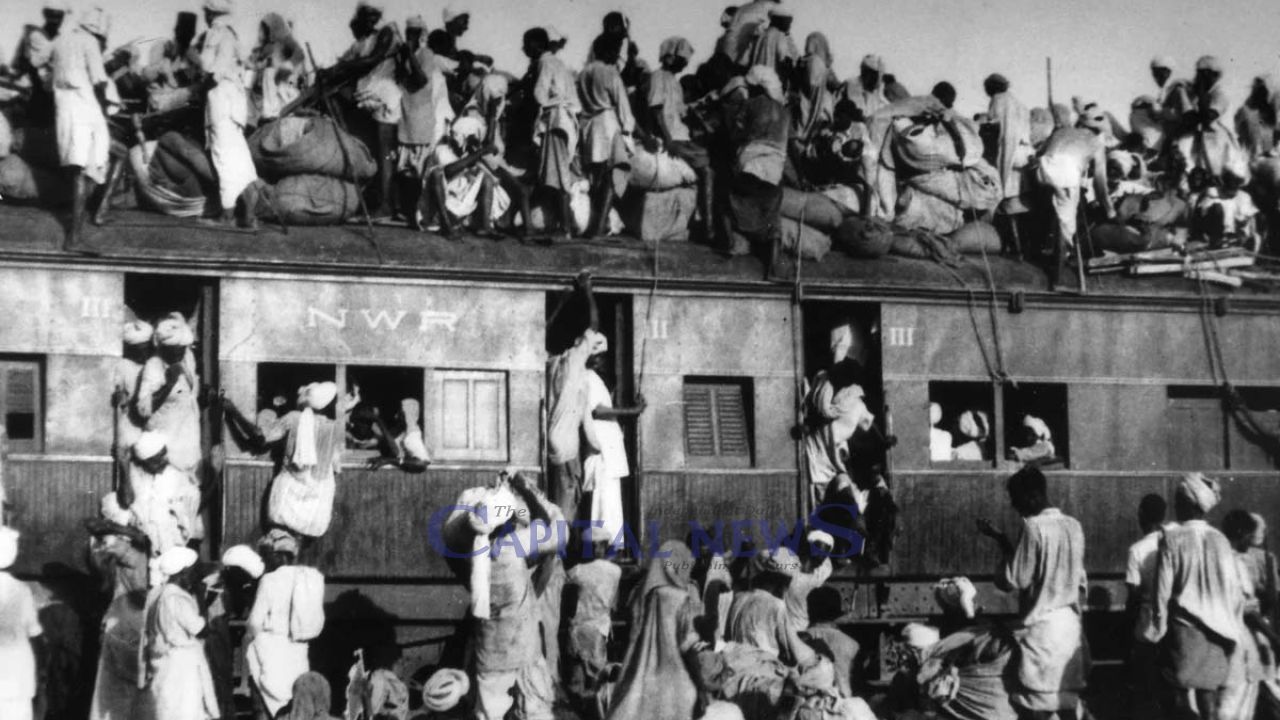
out in the Jammu region during October and November 1947. At the time of
Partition, Muslims constituted a substantial majority of the population in the
Jammu region. However, during the final months of 1947, the region witnessed
systematic killings, looting, abductions of women, the burning of homes and
forced displacement. Historical research and eyewitness accounts have
documented the involvement of the forces of the Dogra ruling establishment,
armed members of the Rashtriya Swayamsevak Sangh (RSS) and Hindu and Sikh
communal groups.
Massacres took place
across Samba, Akhnoor, Kathua, Udhampur, Ramnagar, Reasi and surrounding areas
of Jammu. Muslim villages came under attack, and many people were dragged out
of their homes and killed. Muslim families were transported under military and
administrative arrangements on the assurance that they would be taken safely to
Pakistan. However, many of them were killed in attacks by armed groups along
the way. Women and children were also subjected to horrific abuses. A report
published in The Times of London on 10 August 1948 claimed that 237,000 Muslims
had been systematically killed in the Jammu region. British writer and observer
Horace Alexander, in an article published in The Spectator in January 1948,
referred to approximately 200,000 Muslims whose whereabouts could not be
accounted for. Researcher Christopher Snedden, meanwhile, reviewed various
sources in his book Kashmir: The Unwritten History and discussed estimates
suggesting that the death toll may have ranged from 20,000 to 100,000.
Claims that five
hundred thousand or more Muslims were displaced during October and November
1947 also appear in various historical and political accounts. The research of
Australian political scientist Christopher Snedden is particularly noteworthy
in this regard. Drawing on eyewitness interviews, historical documents and
archival records, he has presented a detailed account of the Jammu massacres.
His research highlights the role of the Dogra state forces and communal armed
groups. Indian journalist Ved Bhasin also documented these atrocities through
his own experiences and research. One of the most significant aspects of the
Jammu massacre is that it was not merely an episode of communal violence; it
fundamentally altered the demographic character of an entire region. The
killing and displacement of Muslims led to a substantial decline in their
proportion of the population in Jammu. According to the 1941 Census, Muslims
constituted the majority in the Jammu region. Subsequent demographic changes
fundamentally transformed that position.
A historical
comparison is often drawn between the Jammu massacre and the Palestinian Nakba
of 1948. During the establishment of Israel in 1948, more than 750,000
Palestinians were driven from their homes. Their villages and settlements were
destroyed, and large numbers were forced to seek refuge in neighboring
countries. The wounds of that displacement remain central to Palestinian
political identity and the struggle for freedom to this day. In 1947, Muslims
in the Jammu region also experienced mass killings and displacement. Various
sources cite figures of five hundred thousand or more Muslims displaced from
the region. The political and historical contexts of these two events were not
identical. Nevertheless, both involved the expulsion of a population from its
historic homeland, with consequences that have been carried by successive
generations. Tragically, the Jammu massacre has not received the same
prominence in international historical discourse as the Palestinian Nakba.
There has been little adequate research, international discussion or initiative
towards justice on the subject.
Moreover, since Narendra
Modi's BJP came to power, its efforts to consolidate India's control over Jammu
and Kashmir have further intensified the crisis. Another major turning point in
Kashmir's history came on 5 August 2019, when the BJP government effectively
revoked Jammu and Kashmir's special constitutional status under Article 370 of
the Indian Constitution. The special rights of permanent residents under
Article 35A were also abolished. At the same time, the state of Jammu and
Kashmir was divided into two Union Territories: Jammu and Kashmir, and Ladakh.
Having lost its long-standing status as a state, the region came under the
direct administrative control of the central government. Before the decision
was implemented, extensive security deployments were made across Kashmir.
Internet and telecommunications services were suspended, political leaders were
detained, and severe restrictions were imposed on public life. At the time,
there was no elected government in office in the very region whose
constitutional future was being determined. Subsequently, provisions relating
to land, permanent residence and citizenship in Jammu and Kashmir were changed.
Under the new domicile policy, people from outside the region who meet
specified conditions also became eligible to obtain permanent residency rights.
In the present
circumstances, remembering Kashmir's struggle for freedom and expressing
solidarity with its people are particularly important. Bangladesh, too, has
come under the scrutiny of major powers because of its geographical and
strategic position. Moreover, Bangladesh is currently hosting approximately 1.5
million Rohingya, who themselves have been displaced from their homeland,
Arakan, and have sought refuge here. The people of Bangladesh should therefore
understand the bloodstained history of the subcontinent so that our own country
never suffers a fate similar to that of the Rohingya or the people of Kashmir.
A lasting resolution
of the Kashmir crisis cannot be achieved through military power, administrative
restructuring or constitutional changes alone. Establishing peace requires
political rights, justice, human dignity and the meaningful participation of
the people. The commitments made in 1947; the United Nations resolutions and
the longstanding political aspirations of the Kashmiri people must be given
serious consideration. It must be remembered that a state may establish control
over a territory, alter its constitutional framework and even declare a
political problem resolved. None of this, however, can erase a people's
history, collective memory or aspirations for freedom. The history of Kashmir
will remain unfinished until its people are guaranteed an independent and
meaningful role in determining their own political future.
Subject : Op-Editorial
শনিবার, ০৭ নভেম্বর ২০২৬
Publish Date : 06 November 2026




Write Your Opinion