The Daily Capital News

Improving People’s Living Standards Will Be the True Measure of Government Success

Improving People’s Living Standards Will Be the True Measure of Government Success

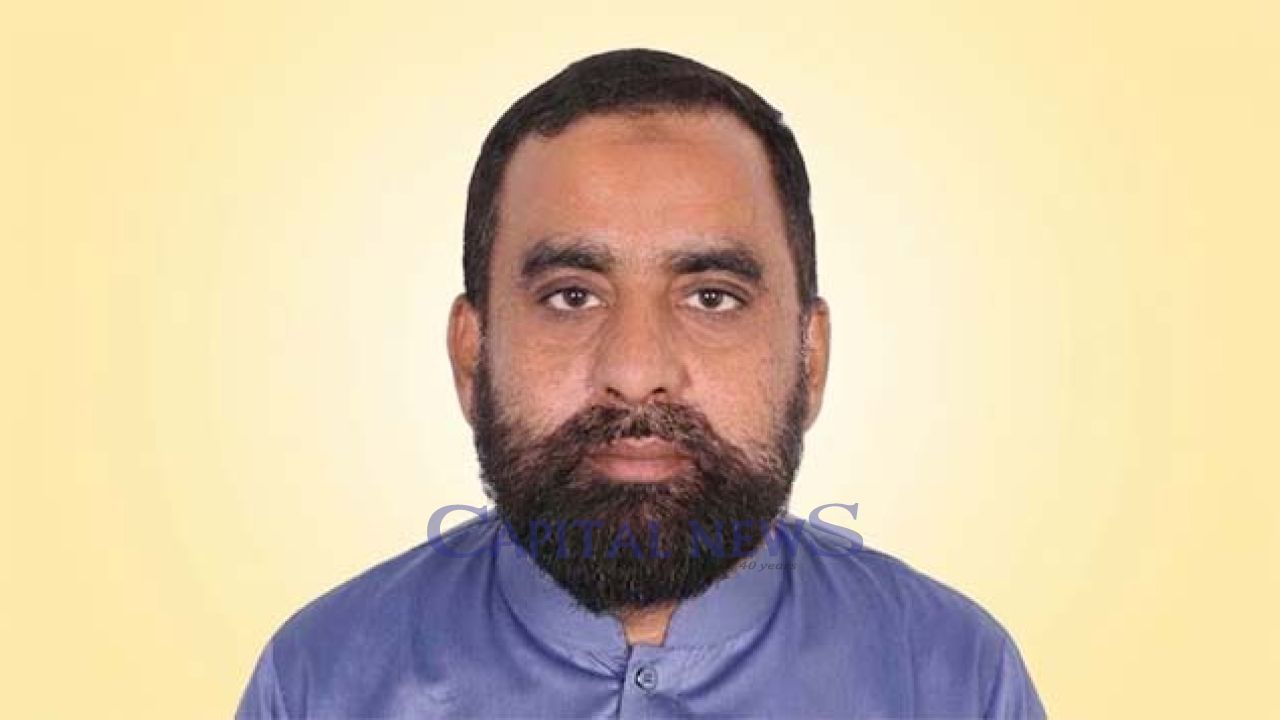
Md. Mukhlesur Rahman: Controlling inflation, creating employment, safeguarding export competitiveness and restoring confidence in the banking sector will be the government’s biggest challenges.


The greatest challenge facing the BNP government led by Tarique Rahman is not Sheikh Hasina or the Awami League; rather, it is the economy. This is my assessment. Political opposition, declarations by former ruling forces about their return to power, or isolated acts of sabotage may create difficulties for the government. However, its biggest test will be managing the economic situation. Ultimately, the government’s stability will depend on people’s living conditions, employment opportunities, inflation, foreign exchange availability and industrial production. If the economy continues to weaken, managing the crisis through political strength alone will not only be difficult but, in certain circumstances, may prove impossible.


Bangladesh’s recent political history also demonstrates the importance of economic performance. During the early years of Sheikh Hasina’s government, infrastructure development, employment generation, exports and remittance inflows helped stimulate economic growth. This contributed to the expansion of a substantial lower-middle-income class. Despite serious questions concerning political rights, elections and human rights, the government’s narrative of economic development provided it with political advantages for a considerable period. However, beneath the surface of this growth, weaknesses in the banking sector, irregularities in lending, capital flight and mounting pressure on foreign exchange reserves were accumulating.


Since 2017, concerns have increasingly emerged over the growing influence of powerful groups in the banking sector, irregular loan disbursements and the erosion of good governance. The consequences of these irregularities subsequently became evident in banking liquidity, non-performing loans and the foreign exchange market. The COVID-19 pandemic and the Russia-Ukraine war further complicated the situation. Nevertheless, it would be incorrect to attribute the entire economic crisis to international developments. Domestic policy weaknesses and irregularities in the financial sector also contributed significantly to deepening the crisis.


From 2022 onwards, pressure on various economic indicators became increasingly evident. Dollar shortages, import restrictions, uncertainty over energy supplies and rising inflation affected both industries and ordinary citizens. Foreign exchange reserves continued to decline. According to Bangladesh Bank, gross foreign exchange reserves stood at approximately US$25.82 billion in July 2024. However, under the IMF’s Balance of Payments and International Investment Position Manual, Sixth Edition (BPM6), gross reserves amounted to approximately US$20.39 billion. Although the difference resulted from variations in accounting methodologies, the downward trend in reserves was a matter of serious concern for the economy.


The dollar shortage also affected energy imports. Uncertainty over gas and coal supplies disrupted electricity generation. Industrial production costs increased, making it more difficult for manufacturers to meet export orders on schedule. Meanwhile, instability in food production, supply chains and international markets added to inflationary pressures. In this way, the economic crisis directly affected the daily lives of ordinary people.


The July-August 2024 mass uprising cannot, therefore, be understood fully merely as a movement for political rights or a change of government. Alongside long-standing political grievances, economic pressure, uncertainty over employment and the rising cost of living also contributed to an environment of public discontent. However, it would be equally inappropriate to attribute the uprising solely to economic hardship. Political rights and democracy were fundamental dimensions of the movement. Allegations of extrajudicial killings, misuse of the justice system, repression of dissenting voices and widespread corruption also generated deep public anger and resentment.


Subsequently, foreign exchange inflows provided some relief to the economy, particularly through increased remittances. According to Bangladesh Bank, remittances amounted to US$23.91 billion in FY2023-24. They increased to US$30.33 billion in FY2024-25 and reached approximately US$35.59 billion in FY2025-26, according to preliminary figures. This growth helped ease pressure on the foreign exchange market, finance imports and meet external payment obligations. Several factors contributed to this achievement, including incentives for remittances through formal channels, exchange rate adjustments and overseas employment opportunities.


However, rising remittances alone cannot resolve all the structural problems of the economy. Recent export statistics also indicate grounds for concern. According to Bangladesh Bank’s preliminary figures for FY2025-26, total merchandise exports on an FOB basis declined by approximately 0.2 per cent compared with the previous fiscal year. Garment exports fell by around 1 per cent during the same period. In contrast, merchandise imports increased by 10.5 per cent. This indicates that despite strong remittance growth, Bangladesh continues to face challenges in maintaining a sustainable balance between exports and imports. The situation further underscores the need to strengthen domestic production and export competitiveness.


At the time the new government assumed office, the international economy was once again facing uncertainty. Conflict and geopolitical tensions involving Iran have created additional pressure on energy markets, transportation and global supply chains. This presents a major challenge for an economy like Bangladesh’s, which depends heavily on imported energy and export earnings. Higher energy import costs increase demand for foreign currency while simultaneously raising industrial production expenses. Furthermore, if consumers in the United States and European markets experience declining purchasing power, demand for garments may contract. Consequently, Bangladesh’s export sector faces pressure from two directions.


In this context, the readymade garment industry deserves particular attention. Conventionally, the sector is estimated to employ around four million workers. However, a comprehensive and regularly updated database of the industry’s total workforce remains unavailable. Field verification under the Mapped in Bangladesh project identified approximately 3.04 million workers in 3,555 export-oriented factories as of December 2024. The garment industry remains one of the principal pillars of the country’s export earnings. Workers’ legitimate demands for fair wages cannot be ignored. Inflation erodes real wages and makes their livelihoods increasingly difficult. At the same time, wage increases must be considered alongside industrial productivity, international competitiveness and business viability. Pitting workers against employers will not resolve these challenges. The government must play an effective mediating role.


The economic and social implications of increasing public-sector salaries also deserve careful consideration. The cost of living has risen for government employees, and there are legitimate reasons to revise their salaries. However, public-sector pay increases also influence the expectations of workers in the private sector. In particular, widening income disparities between public- and private-sector employees may intensify social discontent. Therefore, alongside improving incomes, the government must focus on expanding production and employment opportunities.


The government’s first priority should be to reduce the cost of doing business. Extortion, bribery, administrative harassment and illegal collections throughout transportation and supply chains must be brought to an end. If entrepreneurs are forced to bear these informal costs in addition to their regular production expenses, competing in international markets will become increasingly difficult.


Second, credit flows to the private sector must be restored. Due to irregularities and weaknesses in the banking sector, even capable and genuine entrepreneurs are facing difficulties in obtaining loans. Transparency in lending, proper risk assessment and effective recovery of non-performing loans must be ensured. Export-oriented industries should receive affordable financing and necessary policy support for importing raw materials. At the same time, restoring good governance, accountability and depositors’ confidence in the banking sector is essential.


Third, industrial production and export capacity must receive priority in energy management. Energy wastage should be reduced, sources of energy imports diversified and the use of renewable energy expanded. Fourth, export diversification must be accelerated. Instead of relying excessively on low-cost garments, investment should be encouraged in higher-value-added apparel, pharmaceuticals, leather goods, agro-processing and other promising sectors.


Fifth, revenue collection must be increased. However, this should not be achieved merely by raising tax rates. Instead, the tax base should be expanded, tax evasion curtailed and transparency established in tax administration. Structural reforms of the National Board of Revenue (NBR) and accountability in the banking sector are essential. It would be neither fair nor reasonable to transfer the burden of banking irregularities and capital flight to ordinary taxpayers. Such an approach would not resolve the underlying problems. Rather, individuals and institutions responsible for irregularities must be held accountable.


Given the employment crisis, the government must also exercise caution regarding livelihoods in the informal sector. Before evicting street vendors, restricting battery-powered rickshaws or imposing regulations on informal occupations, alternative employment opportunities should be arranged. Urban management and discipline are necessary, but sudden eviction drives may create additional social and economic difficulties. A balance must be maintained between people’s right to earn a livelihood and the need for orderly urban management.


The government must regularly inform the public about the actual state of the economy. Transparent communication regarding energy shortages, foreign exchange conditions, inflation and government measures is essential. Explaining the realities of a crisis rather than concealing them can increase public understanding and participation, even when difficult decisions become necessary.


Political activities by Sheikh Hasina or the Awami League may pose political and law-and-order challenges for the government. However, the economy will play a more fundamental role in determining the government’s future. If economic difficulties are ignored in the name of confronting political opponents, the government itself will ultimately bear the consequences. Equally, restricting democratic rights and peaceful avenues of protest under the pretext of economic difficulties is not a solution.


The principal test facing Tarique Rahman’s government is to protect people’s purchasing power, keep industries operational, expand employment and restore confidence in the banking and revenue sectors. Economic stability is one of the fundamental foundations of political stability. The government must therefore give greater importance to the economic realities of ordinary citizens than to political calculations involving its opponents.


Ultimately, the government’s success will not be determined solely by overall economic growth, but also by how effectively the benefits of that growth reach ordinary people. Improving people’s living standards will be the true measure of the government’s success.


Author: Md. Mukhlesur Rahman

Economist, Islamic Finance Specialist, Social and Political Thinker, and Human Rights Activist.

Subject : Op-Editorial

Write Your Opinion

The Daily Capital News

মঙ্গলবার, ২৪ নভেম্বর ২০২৬


Improving People’s Living Standards Will Be the True Measure of Government Success

Publish Date : 19 November 2026

featured Image
Md. Mukhlesur Rahman: Controlling inflation, creating employment, safeguarding export competitiveness and restoring confidence in the banking sector will be the government’s biggest challenges.The greatest challenge facing the BNP government led by Tarique Rahman is not Sheikh Hasina or the Awami League; rather, it is the economy. This is my assessment. Political opposition, declarations by former ruling forces about their return to power, or isolated acts of sabotage may create difficulties for the government. However, its biggest test will be managing the economic situation. Ultimately, the government’s stability will depend on people’s living conditions, employment opportunities, inflation, foreign exchange availability and industrial production. If the economy continues to weaken, managing the crisis through political strength alone will not only be difficult but, in certain circumstances, may prove impossible.Bangladesh’s recent political history also demonstrates the importance of economic performance. During the early years of Sheikh Hasina’s government, infrastructure development, employment generation, exports and remittance inflows helped stimulate economic growth. This contributed to the expansion of a substantial lower-middle-income class. Despite serious questions concerning political rights, elections and human rights, the government’s narrative of economic development provided it with political advantages for a considerable period. However, beneath the surface of this growth, weaknesses in the banking sector, irregularities in lending, capital flight and mounting pressure on foreign exchange reserves were accumulating.Since 2017, concerns have increasingly emerged over the growing influence of powerful groups in the banking sector, irregular loan disbursements and the erosion of good governance. The consequences of these irregularities subsequently became evident in banking liquidity, non-performing loans and the foreign exchange market. The COVID-19 pandemic and the Russia-Ukraine war further complicated the situation. Nevertheless, it would be incorrect to attribute the entire economic crisis to international developments. Domestic policy weaknesses and irregularities in the financial sector also contributed significantly to deepening the crisis.From 2022 onwards, pressure on various economic indicators became increasingly evident. Dollar shortages, import restrictions, uncertainty over energy supplies and rising inflation affected both industries and ordinary citizens. Foreign exchange reserves continued to decline. According to Bangladesh Bank, gross foreign exchange reserves stood at approximately US$25.82 billion in July 2024. However, under the IMF’s Balance of Payments and International Investment Position Manual, Sixth Edition (BPM6), gross reserves amounted to approximately US$20.39 billion. Although the difference resulted from variations in accounting methodologies, the downward trend in reserves was a matter of serious concern for the economy.The dollar shortage also affected energy imports. Uncertainty over gas and coal supplies disrupted electricity generation. Industrial production costs increased, making it more difficult for manufacturers to meet export orders on schedule. Meanwhile, instability in food production, supply chains and international markets added to inflationary pressures. In this way, the economic crisis directly affected the daily lives of ordinary people.The July-August 2024 mass uprising cannot, therefore, be understood fully merely as a movement for political rights or a change of government. Alongside long-standing political grievances, economic pressure, uncertainty over employment and the rising cost of living also contributed to an environment of public discontent. However, it would be equally inappropriate to attribute the uprising solely to economic hardship. Political rights and democracy were fundamental dimensions of the movement. Allegations of extrajudicial killings, misuse of the justice system, repression of dissenting voices and widespread corruption also generated deep public anger and resentment.Subsequently, foreign exchange inflows provided some relief to the economy, particularly through increased remittances. According to Bangladesh Bank, remittances amounted to US$23.91 billion in FY2023-24. They increased to US$30.33 billion in FY2024-25 and reached approximately US$35.59 billion in FY2025-26, according to preliminary figures. This growth helped ease pressure on the foreign exchange market, finance imports and meet external payment obligations. Several factors contributed to this achievement, including incentives for remittances through formal channels, exchange rate adjustments and overseas employment opportunities.However, rising remittances alone cannot resolve all the structural problems of the economy. Recent export statistics also indicate grounds for concern. According to Bangladesh Bank’s preliminary figures for FY2025-26, total merchandise exports on an FOB basis declined by approximately 0.2 per cent compared with the previous fiscal year. Garment exports fell by around 1 per cent during the same period. In contrast, merchandise imports increased by 10.5 per cent. This indicates that despite strong remittance growth, Bangladesh continues to face challenges in maintaining a sustainable balance between exports and imports. The situation further underscores the need to strengthen domestic production and export competitiveness.At the time the new government assumed office, the international economy was once again facing uncertainty. Conflict and geopolitical tensions involving Iran have created additional pressure on energy markets, transportation and global supply chains. This presents a major challenge for an economy like Bangladesh’s, which depends heavily on imported energy and export earnings. Higher energy import costs increase demand for foreign currency while simultaneously raising industrial production expenses. Furthermore, if consumers in the United States and European markets experience declining purchasing power, demand for garments may contract. Consequently, Bangladesh’s export sector faces pressure from two directions.In this context, the readymade garment industry deserves particular attention. Conventionally, the sector is estimated to employ around four million workers. However, a comprehensive and regularly updated database of the industry’s total workforce remains unavailable. Field verification under the Mapped in Bangladesh project identified approximately 3.04 million workers in 3,555 export-oriented factories as of December 2024. The garment industry remains one of the principal pillars of the country’s export earnings. Workers’ legitimate demands for fair wages cannot be ignored. Inflation erodes real wages and makes their livelihoods increasingly difficult. At the same time, wage increases must be considered alongside industrial productivity, international competitiveness and business viability. Pitting workers against employers will not resolve these challenges. The government must play an effective mediating role.The economic and social implications of increasing public-sector salaries also deserve careful consideration. The cost of living has risen for government employees, and there are legitimate reasons to revise their salaries. However, public-sector pay increases also influence the expectations of workers in the private sector. In particular, widening income disparities between public- and private-sector employees may intensify social discontent. Therefore, alongside improving incomes, the government must focus on expanding production and employment opportunities.The government’s first priority should be to reduce the cost of doing business. Extortion, bribery, administrative harassment and illegal collections throughout transportation and supply chains must be brought to an end. If entrepreneurs are forced to bear these informal costs in addition to their regular production expenses, competing in international markets will become increasingly difficult.Second, credit flows to the private sector must be restored. Due to irregularities and weaknesses in the banking sector, even capable and genuine entrepreneurs are facing difficulties in obtaining loans. Transparency in lending, proper risk assessment and effective recovery of non-performing loans must be ensured. Export-oriented industries should receive affordable financing and necessary policy support for importing raw materials. At the same time, restoring good governance, accountability and depositors’ confidence in the banking sector is essential.Third, industrial production and export capacity must receive priority in energy management. Energy wastage should be reduced, sources of energy imports diversified and the use of renewable energy expanded. Fourth, export diversification must be accelerated. Instead of relying excessively on low-cost garments, investment should be encouraged in higher-value-added apparel, pharmaceuticals, leather goods, agro-processing and other promising sectors.Fifth, revenue collection must be increased. However, this should not be achieved merely by raising tax rates. Instead, the tax base should be expanded, tax evasion curtailed and transparency established in tax administration. Structural reforms of the National Board of Revenue (NBR) and accountability in the banking sector are essential. It would be neither fair nor reasonable to transfer the burden of banking irregularities and capital flight to ordinary taxpayers. Such an approach would not resolve the underlying problems. Rather, individuals and institutions responsible for irregularities must be held accountable.Given the employment crisis, the government must also exercise caution regarding livelihoods in the informal sector. Before evicting street vendors, restricting battery-powered rickshaws or imposing regulations on informal occupations, alternative employment opportunities should be arranged. Urban management and discipline are necessary, but sudden eviction drives may create additional social and economic difficulties. A balance must be maintained between people’s right to earn a livelihood and the need for orderly urban management.The government must regularly inform the public about the actual state of the economy. Transparent communication regarding energy shortages, foreign exchange conditions, inflation and government measures is essential. Explaining the realities of a crisis rather than concealing them can increase public understanding and participation, even when difficult decisions become necessary.Political activities by Sheikh Hasina or the Awami League may pose political and law-and-order challenges for the government. However, the economy will play a more fundamental role in determining the government’s future. If economic difficulties are ignored in the name of confronting political opponents, the government itself will ultimately bear the consequences. Equally, restricting democratic rights and peaceful avenues of protest under the pretext of economic difficulties is not a solution.The principal test facing Tarique Rahman’s government is to protect people’s purchasing power, keep industries operational, expand employment and restore confidence in the banking and revenue sectors. Economic stability is one of the fundamental foundations of political stability. The government must therefore give greater importance to the economic realities of ordinary citizens than to political calculations involving its opponents.Ultimately, the government’s success will not be determined solely by overall economic growth, but also by how effectively the benefits of that growth reach ordinary people. Improving people’s living standards will be the true measure of the government’s success.Author: Md. Mukhlesur RahmanEconomist, Islamic Finance Specialist, Social and Political Thinker, and Human Rights Activist.

The Daily Capital News

Advisory Editor: Gayeshwar Chandra Roy
Editor: Abul Kashem Majumder
Acting Editor: Mohammad Alamgir Hossain
Executive Editor: Farid Ahmed Ripon

© 2025 The Daily Capital News