The Daily Capital News

From Extreme Rainfall to the Carbon Economy: Unlocking Bangladesh’s Green Future

From Extreme Rainfall to the Carbon Economy: Unlocking Bangladesh’s Green Future

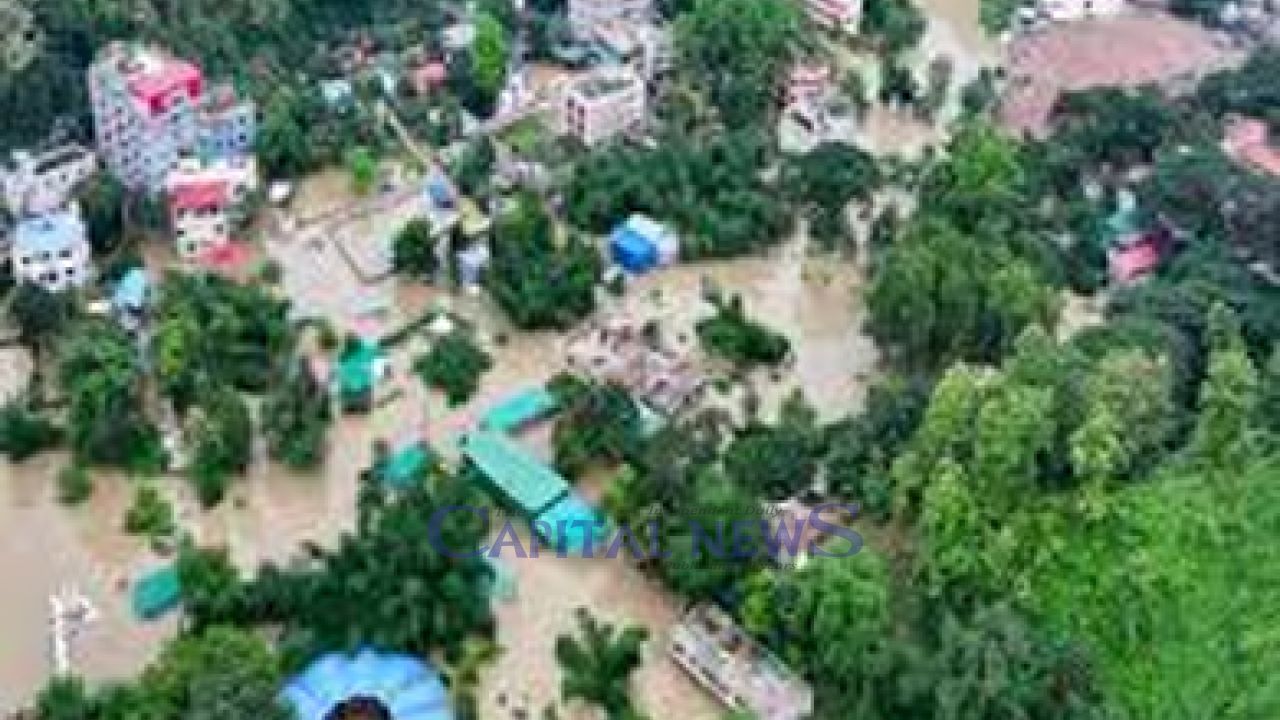
Md. Mukhlesur Rahman: For generations, Bangladeshis regarded the monsoon as a blessing. As a riverine nation, the country’s agriculture, economy, culture, and way of life have long been shaped by seasonal rainfall. Today, however, the monsoon is increasingly becoming a symbol of fear and uncertainty. A few hours of extraordinary rainfall can bring the capital, Dhaka, to a standstill, trigger flash floods in Chattogram and Sylhet, cause deadly landslides in the hill districts, and submerge entire harvests in the haor wetlands within hours. These are no longer isolated incidents—they are unmistakable signs of a changing climate.


The World Meteorological Organization (WMO) and the Intergovernmental Panel on Climate Change (IPCC) have consistently warned that global warming will intensify the Earth’s hydrological cycle. As temperatures rise, extreme weather events—including prolonged droughts, torrential rainfall, powerful cyclones, and sudden floods—are expected to become more frequent and more severe. Bangladesh stands at the epicentre of this emerging climate reality in South Asia.


Bangladesh’s geography has always been both its greatest blessing and its greatest vulnerability. Situated in the world’s largest delta, formed by the Ganges, Brahmaputra, and Meghna river systems, the country faces multiple climate-related threats simultaneously. Himalayan river flows, monsoon rainfall, cyclonic storm surges from the Bay of Bengal, sea-level rise, riverbank erosion, salinity intrusion, and urban flooding combine to create one of the world’s most complex climate risk landscapes.


The greatest irony is that Bangladesh bears almost no responsibility for creating this crisis. Its contribution to global greenhouse gas emissions is negligible compared with that of industrialized nations, whose economic growth has been fueled by fossil fuels since the Industrial Revolution. Yet Bangladesh, along with many other least developed and developing countries, is paying a disproportionately high price for a problem it did little to create. This reality reinforces the growing global demand for climate justice.


Climate change is no longer merely an environmental issue. It has become a defining challenge for economic development, food security, public health, education, urban management, energy security, and national resilience.


Extreme rainfall and prolonged waterlogging disrupt industrial production, interrupt supply chains, reduce agricultural output, increase food prices, and disproportionately affect low-income communities. Urban infrastructure suffers extensive damage, while waterborne diseases and other public health risks escalate dramatically.


Bangladesh must also critically reassess its urban development model. In Dhaka and many other cities, natural canals, wetlands, and flood retention areas have been filled to accommodate rapid and often unplanned urban expansion. As a result, natural drainage systems have been severely compromised. Rainwater that once flowed freely into rivers and canals now accumulates rapidly, causing widespread urban flooding within a matter of hours. Climate change alone cannot explain these disasters; poor planning and weak governance have significantly amplified their impacts.


The country’s foremost priority should therefore be to place climate adaptation at the heart of national development planning. Climate-resilient roads, bridges, and public infrastructure, modern drainage networks, restoration of rivers and canals, rainwater harvesting, wetland conservation, prevention of hill cutting, urban greening, and science-based land-use planning must become integral components of future development strategies.


Agriculture must also undergo a climate-resilient transformation. Developing stress-tolerant crop varieties, promoting efficient irrigation technologies, expanding agricultural insurance, improving digital weather forecasting, and ensuring rapid dissemination of climate information to farmers will be essential for safeguarding future food security.


Yet within this crisis lies a significant economic opportunity. The global carbon economy is expanding rapidly. International carbon markets are now worth billions of dollars annually, rewarding countries and organizations that reduce greenhouse gas emissions through afforestation, renewable energy, carbon sequestration, mangrove conservation, wetland restoration, and sustainable land management.


For Bangladesh, this represents a promising new development pathway. The Sundarbans—the world’s largest mangrove forest—together with coastal green belts, social forestry programmes, climate-smart agriculture, solar energy, biogas, sustainable waste management, and green industrialization can position the country as a significant participant in international carbon markets.


To realize this potential, Bangladesh must establish a comprehensive national carbon registry, internationally recognized emissions measurement and reporting systems, robust carbon accounting standards, transparent verification mechanisms, supportive legal and regulatory frameworks, and a skilled workforce capable of managing carbon finance effectively.


Bangladesh must also strengthen its role in global climate diplomacy. The country should pursue greater access to the Loss and Damage Fund, the Green Climate Fund, adaptation finance, technology transfer, and concessional climate financing. At the same time, strong governance, transparency, and accountability will be essential to ensure that climate finance is used efficiently and effectively.


Beyond climate finance, Bangladesh has considerable potential to promote green bonds, green sukuk, climate-resilient infrastructure funds, and public-private partnerships (PPP) for environmentally sustainable investment. Banks and financial institutions should place greater emphasis on sustainable finance, recognizing that environmental sustainability and long-term economic stability are mutually reinforcing objectives.


Encouragingly, discussions on carbon finance, carbon credits, and Bangladesh’s opportunities within international carbon markets are gaining momentum among policymakers, researchers, and development practitioners. This is an important step forward. However, meaningful progress will require transforming policy discussions into concrete action. Building broad national consensus across political and institutional boundaries is essential.


The world is rapidly transitioning toward a low-carbon economy. Countries that prepare today will be well positioned to benefit from tomorrow’s green investment and carbon markets. Those that fail to adapt risk not only greater climate losses but also economic marginalization in the emerging global order.


Bangladesh therefore stands at a historic crossroads. On one hand lies the urgent challenge of climate adaptation; on the other lies the unprecedented opportunity to become a leader in the green economy and carbon finance. Transforming vulnerability into opportunity will require visionary leadership, evidence-based policymaking, institutional capacity, effective diplomacy, and national unity.


We cannot control how much rain falls. But we can determine how effectively we reduce its impacts, strengthen our resilience, and transform the climate crisis into a catalyst for sustainable economic growth. The choices we make today will shape the Bangladesh inherited by future generations.


The time to act is now.

Write Your Opinion

The Daily Capital News

মঙ্গলবার, ১৪ জুলাই ২০২৬


From Extreme Rainfall to the Carbon Economy: Unlocking Bangladesh’s Green Future

Publish Date : 13 July 2026

featured Image
Md. Mukhlesur Rahman: For generations, Bangladeshis regarded the monsoon as a blessing. As a riverine nation, the country’s agriculture, economy, culture, and way of life have long been shaped by seasonal rainfall. Today, however, the monsoon is increasingly becoming a symbol of fear and uncertainty. A few hours of extraordinary rainfall can bring the capital, Dhaka, to a standstill, trigger flash floods in Chattogram and Sylhet, cause deadly landslides in the hill districts, and submerge entire harvests in the haor wetlands within hours. These are no longer isolated incidents—they are unmistakable signs of a changing climate.The World Meteorological Organization (WMO) and the Intergovernmental Panel on Climate Change (IPCC) have consistently warned that global warming will intensify the Earth’s hydrological cycle. As temperatures rise, extreme weather events—including prolonged droughts, torrential rainfall, powerful cyclones, and sudden floods—are expected to become more frequent and more severe. Bangladesh stands at the epicentre of this emerging climate reality in South Asia.Bangladesh’s geography has always been both its greatest blessing and its greatest vulnerability. Situated in the world’s largest delta, formed by the Ganges, Brahmaputra, and Meghna river systems, the country faces multiple climate-related threats simultaneously. Himalayan river flows, monsoon rainfall, cyclonic storm surges from the Bay of Bengal, sea-level rise, riverbank erosion, salinity intrusion, and urban flooding combine to create one of the world’s most complex climate risk landscapes.The greatest irony is that Bangladesh bears almost no responsibility for creating this crisis. Its contribution to global greenhouse gas emissions is negligible compared with that of industrialized nations, whose economic growth has been fueled by fossil fuels since the Industrial Revolution. Yet Bangladesh, along with many other least developed and developing countries, is paying a disproportionately high price for a problem it did little to create. This reality reinforces the growing global demand for climate justice.Climate change is no longer merely an environmental issue. It has become a defining challenge for economic development, food security, public health, education, urban management, energy security, and national resilience.Extreme rainfall and prolonged waterlogging disrupt industrial production, interrupt supply chains, reduce agricultural output, increase food prices, and disproportionately affect low-income communities. Urban infrastructure suffers extensive damage, while waterborne diseases and other public health risks escalate dramatically.Bangladesh must also critically reassess its urban development model. In Dhaka and many other cities, natural canals, wetlands, and flood retention areas have been filled to accommodate rapid and often unplanned urban expansion. As a result, natural drainage systems have been severely compromised. Rainwater that once flowed freely into rivers and canals now accumulates rapidly, causing widespread urban flooding within a matter of hours. Climate change alone cannot explain these disasters; poor planning and weak governance have significantly amplified their impacts.The country’s foremost priority should therefore be to place climate adaptation at the heart of national development planning. Climate-resilient roads, bridges, and public infrastructure, modern drainage networks, restoration of rivers and canals, rainwater harvesting, wetland conservation, prevention of hill cutting, urban greening, and science-based land-use planning must become integral components of future development strategies.Agriculture must also undergo a climate-resilient transformation. Developing stress-tolerant crop varieties, promoting efficient irrigation technologies, expanding agricultural insurance, improving digital weather forecasting, and ensuring rapid dissemination of climate information to farmers will be essential for safeguarding future food security.Yet within this crisis lies a significant economic opportunity. The global carbon economy is expanding rapidly. International carbon markets are now worth billions of dollars annually, rewarding countries and organizations that reduce greenhouse gas emissions through afforestation, renewable energy, carbon sequestration, mangrove conservation, wetland restoration, and sustainable land management.For Bangladesh, this represents a promising new development pathway. The Sundarbans—the world’s largest mangrove forest—together with coastal green belts, social forestry programmes, climate-smart agriculture, solar energy, biogas, sustainable waste management, and green industrialization can position the country as a significant participant in international carbon markets.To realize this potential, Bangladesh must establish a comprehensive national carbon registry, internationally recognized emissions measurement and reporting systems, robust carbon accounting standards, transparent verification mechanisms, supportive legal and regulatory frameworks, and a skilled workforce capable of managing carbon finance effectively.Bangladesh must also strengthen its role in global climate diplomacy. The country should pursue greater access to the Loss and Damage Fund, the Green Climate Fund, adaptation finance, technology transfer, and concessional climate financing. At the same time, strong governance, transparency, and accountability will be essential to ensure that climate finance is used efficiently and effectively.Beyond climate finance, Bangladesh has considerable potential to promote green bonds, green sukuk, climate-resilient infrastructure funds, and public-private partnerships (PPP) for environmentally sustainable investment. Banks and financial institutions should place greater emphasis on sustainable finance, recognizing that environmental sustainability and long-term economic stability are mutually reinforcing objectives.Encouragingly, discussions on carbon finance, carbon credits, and Bangladesh’s opportunities within international carbon markets are gaining momentum among policymakers, researchers, and development practitioners. This is an important step forward. However, meaningful progress will require transforming policy discussions into concrete action. Building broad national consensus across political and institutional boundaries is essential.The world is rapidly transitioning toward a low-carbon economy. Countries that prepare today will be well positioned to benefit from tomorrow’s green investment and carbon markets. Those that fail to adapt risk not only greater climate losses but also economic marginalization in the emerging global order.Bangladesh therefore stands at a historic crossroads. On one hand lies the urgent challenge of climate adaptation; on the other lies the unprecedented opportunity to become a leader in the green economy and carbon finance. Transforming vulnerability into opportunity will require visionary leadership, evidence-based policymaking, institutional capacity, effective diplomacy, and national unity.We cannot control how much rain falls. But we can determine how effectively we reduce its impacts, strengthen our resilience, and transform the climate crisis into a catalyst for sustainable economic growth. The choices we make today will shape the Bangladesh inherited by future generations.The time to act is now.

The Daily Capital News

Advisory Editor: Gayeshwar Chandra Roy
Editor: Abul Kashem Majumder
Acting Editor: Mohammad Alamgir Hossain
Executive Editor: Farid Ahmed Ripon

© 2025 The Daily Capital News