The Daily Capital News

Mirza Fakhrul Elected Bangladesh’s 23rd President

Mirza Fakhrul Elected Bangladesh’s 23rd President

BNP nominee wins 255 votes; Oli Ahmed secures 88 in first contested presidential election in 35 years

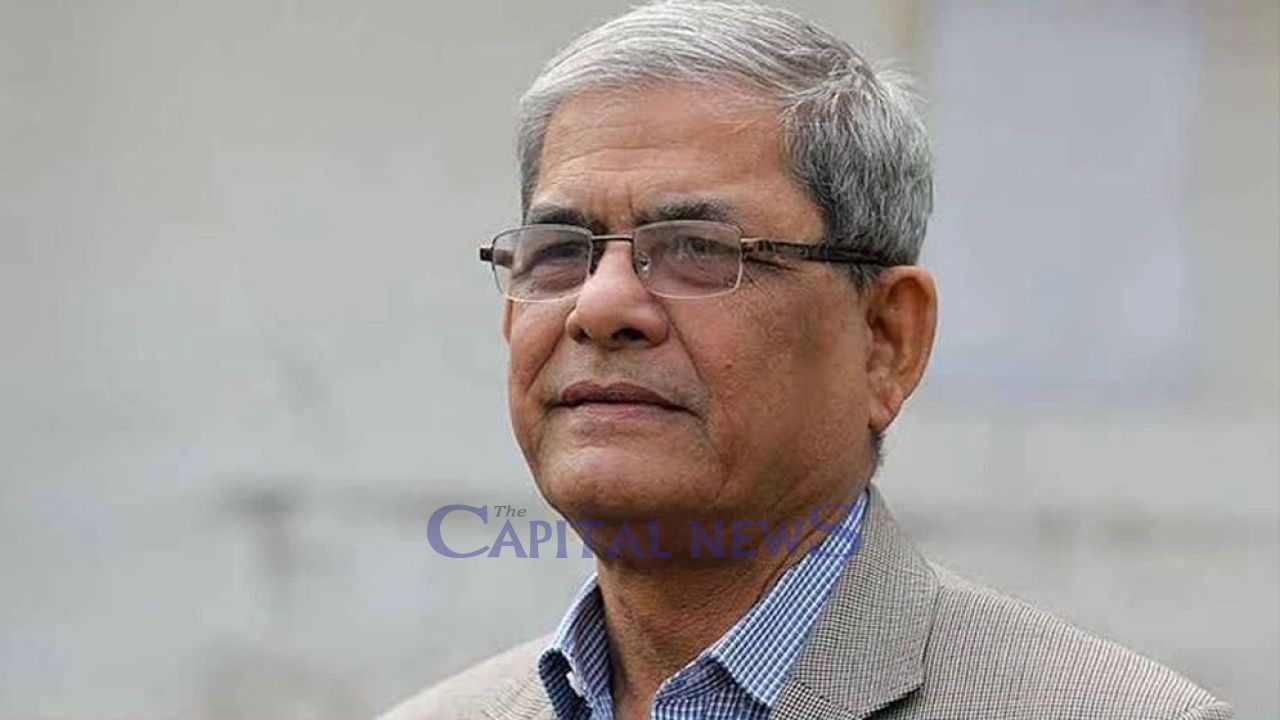
MM Rahmatullah: Bangladesh’s Parliament on Thursday elected BNP leader Mirza Fakhrul Islam Alamgir as the country’s 23rd president, marking the first contested presidential election in 35 years.

Fakhrul secured 255 votes, defeating his rival, Colonel (Retd.) Oli Ahmed, who received 88 votes. The 167-vote margin gave the BNP nominee a decisive victory in the parliamentary election.

Voting began shortly after 2 p.m. on Thursday (August 20) inside the Jatiya Sangsad and concluded at 5 p.m. The election was conducted under the supervision of Chief Election Commissioner and presidential election officer A. M. M. Nasir Uddin.


343 MPs cast their ballots

A total of 349 members of Parliament were eligible to vote in the presidential election. Six MPs did not cast their ballots, leaving 343 votes to be counted.


All 343 votes cast were valid, with Fakhrul receiving roughly three-quarters of the total and Oli Ahmed securing the remainder.


Under Bangladesh’s constitutional system, the president is elected by members of Parliament rather than through a direct popular vote.


Voting begins with key officeholders

The voting process began with Acting President Hafiz Uddin Ahmed (Bir Bikram) casting his ballot. He was followed by Acting Speaker Barrister Kaisar Kamal and Prime Minister and Leader of the House Tarique Rahman.


Fakhrul himself subsequently cast his vote.


The sequence of voting underscored the importance of the election, with senior constitutional and political figures participating at the opening of the process.


Two candidates in the race

The election featured two candidates.


The Bangladesh Nationalist Party (BNP) nominated Mirza Fakhrul Islam Alamgir, one of the party’s senior leaders and a prominent figure in national politics.


The opposing candidate was Colonel (Retd.) Oli Ahmed, nominated by the 11-party alliance led by Jamaat-e-Islami.


Although Oli Ahmed contested the presidency, he was not among the parliamentary voters because presidential electors are members of Parliament.


Article 70 and party discipline

Bangladesh’s Constitution plays a central role in determining how MPs participate in parliamentary voting.


Under Article 70, MPs elected on a party ticket cannot vote against their party’s decision without facing constitutional consequences. Independent MPs, however, are not bound by a party whip in the same way and may choose between presidential candidates.


The provision therefore made parliamentary arithmetic and party positions particularly significant in this election.


A historic contest after three decades

The presidential election carried particular political significance because Bangladesh had not seen a contested presidential election for 35 years.


The return of a two-candidate contest brought renewed public and political attention to an office that is largely constitutional in nature but remains one of the country’s highest state positions.


Fakhrul’s victory, with 255 votes against Oli Ahmed’s 88, demonstrated a clear parliamentary majority in favour of the BNP nominee.


A new chapter for Mirza Fakhrul

For Mirza Fakhrul Islam Alamgir, the election marks a major transition from a long career in party politics to the country’s highest constitutional office.


As president, he will be expected to discharge the responsibilities assigned to the office by the Constitution, uphold constitutional continuity and perform a range of important state functions.


His election also signals a new phase in Bangladesh’s political landscape, with the country entering a period in which the presidency will be occupied by a veteran political figure who has spent decades at the centre of national politics.


After the results were announced, MPs congratulated Fakhrul. Prime Minister and Leader of the House Tarique Rahman rose from his seat to shake hands with the newly elected president, while other senior political leaders also extended their congratulations.


After 35 years, Bangladesh has witnessed a contested presidential election inside Parliament. With 255 votes, Mirza Fakhrul Islam Alamgir has emerged as the country’s 23rd president—beginning a new chapter in the nation’s constitutional and political history.

Subject : National

Write Your Opinion

The Daily Capital News

শুক্রবার, ২১ আগস্ট ২০২৬


Mirza Fakhrul Elected Bangladesh’s 23rd President

Publish Date : 21 August 2026

featured Image
BNP nominee wins 255 votes; Oli Ahmed secures 88 in first contested presidential election in 35 yearsMM Rahmatullah: Bangladesh’s Parliament on Thursday elected BNP leader Mirza Fakhrul Islam Alamgir as the country’s 23rd president, marking the first contested presidential election in 35 years.Fakhrul secured 255 votes, defeating his rival, Colonel (Retd.) Oli Ahmed, who received 88 votes. The 167-vote margin gave the BNP nominee a decisive victory in the parliamentary election.Voting began shortly after 2 p.m. on Thursday (August 20) inside the Jatiya Sangsad and concluded at 5 p.m. The election was conducted under the supervision of Chief Election Commissioner and presidential election officer A. M. M. Nasir Uddin.343 MPs cast their ballotsA total of 349 members of Parliament were eligible to vote in the presidential election. Six MPs did not cast their ballots, leaving 343 votes to be counted.All 343 votes cast were valid, with Fakhrul receiving roughly three-quarters of the total and Oli Ahmed securing the remainder.Under Bangladesh’s constitutional system, the president is elected by members of Parliament rather than through a direct popular vote.Voting begins with key officeholdersThe voting process began with Acting President Hafiz Uddin Ahmed (Bir Bikram) casting his ballot. He was followed by Acting Speaker Barrister Kaisar Kamal and Prime Minister and Leader of the House Tarique Rahman.Fakhrul himself subsequently cast his vote.The sequence of voting underscored the importance of the election, with senior constitutional and political figures participating at the opening of the process.Two candidates in the raceThe election featured two candidates.The Bangladesh Nationalist Party (BNP) nominated Mirza Fakhrul Islam Alamgir, one of the party’s senior leaders and a prominent figure in national politics.The opposing candidate was Colonel (Retd.) Oli Ahmed, nominated by the 11-party alliance led by Jamaat-e-Islami.Although Oli Ahmed contested the presidency, he was not among the parliamentary voters because presidential electors are members of Parliament.Article 70 and party disciplineBangladesh’s Constitution plays a central role in determining how MPs participate in parliamentary voting.Under Article 70, MPs elected on a party ticket cannot vote against their party’s decision without facing constitutional consequences. Independent MPs, however, are not bound by a party whip in the same way and may choose between presidential candidates.The provision therefore made parliamentary arithmetic and party positions particularly significant in this election.A historic contest after three decadesThe presidential election carried particular political significance because Bangladesh had not seen a contested presidential election for 35 years.The return of a two-candidate contest brought renewed public and political attention to an office that is largely constitutional in nature but remains one of the country’s highest state positions.Fakhrul’s victory, with 255 votes against Oli Ahmed’s 88, demonstrated a clear parliamentary majority in favour of the BNP nominee.A new chapter for Mirza FakhrulFor Mirza Fakhrul Islam Alamgir, the election marks a major transition from a long career in party politics to the country’s highest constitutional office.As president, he will be expected to discharge the responsibilities assigned to the office by the Constitution, uphold constitutional continuity and perform a range of important state functions.His election also signals a new phase in Bangladesh’s political landscape, with the country entering a period in which the presidency will be occupied by a veteran political figure who has spent decades at the centre of national politics.After the results were announced, MPs congratulated Fakhrul. Prime Minister and Leader of the House Tarique Rahman rose from his seat to shake hands with the newly elected president, while other senior political leaders also extended their congratulations.After 35 years, Bangladesh has witnessed a contested presidential election inside Parliament. With 255 votes, Mirza Fakhrul Islam Alamgir has emerged as the country’s 23rd president—beginning a new chapter in the nation’s constitutional and political history.

The Daily Capital News

Advisory Editor: Gayeshwar Chandra Roy
Editor: Abul Kashem Majumder
Acting Editor: Mohammad Alamgir Hossain
Executive Editor: Farid Ahmed Ripon

© 2025 The Daily Capital News