The Daily Capital News

Two Generations, one Baul Soul: A Father and Son's journey through Music

Two Generations, one Baul Soul: A Father and Son's journey through Music

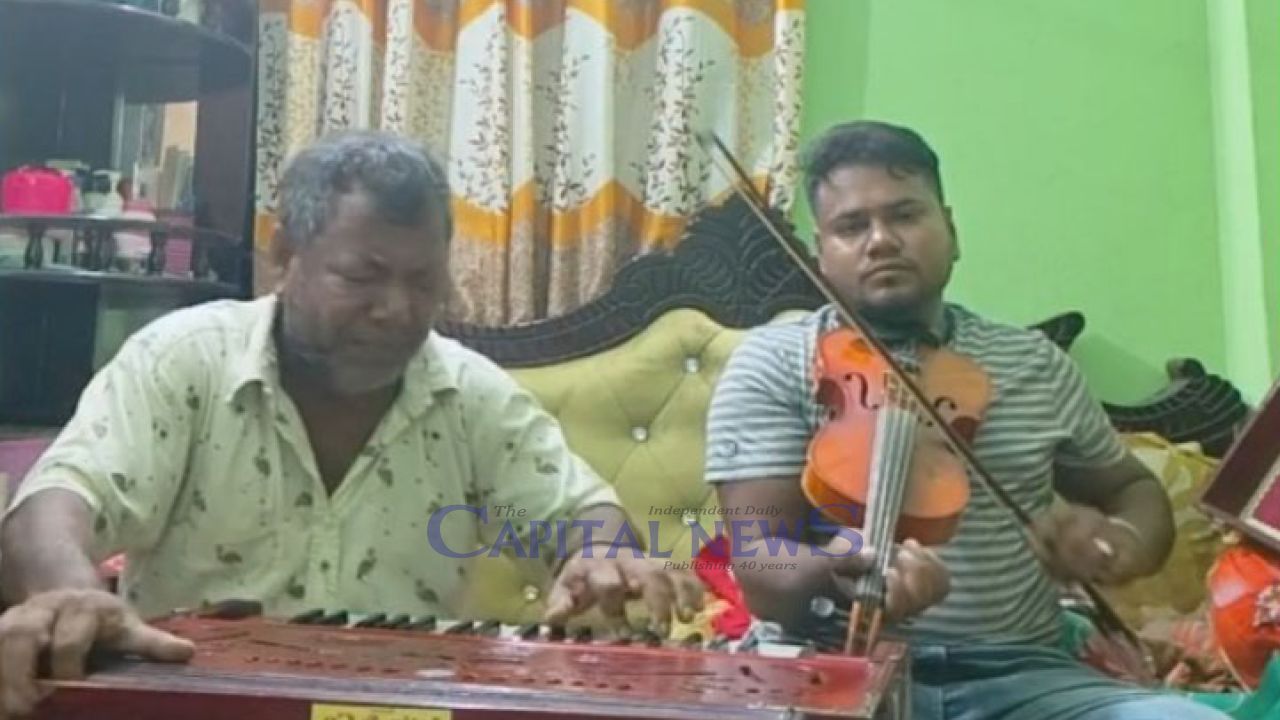
Md. Abdul Hakim plays the harmonium while his son, Alimul Dewan, accompanies him on the violin during a practice session. (Photo: Abida Anjum)


By Abida Anjum: The harmonium was not always his to keep.

For Md. Abdul Hakim, who has spent nearly 25 years in Baul music, even holding a harmonium once felt like a luxury. When money was short, he borrowed one from friends and practiced whenever he could. Some people mocked him, telling him not to touch such an expensive instrument. He still remembers those words.

As he recalled those early days, his eyes became moist.

Hakim's journey into music began with his father, Osman Goni Mollah, who used to sing Doya songs. His father encouraged him to sing and taught him in his own way. Once, he even slapped Hakim for not singing properly. Yet behind that strictness was a deep desire to see his son become a singer.

"My father is the reason I entered the world of music," Hakim said.

He had another reason to continue. After seeing others sing, a determination grew inside him that he too would become a singer. Despite financial difficulties and social discouragement, he continued.

For Hakim, however, music eventually became more than a profession.

"When I sing, I find my father," he said, his voice filled with emotion. "Music gives peace to my soul. It fills an emptiness inside me."

That musical inheritance did not end with Hakim. It passed to his son, Md. Alimul Islam, known in the music world as Alimul Dewan, who has been involved with music for about 23 years.

Alimul's journey began at home. His father's musical practice became part of his childhood. In 2004, an incident involving his father's musical instruments became particularly significant. After his father's friend took away the instruments he had been using, his father felt humiliated. That day, he decided to acquire the instruments needed to continue making music.

Alimul, who did not have formal musical training, did not initially know the basics of musical notation or riyaz. To support his father, he began practicing with him every day. Gradually, music became his own path.

At around seven years old, Alimul performed a Baul song at a programme and won the audience's appreciation. That experience encouraged him to continue as a Baul singer.

But recognition did not come easily.

At different stages of his career, people underestimated him because of his age, appearance and background. At one Baul programme, a respected Baul artist, Mintu Sarkar, initially questioned whether the young Alimul could really sing. Yet after Alimul performed, he won over the audience. Sarkar later apologized for not giving him the respect he deserved before hearing him sing.

Alimul eventually appeared on television, including the Magic Bauliya programme on Maasranga Television. He also received an opportunity to sing on Channel i in a drama featuring popular actor Riaz. But financial difficulties repeatedly forced him to miss opportunities that could have taken his career further.

“Being able to sing on a platform feels different,” Alimul said. “At home, I can sing whatever I want. On a platform, I have to consider the feelings and expectations of the audience.”

Today, balancing music with a job and family responsibilities is another challenge. He no longer has as much time for regular practice as he once did. Still, he refuses to give up.

Coke Studio Bangla has given him some hope. He believes platforms that introduce older songs to younger audiences in new ways are helping keep Baul music alive. Songs such as “Haat Chhaira De Sona Dewra Re” have reached many young listeners, showing that traditional music can still find a place among them.

Yet Alimul worries that music is increasingly being treated as something to hear rather than something to feel. For him, music carries emotion, and Baul music survives because generations of artists have sacrificed for it.

His father shares a similar concern. Hakim feels that modern music has changed the way people listen, while the deeper meaning of older songs is sometimes overlooked.

Still, neither father nor son has abandoned music.

Asked what advice he would give his younger self if he could return to the past, Alimul’s eyes lit up.

“Time and the tide wait for no one,” he said. “Value your time, never stop practicing, and make use of every opportunity.”

For a father who found his own father in music, and a son who inherited that musical journey, the song continues — not simply as a profession, but as a family legacy.


AUTHOR: By Abida Anjum | ID: 2231181001


Subject : Op-Editorial

Write Your Opinion

The Daily Capital News

শুক্রবার, ২১ আগস্ট ২০২৬


Two Generations, one Baul Soul: A Father and Son's journey through Music

Publish Date : 21 August 2026

featured Image
Md. Abdul Hakim plays the harmonium while his son, Alimul Dewan, accompanies him on the violin during a practice session. (Photo: Abida Anjum) By Abida Anjum: The harmonium was not always his to keep.For Md. Abdul Hakim, who has spent nearly 25 years in Baul music, even holding a harmonium once felt like a luxury. When money was short, he borrowed one from friends and practiced whenever he could. Some people mocked him, telling him not to touch such an expensive instrument. He still remembers those words.As he recalled those early days, his eyes became moist.Hakim's journey into music began with his father, Osman Goni Mollah, who used to sing Doya songs. His father encouraged him to sing and taught him in his own way. Once, he even slapped Hakim for not singing properly. Yet behind that strictness was a deep desire to see his son become a singer."My father is the reason I entered the world of music," Hakim said.He had another reason to continue. After seeing others sing, a determination grew inside him that he too would become a singer. Despite financial difficulties and social discouragement, he continued.For Hakim, however, music eventually became more than a profession."When I sing, I find my father," he said, his voice filled with emotion. "Music gives peace to my soul. It fills an emptiness inside me."That musical inheritance did not end with Hakim. It passed to his son, Md. Alimul Islam, known in the music world as Alimul Dewan, who has been involved with music for about 23 years.Alimul's journey began at home. His father's musical practice became part of his childhood. In 2004, an incident involving his father's musical instruments became particularly significant. After his father's friend took away the instruments he had been using, his father felt humiliated. That day, he decided to acquire the instruments needed to continue making music.Alimul, who did not have formal musical training, did not initially know the basics of musical notation or riyaz. To support his father, he began practicing with him every day. Gradually, music became his own path. At around seven years old, Alimul performed a Baul song at a programme and won the audience's appreciation. That experience encouraged him to continue as a Baul singer.But recognition did not come easily.At different stages of his career, people underestimated him because of his age, appearance and background. At one Baul programme, a respected Baul artist, Mintu Sarkar, initially questioned whether the young Alimul could really sing. Yet after Alimul performed, he won over the audience. Sarkar later apologized for not giving him the respect he deserved before hearing him sing.Alimul eventually appeared on television, including the Magic Bauliya programme on Maasranga Television. He also received an opportunity to sing on Channel i in a drama featuring popular actor Riaz. But financial difficulties repeatedly forced him to miss opportunities that could have taken his career further.“Being able to sing on a platform feels different,” Alimul said. “At home, I can sing whatever I want. On a platform, I have to consider the feelings and expectations of the audience.”Today, balancing music with a job and family responsibilities is another challenge. He no longer has as much time for regular practice as he once did. Still, he refuses to give up.Coke Studio Bangla has given him some hope. He believes platforms that introduce older songs to younger audiences in new ways are helping keep Baul music alive. Songs such as “Haat Chhaira De Sona Dewra Re” have reached many young listeners, showing that traditional music can still find a place among them.Yet Alimul worries that music is increasingly being treated as something to hear rather than something to feel. For him, music carries emotion, and Baul music survives because generations of artists have sacrificed for it.His father shares a similar concern. Hakim feels that modern music has changed the way people listen, while the deeper meaning of older songs is sometimes overlooked.Still, neither father nor son has abandoned music.Asked what advice he would give his younger self if he could return to the past, Alimul’s eyes lit up.“Time and the tide wait for no one,” he said. “Value your time, never stop practicing, and make use of every opportunity.”For a father who found his own father in music, and a son who inherited that musical journey, the song continues — not simply as a profession, but as a family legacy. AUTHOR: By Abida Anjum | ID: 2231181001  

The Daily Capital News

Advisory Editor: Gayeshwar Chandra Roy
Editor: Abul Kashem Majumder
Acting Editor: Mohammad Alamgir Hossain
Executive Editor: Farid Ahmed Ripon

© 2025 The Daily Capital News