

Bangladesh should look at energy, skills and diversification of exports.
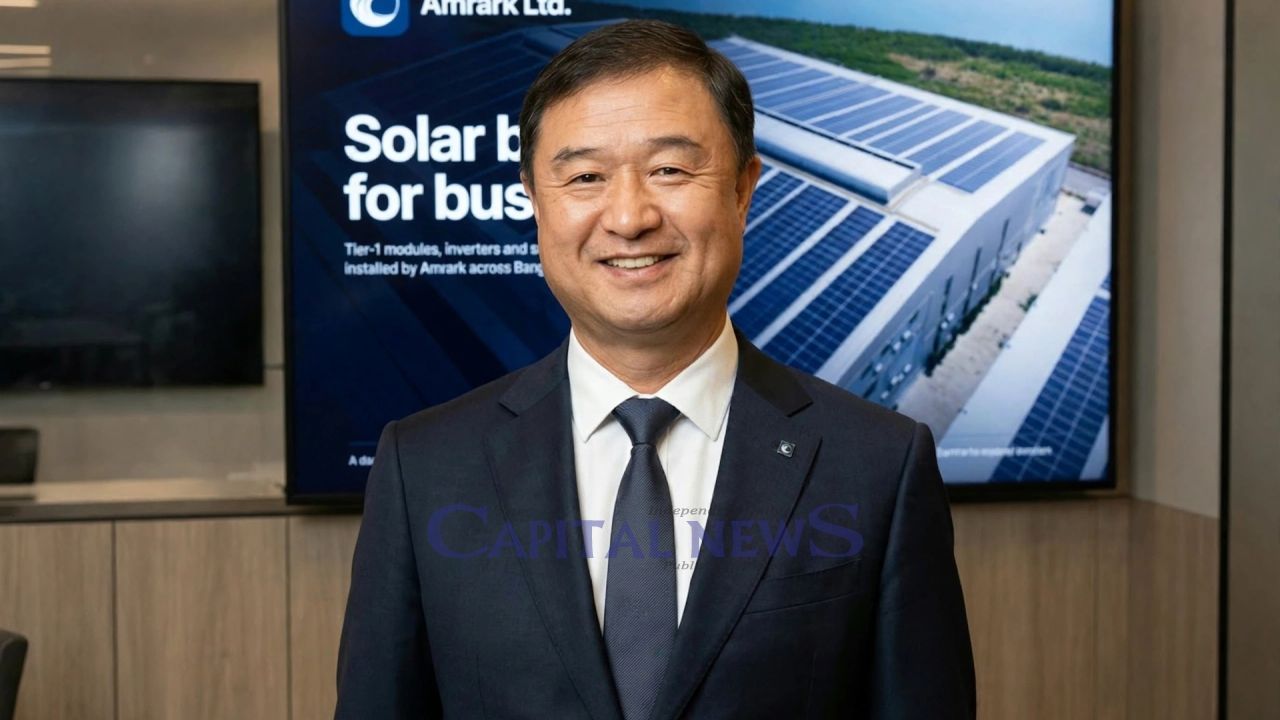
Says Minkeun (Million) Park, Secretary General, Korea-Bangladesh Chamber of Commerce and Industry (KBCCI) and Managing Director of MKP Designers Company Limited,
As the United Nations has just deferred LDC graduation of Bangladesh by three years, to November 2029, that time should be used well, on energy, skills and the diversification of exports. Bangladesh's export basket is highly dependent on readymade garments, holding 80 per cent of total exports of the country.
South Korea prospered as it diversified its export basket to steel, ships and semiconductors, reducing dependence on wigs and garments, said Minkeun (Million) Park, Secretary General, Korea-Bangladesh Chamber of Commerce and Industry (KBCCI) and Managing Director of MKP Designers Company Limited, in an interview with Imtiaz Ahmed of the Bangladesh Mail.
To a question of wooing foreign direct investment (FDI), Bangladesh should look at some serious issues to woo foreign direct investment (FDI). However, difficulties in opening letters of credit, repatriating profits, customs delays and policies that change midway remain real obstacles.
1. Dhaka-Seoul relations under the new government
The relationship between our two countries is older and deeper than many people realise. In the late 1970s, Desh Garments sent about 130 young Bangladeshis to a Daewoo factory in Busan for six months of training. They returned home and laid the foundation of an industry that today has more than 4,000 factories. Korea was not only a trading partner. It shared the knowledge of the very industry that had lifted Korea itself out of poverty. I should make clear that I speak as a businessman and not as a diplomat, and I do not speak for the Korean government. I am Korean, but I have lived and worked in Bangladesh for more than two decades. I raised my family here, and I serve as Secretary General of the Korea-Bangladesh Chamber of Commerce and Industry. I therefore see the relationship from both sides, and I hear regularly from the companies involved in it. With the new government, I am optimistic. An elected government with a strong mandate gives investors the predictability they need. The CEPA negotiations began in November 2024 and were concluded in August this year after five rounds, which is quick for an agreement of this kind. It is Korea's second such agreement in South Asia, after India. Bilateral trade grew by more than half in the first six months of this year. I was also encouraged that Prime Minister of Bangladesh Mr Tarique Rahman visited the Bangladesh Solar Expo this month and stopped at the stall of Amrark, the solar company my son chairs. Businesspeople notice when a head of government takes a personal interest.
2. Soft loans for development projects
This is a decision for the Korean government, and I cannot speak on its behalf. What I can say is that the mechanism is already in place. Korea's Economic Development Cooperation Fund lends to Bangladesh at 0.01 to 0.05 percent interest, repayable over 40 years with a 15-year grace period. These are among the most generous terms available anywhere. The current framework provides 3.00 billion US dollars for 2023 to 2027, more than four times the previous one, and it has made Bangladesh the second largest recipient of Korean development assistance in the world. In my experience, the difficulty is not the availability of funds but the speed of implementation. Feasibility studies, land acquisition, approvals and procurement take a long time here, and concessional money waits unused. Korea has pledged about 1.00 billion US dollars for Dhaka's metro rail, and Bangladesh has asked Seoul to expedite the financing decision. Both sides can move faster. It is worth remembering that Korea itself received aid within living memory and is now a donor. Japan, through JICA, has long been Bangladesh's largest bilateral lender. Korea is steadily becoming a second pillar, and it does so with a clear memory of what development requires.
3. Working together on energy
Yes, and I believe this is one of the most important areas for cooperation. When the Strait of Hormuz was closed after 28 February, all three of Bangladesh's long-term LNG suppliers declared force majeure at once. Bangladesh imports about 95 percent of its oil, and analysts estimate that every 10 dollars increase in the price of oil adds roughly 900 million dollars to the import bill. A conflict far away was felt at fuel stations here within weeks. South Korea knows this vulnerability well, because it also imports almost all of its energy. Its response was to build strong industries in solar modules, batteries, grid equipment and energy-efficient machinery. That experience is what Korea can offer. There is already a good example. The largest rooftop solar plant in Bangladesh, 40 megawatts, stands on the factory roofs of the Korean EPZ in Chattogram and was built by a Korean company, Youngone. The government now aims to add 10,450 megawatts of renewable capacity by 2030, more than half of it on rooftops, from a base of under 2,000 megawatts today. That is a very large task, and it cannot be done without foreign technology and finance. I follow this sector closely because my son, Jisu, who grew up in Dhaka and studied political economy at the University of California, Berkeley, chairs a solar company here, Amrark Ltd. Amrark works with technology partners from several countries, including Sky Japan from Japan and Sonnex Energie from Germany, alongside the leading Chinese manufacturers, and we have been in discussions with Hanwha Qcells from Korea. Solar power has one advantage that no imported fuel can match. Its supply cannot be interrupted by events overseas.
4. Korean investment and the investment climate
I do expect more Korean investment, and the foundation is larger than is often understood. Korea is the fifth largest foreign investor in Bangladesh, with about 1.56 billion dollars of investment stock across more than 150 companies. Korean firms are the largest foreign investors in the country's export processing zones. Youngone came in 1980 as the first foreign investor in the garment sector and today employs tens of thousands of people. Samsung phones are made in Narsingdi and Hyundai cars are assembled in Kaliakoir. My own company, MKP Designers, has been part of that garment story.
The next phase should be in energy and higher-value manufacturing. The Prime Minister of Bangladesh Mr Tarique Rahman has invited Korean companies to invest in shipbuilding, semiconductors, electronics and automobiles. In renewable energy, demand is coming from the market itself, because international buyers now ask factories about their carbon footprint and grid electricity is costly and unreliable.
I can share one experience. We have held discussions with Hanwha Qcells, Korea's largest solar manufacturer and the leading residential module brand in the United States for eight consecutive years. Their quality is excellent. However, Bangladesh is an extremely price-sensitive market, and premium Korean modules find it difficult to compete with Chinese suppliers on price alone. Korean technology is best suited to public sector projects supported by concessional finance, where reliability over 25 years matters more than the lowest initial price. Japan has done this effectively by pairing its companies with JICA financing. Korea has similar instruments in EDCF, KOICA and Korea Eximbank, and I hope they will be directed toward the energy sector. This brings me to a concern I feel strongly about. Too much of the solar market here is decided on price alone, and the results are visible. A CPD survey found that 47 per cent of household solar systems in the country no longer function. A utility survey in Tongi found about 90 percent of rooftop systems out of order. A solar panel should produce electricity for 20 years or more, yet a DESCO engineer has said that many panels here deteriorate within five. I know of a building in Dhaka, one I visit regularly, where the panels on the roof do not work and no one can say who installed them. In most cases the problem begins before installation. Low-quality and even counterfeit equipment carrying well-known brand names can be bought in the wholesale markets of Old Dhaka at prices no genuine manufacturer could offer. On a quotation the two look the same, but over ten years they are very different investments. Poor engineering is equally damaging. I have heard of a company whose electricity bill increased for several months after it installed solar. As I understand it, the system had not been properly arranged for net metering, so the meter recorded the surplus power sent to the grid as consumption. The company was in effect paying for its own electricity.
A solar plant must work for 25 years, and most of what determines its performance cannot be seen: the structural assessment of the roof, the shading study, the correct sizing of strings and inverters, earthing and lightning protection, the grid connection, and monitoring after handover. Panel prices have roughly halved in two years, so equipment is no longer the main cost. Sound engineering is what the customer is really paying for. Analysts estimate that only 15 to 20 firms in the country have the technical capacity to carry out rooftop solar properly, although many more are offering it. I have spent my career in the garment industry, and I have seen what happens when an industry competes only on price. Quality falls until the product is no longer worth buying. Solar must not follow that path, because every failed installation persuades the neighbours that solar does not work. For a factory owner or a family this is a major investment, and it should be done properly the first time. I advise buyers to question their installer about design and engineering, not only about price. Amrark operates on the principle that it is better to lose a bid than to build a system that will underperform, and I fully support that.
This is also an area where Korea can contribute beyond equipment. Standards, testing and the certification of installers are how Korea built its reputation for quality, and Bangladesh's solar sector needs the same. As for the investment climate, I will be frank. The potential is considerable and the direction is positive. This year's budget removed some of the tax disadvantages that clean energy imports had faced. However, difficulties in opening letters of credit, repatriating profits, customs delays and policies that change midway remain real obstacles. Korean investors are patient, but they consult one another. If those who invest now have a good experience, others will follow.
5. High-level visits
I am not in a position to know the plans of either government, but the public signals are encouraging. President Lee Jae Myung sent a message of congratulations when the new government took office. In August the Prime Minister invited him to visit Bangladesh, and the State Minister for Foreign Affairs conveyed that invitation in Seoul. The two sides have also agreed to finalise the CEPA text by December so that it can be signed at a high-level meeting. The visit you mention took place in 2002, twenty-four years ago. Both countries have changed a great deal since then, and a visit at the level of heads of government is overdue. The signing of the CEPA would be a fitting occasion. In my experience, when leaders travel, business delegations travel with them, and that is when partnerships are formed.
7. Bangladesh's economic journey
In the 1970s, some in Washington dismissed Bangladesh as a "basket case". Similar things were said about Korea after the Korean War. Both countries proved those judgments wrong, and in the same way, through the hard work of their people in export industries. I have witnessed a good part of this change myself. When I first came to Dhaka there was no metro rail, no elevated expressway and no Padma Bridge. Today even a rickshaw puller accepts mobile payments. The credit belongs to the women on the factory floor, the workers who send remittances from abroad, and the entrepreneurs who built export businesses from very little. As a friend of Bangladesh, I should also speak plainly about what lies ahead. More than four fifths of export earnings still come from a single industry. Korea prospered because it did not stand still. It moved from wigs and garments to steel, ships and semiconductors. Bangladesh must make a similar transition. The United Nations has just deferred LDC graduation by three years, to November 2029. That time should be used well, on energy, skills and the diversification of exports.
8. Bangladeshis in Korea
I do not have an official figure for the number of Bangladeshis residing in Korea, and the two embassies would be the proper source. What is recorded is that 38,059 Bangladeshi workers have gone to Korea under the Employment Permit System since 2008, with a record 5,891 in 2022. In addition, there are students, researchers and professionals.
Their contribution is valued, and the reason is demographic. Korea's fertility rate was 0.80 last year, against the 2.1 needed to maintain a population, and deaths exceeded births by more than 100,000 in 2025. Korean factories, shipyards and fisheries depend on foreign workers, and Bangladeshi workers are well regarded by employers as hardworking and quick to learn. There is, however, a matter that needs attention. Over five recent years Bangladesh filled only about 37 percent of the quota Korea offered. Korea has also reduced its overall quota for this visa category from 165,000 in 2024 to 80,000 this year, so competition among sending countries is increasing. The main barrier is the Korean language test, a subject we hear about often at the chamber. The Prime Minister's proposal for Korean-supported shipbuilding training centres in Bangladesh, with language training included, is the right approach. Each worker who qualifies improves the life of an entire family.
9. Scholarships
Korea already provides scholarships. The best known is the Global Korea Scholarship, fully funded by the Korean government. It is an excellent programme but a limited one, with roughly 20 Bangladeshi students selected each year. A larger opportunity is less well known. A few years ago there were already about 1,500 Bangladeshi students in Korea, most pursuing master's and doctoral degrees in engineering, and many supported by the universities and research laboratories themselves. Because Korea has fewer young people each year, its universities actively seek capable foreign students. This year Korea also expanded a visa track that helps outstanding foreign graduate students move toward residency.
My advice to students is not to wait for a government announcement. They should identify Korean professors working in their field and write to them directly, and they should begin learning Korean early. As a father who sent his own son abroad to study, I know that the degree is only part of what a young person brings home.
10. Trade volume and the next five years
The figure depends on the source. Bangladeshi official data put two-way trade at about 1.65 billion dollars in FY2024-25, of which 1.18 billion was imports from Korea. Other estimates exceed 3 billion dollars. Even these figures understate the relationship, because many Korean branded goods sold in Bangladesh, such as Samsung phones, are shipped from factories in third countries like Vietnam and are not counted as bilateral trade. The imbalance is clear. Bangladesh exported about 421 million dollars to Korea last fiscal year, down 9 percent. Korea imports around 13 billion dollars of apparel a year, and Bangladesh's share is only about 5 percent. For the world's second largest garment exporter, that leaves a great deal of room to grow. The CEPA is intended to address this. Once in force, 97 percent of Bangladeshi products will receive preferential access to Korea, and 87 percent of Korean products will receive the same here. However, an agreement only opens the door. Korean consumers prefer higher-value, design-oriented products in smaller quantities with quick delivery, whereas Bangladesh's strength has been in large volumes of basic items. Vietnam already has three trade agreements with Korea and a considerable lead. If Bangladeshi exporters adapt, and if Korean manufacturers begin to produce in Bangladesh for export, I believe bilateral trade can double within five years. That is my personal estimate.
11. Healthcare cooperation
I am not a medical professional, so I will answer from a business and economic point of view. The Prime Minister stated in July that about 5 billion dollars leaves Bangladesh each year for medical treatment abroad. Around 482,000 Bangladeshi patients were treated in India in 2024 alone. For comparison, 5 billion dollars is more than Korea's entire five-year concessional loan framework for Bangladesh, and it is spent every year.
Studies of why patients go abroad point mainly to confidence in diagnosis, nursing care and communication, more than to buildings or equipment. I therefore agree with the emphasis in your question. Training should come first. South Korea is well placed to assist. It has an international reputation in cancer and cardiac care and in the efficient management of large hospitals, and it is already engaged here. Korean concessional finance supported the super specialised hospital at BSMMU, and KOICA has supported nursing education in Dhaka. I would like to see fellowships for Bangladeshi specialists and nurses in Korean hospitals, Korean hospital management and information systems introduced here, and a joint venture specialised hospital in Dhaka or Chattogram. If even one fifth of that 5 billion dollars remained in the country, it would mean a billion dollars a year for better hospitals.
সোমবার, ২৩ নভেম্বর ২০২৬
Publish Date : 20 November 2026


Write Your Opinion