

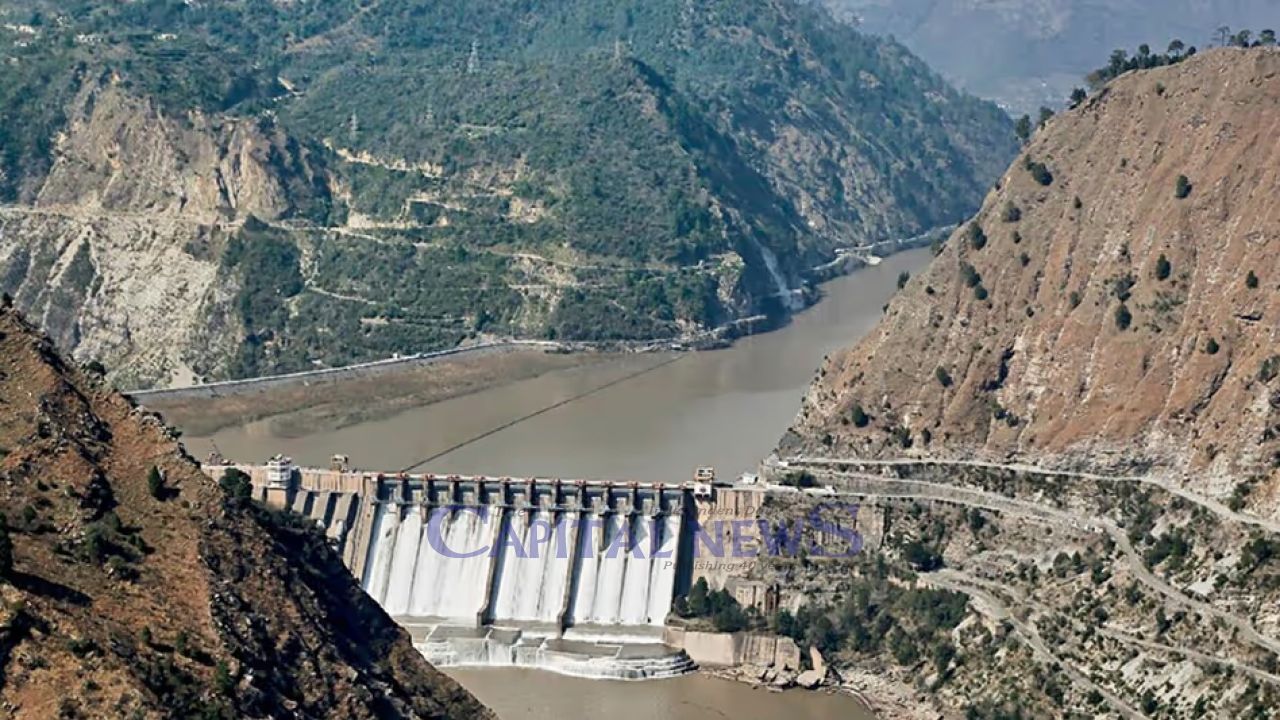
A dangerous, suffocating silence has enveloped the Indus Basin. More than a year after New Delhi unilaterally announced its decision to place the historic 1960 Indus Waters Treaty (IWT) in "abeyance" on April 23, 2025 - using the Pahalgam incident as political cover - the world's most resilient water agreement have ground to a halt. India's Union Minister of Jal Shakti, CR Patil, alongside the ruling BJP leadership, has firmly dug in his heels. They are operating under the old, uncompromising rhetoric that "blood and water cannot flow together". The operational fallout of this diplomatic freeze is already hitting Pakistan.
Pakistan's Indus Water Commission has reportedly written four consecutive, urgent letters to its Indian counterpart, asking for mandated hydrological data, reservoir levels and information on upstream diversions. Every single letter has been met with a wall of absolute silence.
When India refuses to share data, Pakistan is left completely in the dark. Without real-time information, our water management is reduced to sheer guesswork. This guesswork has devastating consequences. It means our farmers cannot plan their sowing seasons, threatening the food security of over 240 million people. It means our disaster management authorities are left blind to incoming flash floods or intensifying droughts. When you manage a massive river system on assumption, you end up with catastrophic water waste at times when you need it most, and sudden, artificial shortages that dry up our fields.
This calculated non-cooperation reveals a deeply unsettling shift in New Delhi's mindset. When states begin to view the starvation and deprivation of ordinary human beings as a legitimate tool of statecraft, the line between geopolitical posturing and a humanitarian atrocity completely dissolves.
What makes India's intransigence even more alarming is its blatant defiance of international dispute mechanisms. Just recently, on May 15, 2026, the Permanent Court of Arbitration (PCA) in The Hague issued a major supplemental award upholding Pakistan's stance, ruling that the treaty places strict, substantive limits on India's water-control and pondage designs. This followed previous PCA rulings firmly establishing that India cannot unilaterally suspend or place the treaty in abeyance.
If the IWT is allowed to die, no legal or regional order in South Asia will remain secure. New Delhi must realise that water weaponisation is a double-edged sword that will ultimately destabilise the entire subcontinent. It is time to break the silence and restore the treaty's cooperative routines. The life-giving waters of the Indus must continue to sustain the green pastures on both sides of the border, before the rivers run completely dry for us all.
শনিবার, ০৪ জুলাই ২০২৬
Publish Date : 04 July 2026






Write Your Opinion